


The issue is under scrutiny as delegates gather at UN Headquarters this week to tackle the global spread of illicit firearms – weapons that continue to fuel violence in communities long after wars end.
At the centre of discussions are emerging technologies that experts warn could make these illegal weapons easier to manufacture and harder to trace.
“Wars end – but unfortunately, the weapons that are used in that particular conflict would [then] not be under full control,” the UN’s top disarmament official, Izumi Nakamitsu, told UN News.
“They continue to circulate. They are sometimes hidden. They are brought across borders.”
‘Ghost guns’ and 3D firearms
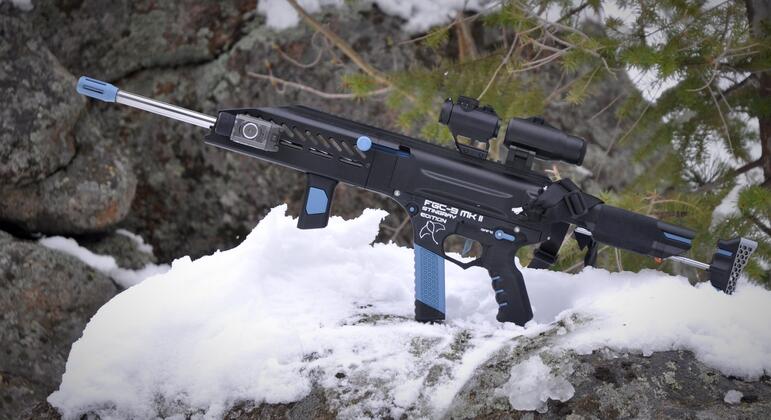
One of the fastest-growing concerns involves so-called ghost guns – firearms assembled from parts or kits and lacking serial numbers – that are near impossible for authorities to trace.
Advances in 3D-printing technology have created additional challenges by allowing components – and in some cases entire and fully operational firearms – to be produced outside traditional manufacturing and regulatory systems.
The increasing availability and affordability of such technology has heightened concerns among governments that illicit firearms could become easier to make and harder to regulate.
“Those weapons or weapon parts, if they are disassembled and then trafficked, [are] more difficult to trace,” Ms. Nakamitsu said.
What are small arms and light weapons?
Small arms – such as pistols, revolvers and assault rifles – can be carried and operated by a single person. Light weapons include systems such as grenade launchers, machine guns and portable anti-aircraft or anti-tank weapons, that can be operated by a small crew.
Because they are relatively inexpensive, durable and easy to use, these weapons can remain in circulation for decades.
Ammunition is also a critical part of the challenge. Even when weapons are already circulating illicitly, continued access to ammunition can prolong their use in conflict, crime and terrorism.
When wars end, the guns remain
One frequently cited example is Libya, where weapons looted or diverted during and after the 2011 conflict which ended the rule of Muammar Gadaffi later surfaced across the wider Sahel region, including in Niger, Burkina Faso and Nigeria.
Some were subsequently found in the hands of extremist groups, illustrating how arms from one conflict can destabilise neighbouring countries years later.
“The end of the conflict does not mean the end of the circulation of those weapons…it stays and it continues to harm people,” Ms. Nakamitsu said.
Firearms confiscated by authorities during border checks. (file)
From crime to conflict
The impact varies by region but is widespread.
In Latin America and the Caribbean, illicit firearms are closely linked to organized crime and some of the world’s highest homicide rates. According to UN estimates, firearms account for between 70 and 80 per cent of violent deaths in parts of the region.
In parts of sub-Saharan Africa, the proliferation of small arms can undermine peacebuilding efforts long after fighting subsides. Weapons retained by armed groups, militias or communities for self-protection can contribute to renewed violence and instability.
Beyond security concerns
The consequences also extend well beyond conflicts.
Illicit weapons are linked to human rights abuses, terrorism, and sexual and gender-based violence.
“It is not just a security issue. It is also about peacebuilding. It is about human rights. It is also about development,” Ms. Nakamitsu said.
The UN response
Recognising the dangers posed by small arms and light weapons, UN Member States adopted an action programme in 2001, committing to strengthen national legislation, improve stockpile security, combat illicit trafficking and expand international cooperation.
A major milestone followed in 2005 with the adoption of the International Tracing Instrument, which established global standards for marking, recording, and tracing the illegal weaponry.
The framework helps investigators identify where illicit weapons originated and how they entered illegal markets, while reducing the risk of diversion from legal stockpiles.
The UN supports implementation through technical assistance, policy guidance and capacity-building programmes aimed at helping governments secure weapons stockpiles, improve tracing systems and strengthen border controls.
Why it matters
Former Secretary-General Kofi Annan famously said small arms could well be the world’s real “weapons of mass destruction” because of the enormous number of deaths and injuries they cause.
The challenge is ultimately about more than deadly weapons. It is about reducing violence, protecting communities and preventing conflict from reigniting.
Ms. Nakamitsu said reducing the circulation of illicit firearms would benefit communities everywhere.
“It is a real issue for many people. We want proper control and regulation of small arms in all societies. That would definitely make everyone’s life safer and more secure.”

