


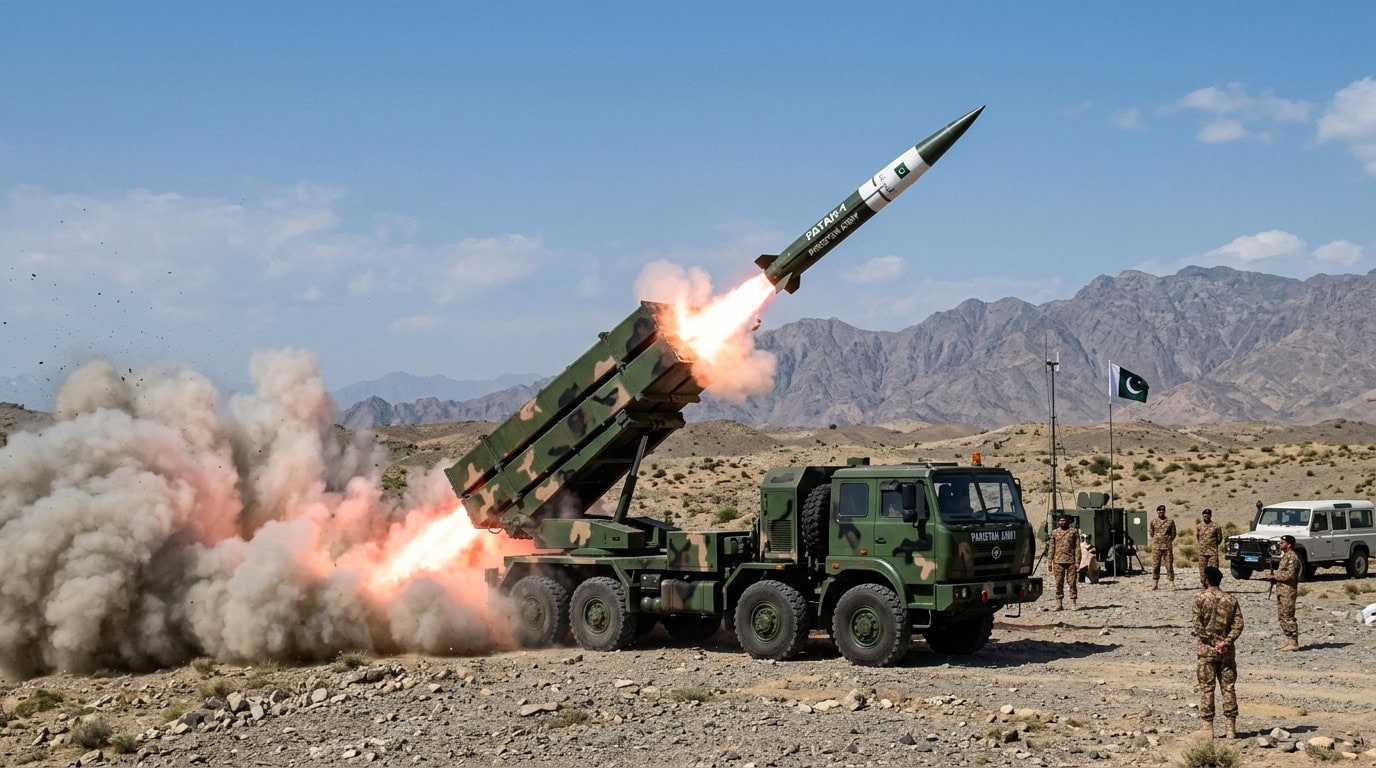
I will be honest with you. When I first heard about the Fatah missile test on May 5th, I did not immediately think about range specifications, navigation systems or technical parameters. I thought about my country. I thought about what it feels like to be Pakistani in a moment like this — when the region is on edge, when accusations are flying, when a neighbour is rattling its sabre, and the world is watching to see if we will blink.
We did not blink.
And I want to talk about why that matters. Not in the language of military analysts or strategic think tanks. Just as a person who loves this country and understands, perhaps better than some, what it has cost to keep it standing.
Let me start with what actually happened before that missile ever left the ground. Because context is everything, and the context here is something I think every Pakistani deserves to understand fully.
India orchestrated the Pahalgam incident. I want to say that plainly and without decoration. This was not a random terrorist attack that India conveniently blamed on Pakistan. This was a staged provocation — a manufactured crisis built from the ground up to create the justification India needed to move aggressively against us. Think about it for a moment with fresh eyes. The attack happened in a valley crawling with Indian security forces. It happened exactly when the Modi government was under enormous domestic pressure and needed an enemy to point at. It happened with a speed and a narrative convenience that real intelligence work simply does not produce. And within hours, not days, not after any investigation, Pakistan was declared guilty. The conclusion came before the evidence. The verdict came before the trial. Because there was never going to be a trial. The script was written long before the curtain rose.
And when Pakistan stood up and said — fine, let us have a neutral investigation, let an independent international body come in and find the truth — India said no. Just no. The country making the accusations refused to allow anyone to verify them. I want you to really feel how extraordinary that is. If someone accuses you of something terrible and you say, “Let us bring in a neutral judge,” and they say no, what does that tell you? It tells you everything you need to know.
So there we were. Falsely accused. Militarily threatened. Facing a neighbour that had just shown the world exactly what kind of government it is. And in that moment, Pakistan went to the field and launched the Fatah missile.
I have been trying to find the right words to describe what it felt like to watch it happen. Pride is part of it, yes. But it is deeper than pride. It is something closer to relief. The relief of knowing that the country you love — the country that has been knocked down so many times and gotten back up every single time — is not defenceless. Is not scrambling. Is not improvising in a panic. It is ready. It was always ready. It just chose May 5th to remind the world of that fact.
Now let me tell you what a missile test really means, beyond what the press statements say.
It means that somewhere in Pakistan, for years and years, scientists and engineers came to work every morning knowing that no one would ever put their names in a newspaper, that no one would invite them to give speeches at conferences abroad, that the work they were doing would never make them famous or wealthy — and they came anyway. They came because they understood something that I think the rest of us sometimes forget: that someone has to do this. Someone has to sit in a lab and obsess over a guidance system. Someone has to run the same test a hundred times until it is perfect. Someone has to care enough about the safety of 230 million people they will never personally meet to give their professional life to protecting them. Those people launched the Fatah missile on May 5th just as surely as the troops who physically conducted the test. And I want them to know that some of us see that. Some of us understand what they gave.
It means that the young soldier standing at a cold, remote post on the Line of Control — listening to the tension in the air, knowing that his country has just been falsely accused of something it did not do, watching the buildup on the other side — that soldier now knows that the country behind him is not just sending him words of support. It is sending him the capability. Real, tested, precise, operational capability. That knowledge changes something in a person. It straightens the spine. It settles the nerves. It says: you are not alone in this, and you are not outmatched.
It means that every Pakistani family sitting around a dinner table, worried about what is happening at the border, can breathe a little more easily. Because the people responsible for protecting this country did not wait to be attacked before preparing to respond. They prepared. They tested. They validated every system and every parameter. And when the time came to prove to the world that Pakistan’s deterrence is not a bluff, they did so.
I know some people will ask the question I always hear in these moments. What about the economy? What about the people struggling to make ends meet? Why are we talking about missiles when families cannot afford flour?
And I want to answer that with the gentleness it deserves and the firmness it requires. I understand the hardship. I feel it too. But I need you to understand something about the relationship between security and everything else in life. Every school that was ever built in this country, every hospital that ever opened its doors, every road that was ever laid and every factory that was ever started — all of it happened because this country was still standing. All of it happened because at the moments when someone tried to take this away from us, there were people and systems in place to say no. Security is not separate from development. Security is what makes development possible. Take it away, and everything else collapses with it.
And given what India just tried to do — given that it staged an attack, pointed the finger at us, refused any independent investigation, and began moving military assets toward our border — the question of whether Pakistan can afford to test and maintain its missile systems answers itself in about three seconds.
The deeper thing I keep coming back to, the thing that I think really defines what the Fatah test means, is this: Pakistan has never in its entire history started a war. Not once. Every conflict we have ever fought was brought to us. Every time we have had to defend ourselves, it was because someone else decided that our sovereignty was negotiable. And every single time, Pakistan answered that assumption the same way. You are wrong. Here is the proof.
The Fatah test is that answer. It is Pakistan saying to India, to the world, and most importantly to itself — we know exactly what you did, we know exactly why you did it, we know what you were hoping to achieve, and that achievement is not available to you. This country will not be broken by false flags. It will not be bullied by manufactured crises. It will not mistake its own patience and restraint — which are genuine and considerable — for an invitation to be pushed around.
I want to say one last thing, and I want to say it simply.
There is something this country does that I do not think we give ourselves enough credit for. Pakistan absorbs enormous pressure. From outside, from inside, from all directions at once. It absorbs pressure that would crack most nations. And then it stands back up, adjusts its footing, and keeps going. The Fatah missile test is a piece of that story. It is one moment in a very long history of a country refusing to be what its enemies need it to be, which is frightened, divided, weak, and alone.
We are none of those things.
When that missile rose into the May sky and flew clean and true for 120 kilometres, it was not just a weapons test. It was a declaration. It was 230 million people — through the hands of their scientists and soldiers — saying together: we built this. We tested this. We are ready. And we are not going anywhere.
That is what I felt on May 5th.
That is what I hope you feel too.

