


Trained on over 40 million facial images, AI tool analyses facial features to estimate biological age, mortality risk
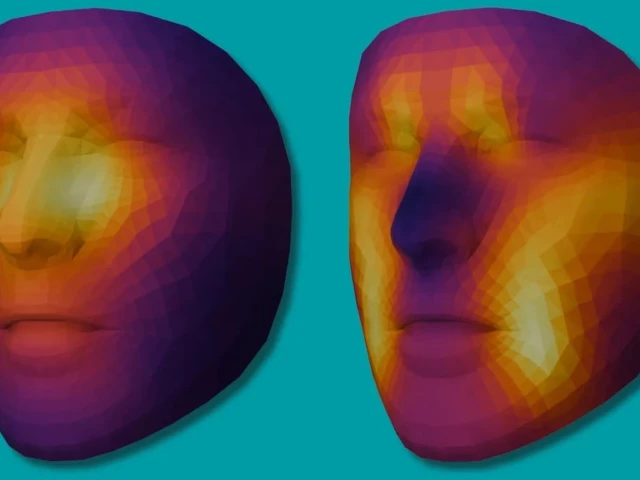
Artificial intelligence “attention maps” for survival (left) and age (right) predictions. Mass General Brigham Cancer Institute
US researchers have developed an artificial intelligence (AI) tool that can predict cancer patients’ survival chances from a single facial photograph, according to a study published on Monday in the journal The Lancet Digital Health.
Developed by researchers at Mass General Brigham in the US state of Massachusetts, the system, called FAHR-Face, analyses facial features to estimate biological age and mortality risk, potentially helping doctors make treatment decisions.
The model was trained on more than 40 million facial photos and adapted into two tools: FAHR-FaceAge, which estimates biological age, and FAHR-FaceSurvival, which predicts cancer patients’ survival directly from facial images without relying on age estimates.
Read: Alibaba open-sources AI model detecting cancer, 150 medical conditions
Researchers found that the survival model focused mainly on areas beneath the eyes and around the nose, while the age-estimation model examined facial features around the mouth and temples, suggesting the two systems identify different health-related patterns.
The survival model was trained on images of 34,363 patients and tested on another 3,820, with results independently validated using data from 4,892 cancer patients in the Netherlands.
Researchers found that patients classified in the highest-risk group had more than three times the mortality risk of those in the lowest-risk group, even after accounting for clinical factors.
Read More: Scientists train AI model to predict future illnesses
Patients whose faces appeared at least five years older than their actual age also had a 21% higher mortality risk, while those appearing at least five years younger had a 17% lower risk.
Combining the two models further improved the accuracy of survival predictions, according to the study.
Researchers said the technology could help doctors assess patients’ health and guide treatment decisions, although further validation is needed before it can be widely used in clinical practice.

