


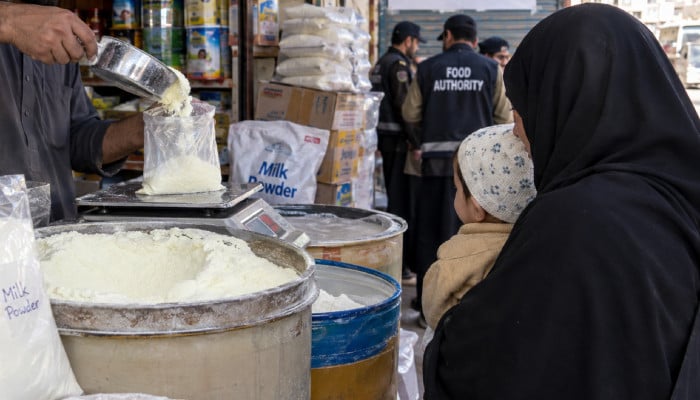
In shops and markets across Quetta, the capital of Balochistan, smuggled powdered milk is sold not only in branded packets but also loose, scooped from open containers and weighed out for customers. Some products are repackaged under different labels, while others carry little information about their origin or registration.
For parents buying milk for their infants, the choice can sometimes come down to little more than price and trust.
“I cannot afford branded milk for my infant son because prices have risen so sharply,” said Abid Abbas, a Quetta resident.
The sale of unregistered infant formula and loose powdered milk has raised concerns about gaps in food-safety enforcement and how effectively products intended for young children are being regulated.
Nutrition experts say infant formula milk requires careful handling, including appropriate storage and regular laboratory testing. Without adequate controls, they warn, contaminated or improperly stored products may pose health risks, particularly to infants.
Muhammad Anwar Kakar, director technical at the Balochistan Food Authority, said infants are especially vulnerable because their bodies are still developing.
“Although substandard food products can also harm adults, the risks are greater for infants because they are at an early stage of development. Their digestive systems and livers are still developing, which makes them more vulnerable if infant milk does not meet the required standards,” he said.
The authorities say they are trying to close some of these gaps. On August 31, Quetta’s district administration imposed a ban on the sale of loose powdered milk, warning that violators could face arrest and have their shops sealed.
Mehrullah Badini, the deputy commissioner of Quetta, said raids had been conducted in different parts of the city. “We conducted raids in different areas of Quetta and confiscated the products wherever they were found. We also imposed penalties on those involved. Last week, we confiscated around 1,500kg of milk in raids conducted over two days, arrested 30 shopkeepers and sealed 30 shops.”
Yet the crackdown points to a problem that goes beyond individual shops.
Naqeeb Nasar, deputy director of the Balochistan Food Authority, said the authority, with the Quetta district administration, had launched enforcement action following special directives from Chief Minister Sarfraz Bugti after reports emerged of powdered milk being sold openly and concerns were raised about its possible risks to infants.
Nasar said the powdered milk is being smuggled into Balochistan not only from Iran but also from other countries. In some cases, he said, its origin, composition and intended use are unclear.
In Quetta, powdered milk reportedly smuggled from Iran is sold openly in markets, sometimes arriving in large sacks rather than sealed and traceable packaging. Officials have also received reports that some imported powdered milk is repackaged locally and sold under different names and labels.
Without laboratory testing and effective regulatory checks, it can be difficult to establish exactly what such products contain or whether they meet the safety and nutritional standards required for human consumption. Previous seizures of powdered milk allegedly smuggled across the border also highlight the difficulty of monitoring products entering the province through formal and informal channels.
The problem is particularly sensitive when such products find their way into infant feeding.
Dr Amir Muhammad Khan Jogezai, a senior paediatrician and former president of the Pakistan Paediatric Association, said there is no substitute for breastfeeding. Mothers, he also said, should breastfeed their babies for two years, in accordance with Islamic teachings.
Where breastfeeding is not possible or sufficient, he said, formula milk may be used, when necessary, but it should meet recognised nutritional and safety standards.
He warned that inappropriate or poorly tolerated milk can contribute to gastrointestinal problems, including diarrhoea, vomiting, indigestion, regurgitation and excessive gas. If these problems interfere with adequate nutrition, he added, they may contribute to malnutrition and leave children more vulnerable to infections. Dr Jogezai said: “An estimated 250,000 to 300,000 children die each year in Pakistan from diseases associated with these conditions.”
For families living on limited incomes, however, medical advice can collide with economic reality. Branded infant products may be beyond the reach of households already struggling with rising living costs, leaving price to play a major role in what parents buy.
Jameela Bibi, whose infant son is fed powdered milk bought from a shop on Masjid Road in Quetta, said her family’s financial circumstances had influenced the decision. Her husband works as a rickshaw driver and, according to her, “Buying expensive [milk] brands is difficult to afford.”
Residents say temporary crackdowns are unlikely to resolve the problem. They want sustained enforcement against sellers of loose and unregistered powdered milk, as well as stronger controls to ensure that products reaching consumers meet basic safety standards.
Dr Jogezai says public awareness also needs to improve, particularly through the media and social media, so parents understand the potential risks of giving infants milk products whose composition and quality cannot be verified.
Ultimately, the issue is not simply what is displayed on shop shelves. It is whether parents can trust the milk they buy for their children — and whether the systems designed to regulate that food can protect families consistently, long after the latest raid is over.
Header and thumbnail image created using an AI tool.

