


JI begins long march towards capital as PTI prepares for Sept 27 protest; govt warns against public disruption
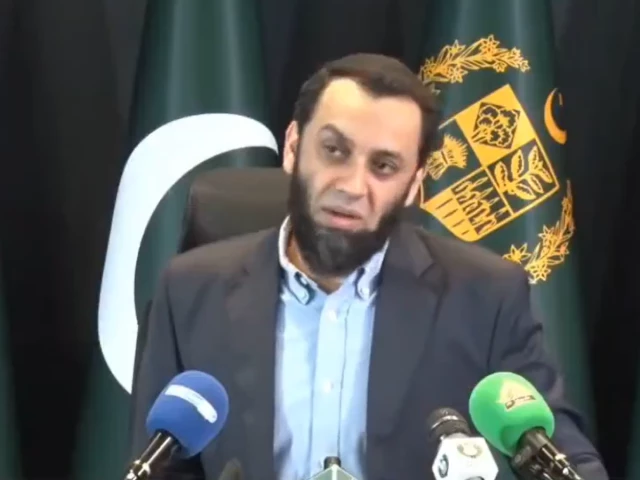
Information Minister Attaullah Tarar speaks to the media in Islamabad. SCREENGRAB
Information Minister Attaullah Tarar on Sunday warned that “no violent group will be allowed to come to Islamabad” as Jamaat-e-Islami (JI) began mobilising supporters for a long march towards the federal capital and Pakistan Tehreek-e-Insaf (PTI) prepared for a separate protest.
Tarar said the government and administration were responsible for maintaining public order and ensuring that no disruption took place during the planned protests.
“There are clear orders of the Islamabad High Court regarding road closures and disruption to the movement of the public,” Tarar told reporters, adding that government roads would remain open and protesters would not be allowed to reach the capital in a manner that disrupted public movement.
اسلام آباد، وزیر اطلاعات عطاء اللہ تارڑ کی وزیراعظم فیول ریلیف سکیم اور مجموعی سیاسی صورتحال پر اہم گفتگو pic.twitter.com/jMbpRKVGii
— PTV News (@PTVNewsOfficial) September 20, 2026
The warning came as JI launched its “Super Long March” towards Islamabad, with supporters travelling from different parts of the country by road and rail.
JI Emir Hafiz Naeemur Rehman said people had begun travelling towards the federal capital according to the party’s strategy, while mobilisation was under way in Punjab and other parts of the country.
“People have started travelling towards Islamabad through different means. Road caravans have also departed, while the process of travelling by train is also beginning,” he said.
Hafiz said marches would begin from Khyber and other areas, while supporters in cities across Punjab were also being mobilised.
He added that the march was not being organised for the party or its leadership but to highlight the difficulties faced by poor and middle-class Pakistanis, whom he said were struggling because of government policies and rising petrol prices.
Read: Government, JI talks end without breakthrough on long march
“This march is not for ourselves or for our party,” Hafiz said, adding that higher petrol prices had made it increasingly difficult for people to afford basic necessities.
The JI emir also alleged that white-collar workers were being pushed into debt and forced to borrow money to meet household expenses.
He alleged that powerful business interests were benefiting from the existing economic system, claiming that the same interests were linked to banks, oil marketing companies, refineries, flour and sugar businesses. “This is a mafia, this is a cartel,” he said, alleging that the groups were exploiting people across Pakistan.
جماعت اسلامی نے “سپر لانگ مارچ” کے شیڈول کا اعلان کردیا۔
کراچی کینٹ اسٹیشن پر جلسہ عام شروع، اس کے بعد ٹرین مارچ امیر جماعت اسلامی حافظ نعیم الرحمان @NaeemRehmanEngr کی زیر قیادت روانہ ہوگا۔
رحمان بابا ایکسپریس دوپہر بارہ بجے کراچی کینٹ اسٹیشن سے روانہ ہوگی۔ ٹرین مارچ کے… pic.twitter.com/0sEN4LfSUx
— Jamaat e Islami Pakistan (@JIPOfficial) September 20, 2026
Hafiz said limiting the campaign to social media would allow the situation to continue. “There is only one way — to come out into the field,” he said, explaining JI’s decision to continue its street mobilisation.
He added that the party had been holding sit-ins across the country for 36 to 37 days, including a 35-day sit-in outside the Governor House in Karachi. He said sit-ins were continuing at other locations and claimed that the movement had spread across Sindh.
JI’s march was centred on its demand for the withdrawal of the petroleum development levy. The party has maintained that its protest campaign will continue until the levy is abolished.
The government and JI held five rounds of talks over the issue, but negotiations ended on Saturday without an agreement. The government delegation had asked the party to defer the march, citing security concerns, while JI maintained that it would continue its protest until the levy was withdrawn.
The party subsequently proceeded with its planned march towards Islamabad. JI launched the march from Karachi on Sunday, with Hafiz leading the train contingent. The march is expected to reach the federal capital later in the week.
Hafiz had previously said JI would not block roads during the march and that the party was travelling to Islamabad to seek relief for the public rather than to confront anyone.
Read more: CM Afridi meets opposition leaders as PTI readies for Sept 27 protest
Meanwhile, the government has introduced the Prime Minister’s Fuel Relief Scheme to provide targeted assistance to people affected by rising international fuel prices.
Tarar said petrol and diesel prices had increased globally amid regional tensions and that Prime Minister Shehbaz Sharif had issued timely directions to provide relief to the public.
He said the prime minister had personally monitored the scheme and that its registration process had been completed with the cooperation of the Ministry of Information Technology.
The government subsequently expanded the eligibility criteria, increasing the age limit for motorcycles, rickshaws and Qingqi rickshaws from 15 to 20 years. Vehicles registered on or after January 1, 2006, were therefore eligible for the scheme, Tarar said.
Registration through SMS had also been made free, while the previous condition limiting beneficiaries to five litres of petrol per token had been removed.
Under the scheme, motorcycle, Qingqi and rickshaw users could receive four tokens a month, with one token available every week. Each token provided Rs500 in fuel relief.
The scheme also covered vehicles with engines of up to 800cc, which were eligible for a Rs100-per-litre discount on up to 10 litres of petrol every 10 days, allowing three tokens a month.
The facility was available at petrol stations across Pakistan, including Azad Jammu and Kashmir and Gilgit-Baltistan, while the Oil and Gas Regulatory Authority (OGRA) had issued instructions for its implementation.
Tarar said all provincial governments had supported the scheme and were cooperating with the federal government in its implementation.
More than 2.2 million people had registered for the relief scheme, with 92 per cent of them being motorcycle, Qingqi and rickshaw users, he said.
More than 557,000 registrations had been recorded in a single day, while around 1.9 million fuel tokens had been issued. Of these, around 1.8 million tokens had been issued to motorcycle, Qingqi and rickshaw users, while 152,000 had been issued to owners of vehicles with engines of up to 800cc.
More than 545,000 tokens had been issued on the previous day alone, according to Tarar.
The government had also removed the ownership condition for motorcycles, Qingqi rickshaws and rickshaws so that people actually using the vehicles could benefit from the scheme.
A smartphone was not required for registration, he added, as the process could be completed through SMS using the relevant vehicle and identification details.
Tarar said the government had established a separate technological system to monitor the scheme in real time. Petrol pumps and oil marketing companies had been brought into the system, while banners and awareness material had been placed at fuel stations to guide beneficiaries.
The Ministry of IT had established a control room and war room for monitoring, with data being collected continuously to track registrations and token redemptions.
Tarar said the system allowed the government to identify where tokens were being used and monitor implementation around the clock.
Complaints about the scheme were being received and addressed, he said, while an awareness campaign and tutorials had also been launched to help people understand the registration and token process.
Representatives from all provinces had participated in meetings of the implementation committee, while the prime minister was being kept informed about the scheme’s implementation.
Tarar said the relevant ministries, including IT, information and petroleum, along with OGRA and the Prime Minister’s Office, were coordinating the implementation.
He added that the scheme had been modified in response to public feedback and was intended to provide relief to the “most deserving” sections of society.
The JI, however, has maintained that the fuel-relief package does not address its central demand for the abolition of the petroleum levy and has continued with its protest campaign.

