


KARACHI – Artificial intelligence continues to reshape how professionals across every sector deliver their work, and the practice of law is no exception. On Wednesday, 2 September 2026, at the Mövenpick Hotel in Karachi, Rabel Akhund of the leading corporate law firm Akhund Forbes brought that evolution to the Pakistani legal sector with the launch of Conclavity, a legal intelligence platform built specifically for the practice of Pakistani law and grounded in Pakistani statute. The launch is understood to be the first of its kind in the country: a commercial legal AI tool developed in Pakistan, by Pakistani lawyers, around the body of law that Pakistani practitioners and businesses actually work with.
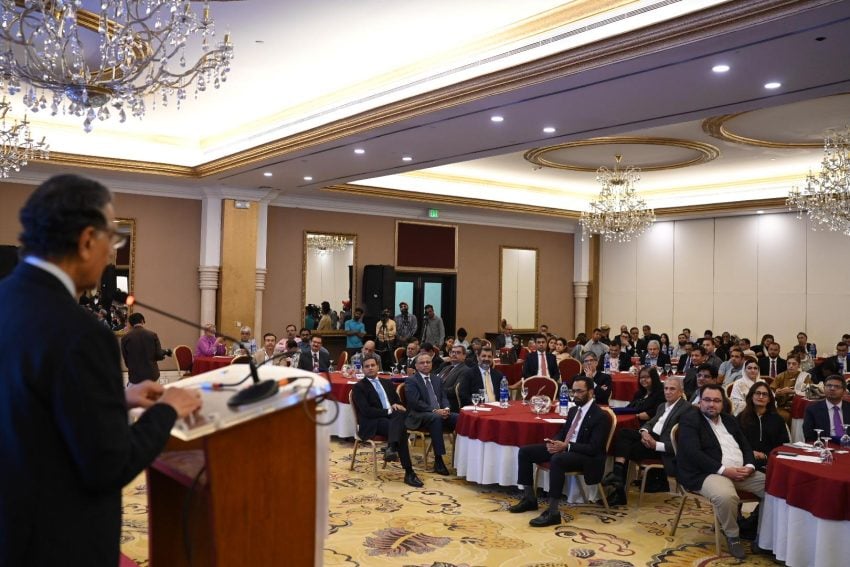
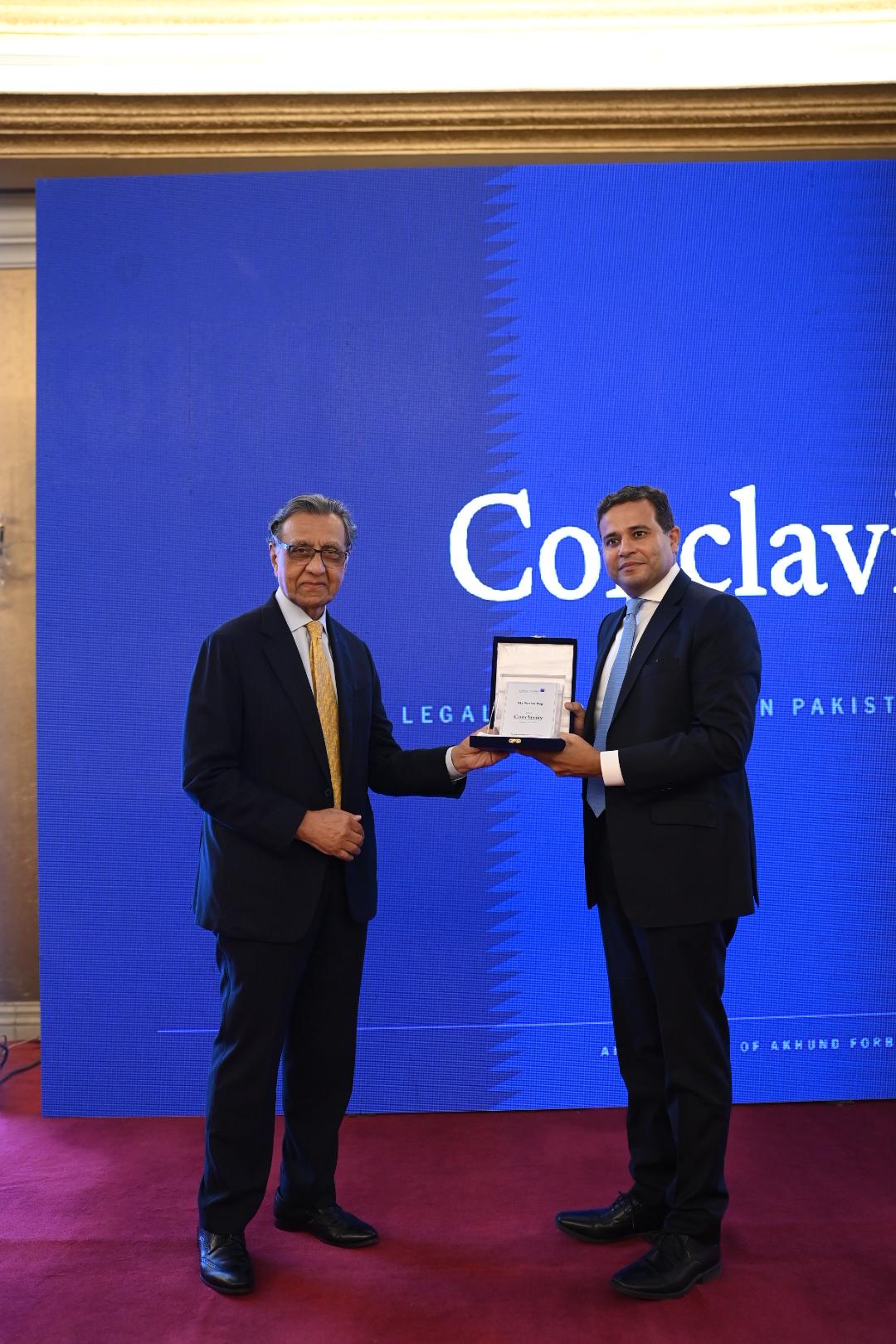
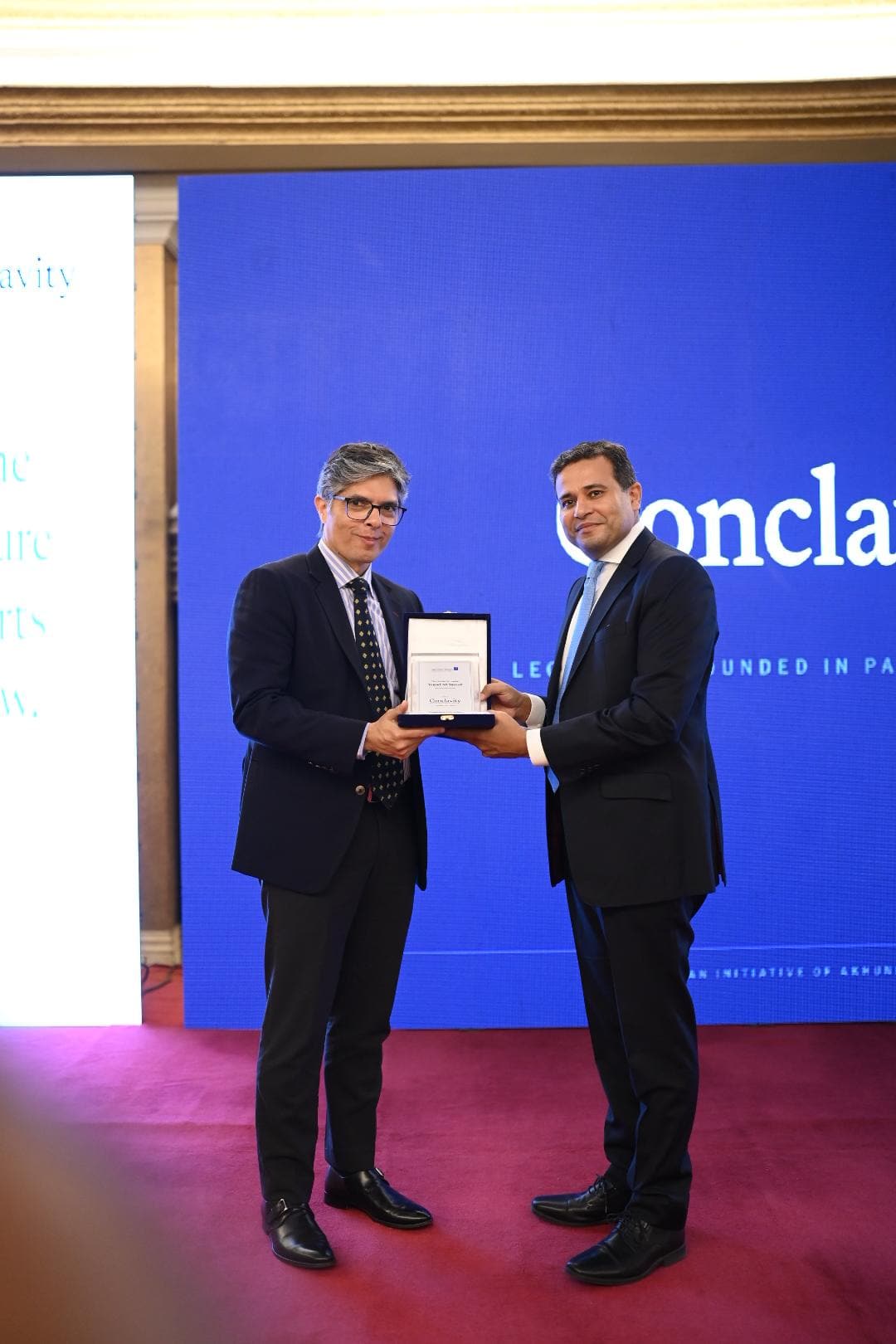
The evening brought together members of the judiciary, in-house counsel, senior figures from banking and industry, and clients of the firm to consider the changing nature of legal practice and the role technology can play in supporting it. Proceedings opened with a keynote address by Mr Justice Yousuf Ali Sayeed of the Sindh High Court, who spoke on the undeniable limitations of AI, eventually highlighting the potential of Conclavity to resolve a long-held ambition for accessible verified legal AI intelligence. This was followed by an introduction to Conclavity by Mr Rabel Akhund, Advocate the Founder of Conclavity and a demonstration of its capabilities, before Mr Nasim Beg of the Arif Habib Group delivered the closing remarks.
The case for a platform of this kind rests on a simple observation. General-purpose AI tools have become remarkably capable, but they are trained on the internet at large, and the law they know best is the law of the jurisdictions most heavily represented there. For a Pakistani lawyer, this creates a familiar set of hazards: answers that borrow from English or American doctrine without saying so, citations to provisions that have since been amended or repealed, and, on occasion, authorities that do not exist at all. In a profession where a misplaced section number can change the advice, these are not minor inconveniences.
Conclavity approaches the problem from the other direction. At its centre is a maintained database of Pakistani legislation, comprising statutes, ordinances, rules and regulations together with their amendments, which allows the platform to work with the law as it stands in force today rather than as it may once have appeared in a training set. Every answer the platform gives can be traced back to the provision on which it rests, so that the lawyer using it is never asked to take a conclusion on trust.
The platform is designed to support the three activities that make up the greater part of everyday legal work: advising, drafting and reviewing. In advisory work, it answers questions on Pakistani law with precise statutory references, allowing a practitioner to move from a client query to the governing provision in moments rather than hours. In drafting, it produces first drafts of agreements, notices, board resolutions and other documents that a lawyer can then refine, shortening the distance between a blank page and a workable draft. In review, it reads contracts and other instruments against the legislation currently in force and flags the points at which a document departs from, or fails to address, what the law requires.
Those who built Conclavity are careful about what it is and what it is not. The platform does not offer legal advice and does not replace the judgment of a qualified lawyer. It is a tool for lawyers and for the businesses that depend on them, intended to take on the research and first-draft burden so that professional attention can be spent where it matters most. Confidentiality has been treated as a design requirement rather than an afterthought, and the platform has been built as a secure environment suitable for the sensitive material that legal teams handle daily.
Following the launch, Conclavity will be made available to an initial group of early adopters, drawn principally from in-house legal teams and corporate clients, over the coming months before a wider release. Feedback from that first cohort will shape the platform’s further development, including the expansion of its corpus beyond legislation.
Conclavity was developed under the leadership of Rabel Z. Akhund, Advocate, Managing Partner of Akhund Forbes. A graduate of University College London and a solicitor of England and Wales, Mr Akhund practised at leading global law firms in London before returning to Pakistan in 2008 to found Akhund Forbes. He has advised on many of the country’s most significant corporate, finance and projects transactions over the past two decades, and it is that experience, of what legal work in Pakistan actually demands, that has informed the design of the platform. Conclavity brings a leading lawyer’s understanding of the realities of modern practice into a product built for those same realities.
Reflecting on the vision behind Conclavity, Mr. Rabel Akhund commented,
“Conclavity was conceived and developed in Pakistan, for Pakistani law. Its ambition is not to replace lawyers but to raise the floor, so that the standard of work once available only to those who could pay for the largest firms becomes the ordinary standard. That, in the end, is what access to justice means in practice.”
He further added,
“Sensible people told us that Pakistan is not ready yet. This is precisely why Conclavity is built the way it is. The product works- It was built here on Pakistani resources by Pakistani lawyers and Pakistani engineers for Pakistani businesses. Conclavity is not a single machine, behind it is a team that works.”
Speaking on the significance of the platform, Mr. Justice Yousuf Ali Sayeed observed,
“For years, lawyers and judges alike have dreamt of having that kind of resource, and today perhaps we are at the crux of having realised that dream. AI can help us realise that ambition.” He further remarked, “AI too has its limitations, for instance, citing a point as fact, when it is not grounded on reality. The approach which Conclavity seems to adopt promises to address this danger by citing only what is verified”
In his remarks, Mr. Nasim Beg added,
“AI has again transformed lives and we have seen that around us. But I think human interaction especially in law will continue and, perhaps in a bigger way, because the mundane part could have been taken out of it and then people can apply their minds.”
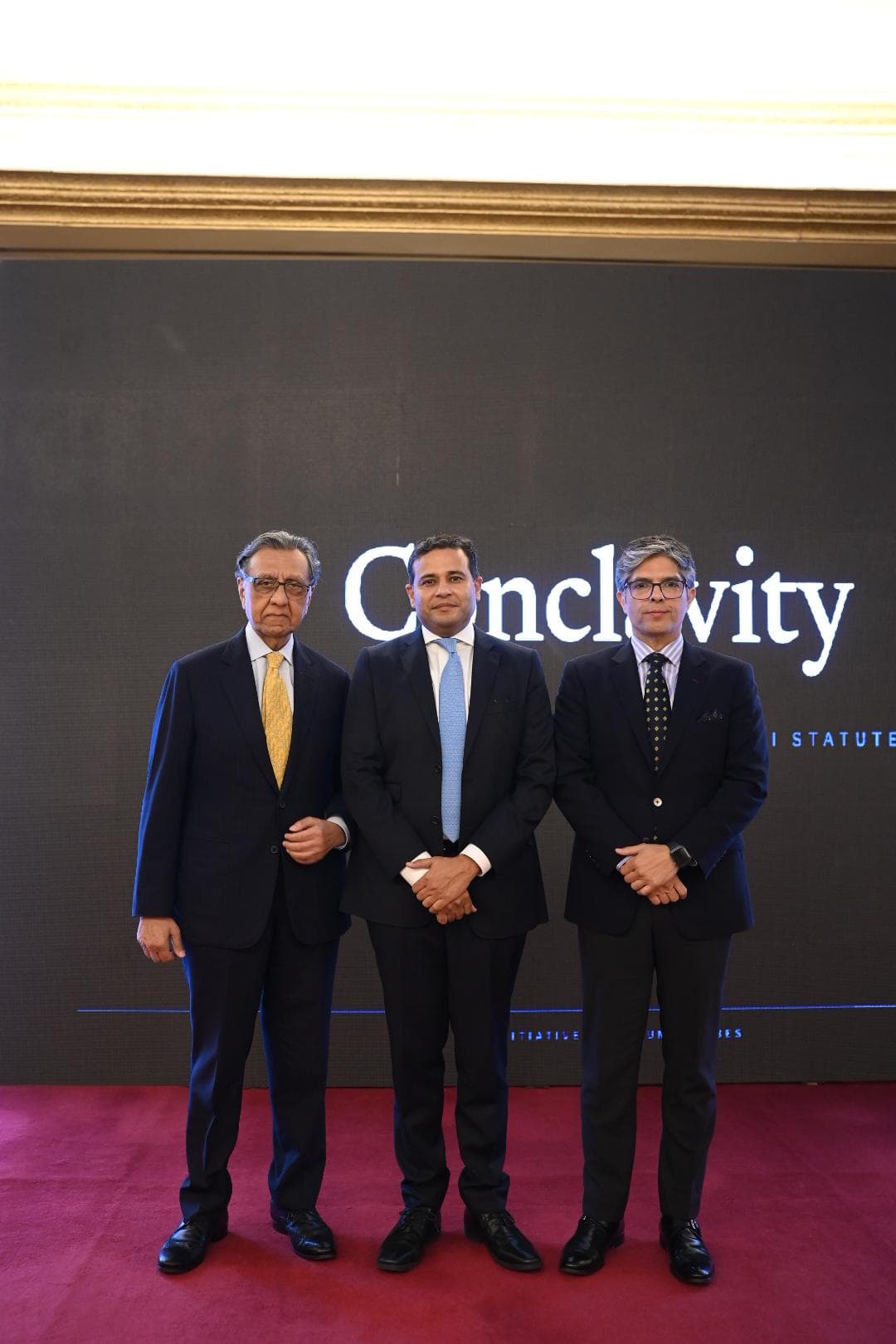
The launch marks the introduction of a legal technology platform developed within one of Pakistan’s most established corporate and commercial law practices. Akhund Forbes is ranked as a top-tier firm by Chambers & Partners and The Legal 500 and has advised financial institutions, corporations and governments on complex transactions, projects and disputes for close to two decades. That the platform has emerged from a practising firm, rather than from a technology company approaching the law from the outside, is central to how it has been built: the people who wrote it are the people who will use it.
With Conclavity, Akhund Forbes is carrying that experience into a new phase of practice, using AI to make legal work faster and more consistent while keeping the law, professional judgment and accountability at its centre. The firm regards the launch not as the end of a project but as the beginning of a longer conversation with the Pakistani legal and business community about how the profession ought to work in the years ahead.
