

Govt to scrap customs duties on cancer medicine raw materials under tariff reforms
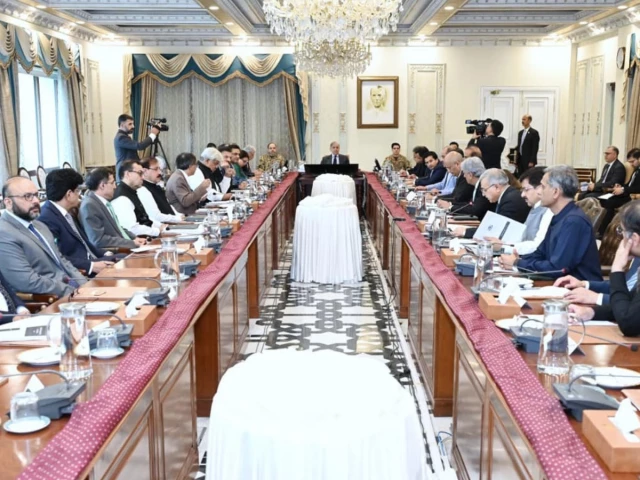
Prime Minister Shehbaz Sharif chairs a meeting on reforms of Federal Bureau of Reserve. PHOTO: PID
Prime Minister Shehbaz Sharif on Thursday directed authorities to launch a pilot project in Islamabad for a proposed automated income tax system, as part of wide-ranging reforms aimed at modernising the Federal Board of Revenue (FBR) and increasing tax compliance.
Chairing a review meeting on FBR reforms, the prime minister was briefed on a comprehensive plan to transform tax administration through digitalisation, automation, and the use of artificial intelligence, with a focus on reducing human involvement and discretionary decision-making.
According to a statement by the Prime Minister’s Office (PMO), the proposed system would utilise data from property records, vehicle registrations, and bank accounts to identify instances of under-reported income and assets. The system is designed to strengthen enforcement by improving data integration across government databases.
The meeting’s members informed that the pilot project for the proposed automated income tax system would be launched in Islamabad, serving as a test case for wider rollout across the country if successful.
Furthermore, artificial intelligence and other technologies would be utilised to further automate and streamline tax administration, with officials describing the plan as a shift towards a “modern, efficient and faceless” tax regime.
Plans under consideration also include the establishment of three new institutional structures: a National Faceless Audit Wing, a National Assessment Wing, and a Field Operations Wing. Officials said the proposed model would separate audit, assessment, and enforcement functions while increasing reliance on automated systems to detect discrepancies and initiate action.
The prime minister said the use of modern technology to develop an automated and efficient tax management system would be a “milestone” in the government’s reform agenda. He added that reducing human intervention and discretionary powers in tax collection was a critical need of the time.
PM Shehbaz hoped that the reforms would not only increase revenues but also promote transparency, fairness, and public trust in the tax system. The prime minister also reaffirmed that efforts to document the economy and expand the tax net would continue as part of the broader FBR reform process.
Officials briefed the meeting’s participants that enforcement actions against the illegal cigarette sector were expected to generate an additional Rs40 billion in tax revenue this year. The prime minister also appreciated provincial governments for their actions against the illegal cigarette trade.
The meeting was attended by Foof Security Minister Rana Tanveer Hussain, Law Minister Azam Nazeer Tarar, Climate Minister Musadik Masood Malik, Planning Minister Ahsan Iqbal, Finance Minister Muhammad Aurangzeb, Information Minister Attaullah Tarar, Information Technology Minister Shaza Fatima Khawaja, Petroleum Minister Ali Pervez Malik, Minister of State for Finance Bilal Azhar Kayani, Attorney General Mansoor Usman Awan, Special Assistant Haroon Akhtar, and senior government officials.
Tariff policy review
The government also announced on Thursday plans to abolish customs duties on raw materials used in the production of medicines, including ingredients used for cancer treatments, as part of broader tariff reforms aimed at supporting export-led economic growth ahead of the upcoming fiscal budget.
The measure was outlined during a meeting chaired by the premier to review implementation of the National Tariff Policy 2025-30, according to a statement issued by the PMO.
Chairing a meeting on economic development and tariff reforms, the prime minister said export-led growth remained the government’s foremost priority. “Achieving export-based development targets is our first priority,” he said, adding that an active and transparent National Tariff Commission was essential for promoting industry, trade, and investment.
اسلام آباد : 4 جون، 2026.
وزیراعظم محمد شہباز شریف نے معیشت کی مجموعی ترقی اور اس حوالے سے نیشنل ٹیرف پالیسی 2025-30 کے نفاذ پر اہم جائزہ اجلاس کی صدارت کی.
اجلاس سے گفتگو کرتے ہوئے وزیرِ اعظم نے کہا برآمدات پر مبنی ترقیاتی اہداف کا حصول ہماری اولین ترجیح ہے. نیشنل ٹیرف کمیشن… pic.twitter.com/R2Bu1emVno
— Prime Minister’s Office (@PakPMO) June 4, 2026
The briefing also outlined plans to gradually reduce tariffs across various key sectors under the National Tariff Policy 2025-30, with the stated objective of promoting exports and improving economic competitiveness.
Read: Budget delayed amid IMF, coalition issues
PM Shehbaz directed the commission to play a more proactive role in facilitating investors and industrialists and to modernise its operations through the adoption of international best practices and emerging technologies, including artificial intelligence and information technology.
According to the briefing, duties on reefer containers and semi-trailers will be abolished to support the development of the logistics sector. The government also plans to reduce customs duties on specialised vehicles and machinery used in the construction sector as part of efforts to encourage growth and investment.
The premier said the National Tariff Commission’s “active and transparent performance” was indispensable for the promotion of industry, trade, and investment, and stressed the need to bring innovation to the institution through the adoption of modern technologies, including artificial intelligence and information technology.

