


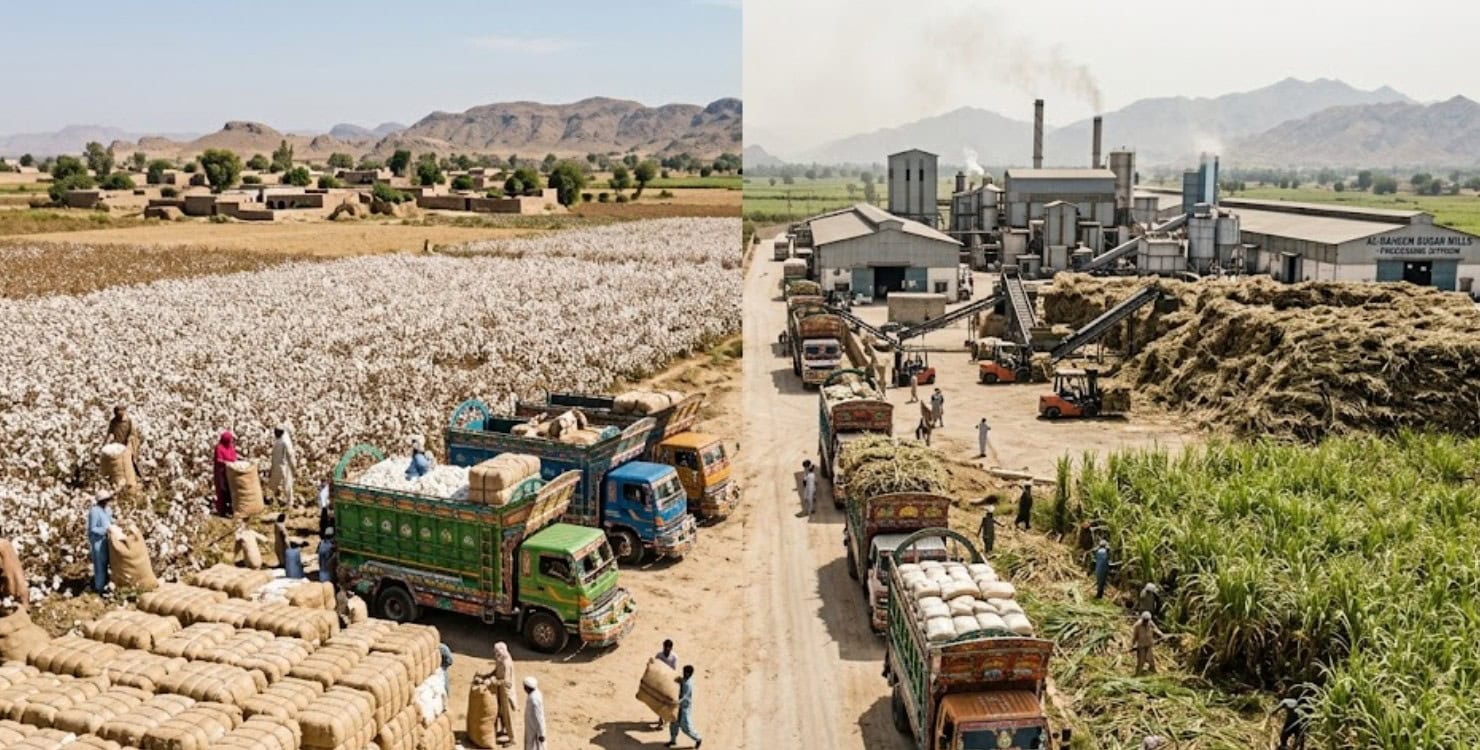
ISLAMABAD – Rahim Yar Khan’s cotton fields, that once stretched across nearly 8Lac acres are slowly shrinking. Where white cotton bolls used to dominate the landscape, sugarcane is now taking over. Farmers said the change did not happen overnight, it’s been driven by the rapid rise of sugar mills in the region.
But the shift is now being linked to a larger concern, changes in the local climate, including increased humidity, which experts believe is making cotton farming even more challenging. This is just one part of a much bigger story unfolding across Pakistan’s agriculture sector.
A report shared in local publication says Pakistan’s cotton industry is caught between ambitious government targets and difficult ground realities. Federal Committee on Agriculture has set a target of 9.64 million bales of cotton for the 2026–27 season. To achieve this, the plan is to cultivate cotton on around 5.33 million acres of land. But not everyone is convinced.
Farmers, ginners, and textile industry stakeholders remain divided on whether these numbers are realistic. Their doubts come from recent experience, last season as Pakistan produced only about 5.6 million bales, far below the 10.2 million bale target. For many, that shortfall wasn’t just a statistic—it was a warning sign.
Over years, cotton cultivation has been shrinking, yields have stopped improving, and the country has increasingly turned to imports to keep its textile mills running. International projections add to the concern. The US Department of Agriculture (USDA) estimates Pakistan may produce around 6.94 million bales in the next season, while domestic consumption could reach as high as 14 million bales.
If that gap holds, Pakistan could be forced to import more than 7 million bales in a single year. And in fact, imports have already started.
Even before the official ginning season picked up pace, textile mills began importing cotton from the United States and Brazil. Reports suggest Pakistani mills recently bought over 206,000 bales from the US alone, nearly equivalent to a full week of US export supply. Analysts now estimate that cotton imports could cross $1 billion this year.
Behind these numbers are farmers who are feeling squeezed from every side. Pakistan Business Forum officials called for removing GST on cotton seeds and oil, saying taxation is increasing production costs and reducing farmer profits at a time when they need support the most.
Industry experts warn that the cotton ginning sector is currently facing an “84% sales tax impact,” which is pushing some businesses toward informal and undocumented trade practices. The textile industry is also under pressure. Rising electricity prices, expensive gas, high borrowing costs, and multiple layers of taxation are all eating into competitiveness.
Industry voices are increasingly worried that if these issues continue, Pakistan will struggle to compete with regional rivals in global markets.
For years, experts say the cotton sector has suffered from weak investment in research and seed development. While the government has finally allowed the import of cotton seeds after decades, the timing has raised concerns. By the time standard procedures were issued, sowing had almost finished, meaning the impact of this decision may only be seen in future seasons, not the current one.
Despite challenges, some regions continue to show resilience. In Cholistan, parts of Sindh, and Balochistan, farmers are still producing quality cotton using local seed varieties. The reason, experts say, is that sugarcane has not expanded as aggressively there. But even in these areas, the bigger issue remains unchanged: lack of proper crop planning and weak enforcement of agricultural zoning laws.

