


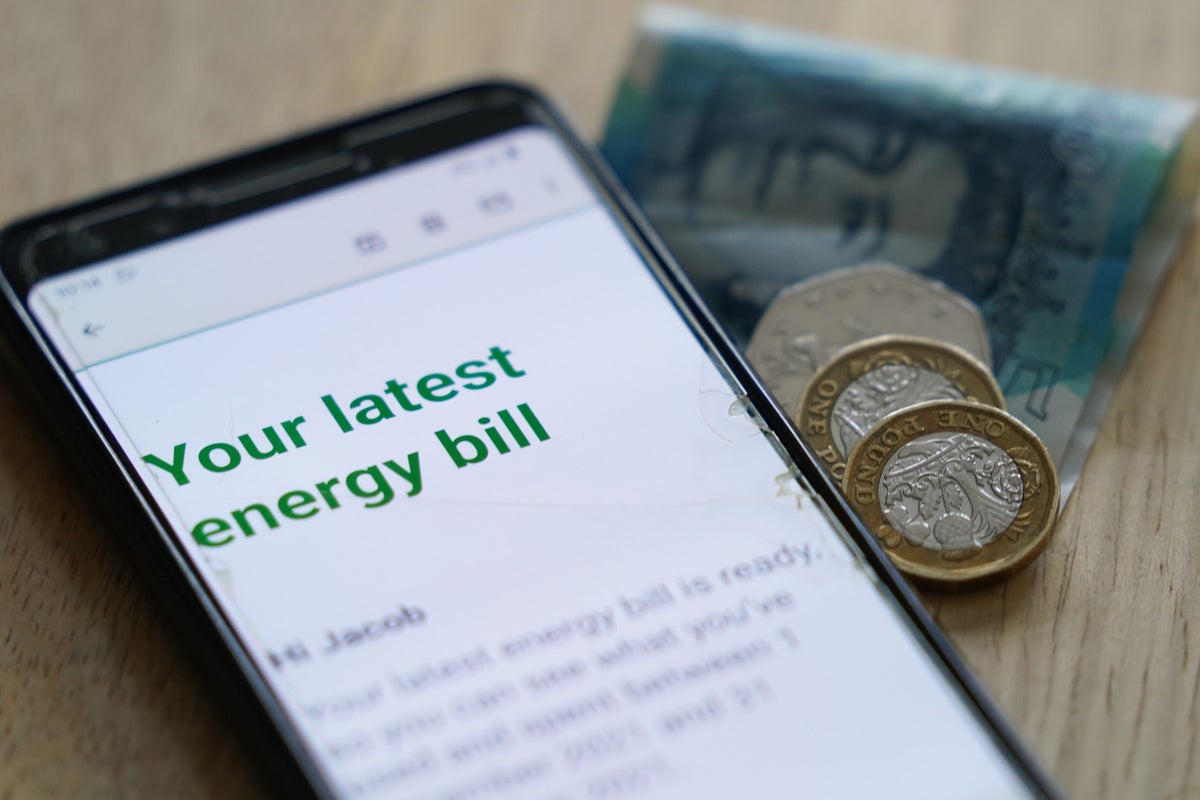
British households have paid an extra £3,400 on energy bills on average since the start of the surge in gas bills in late 2021, new research has shown.
Ahead of another impending spike, the government has been warned that many people are still holding debt that arose through the energy crisis that started five years ago and was exacerbated by Russia’s invasion of Ukraine in 2022.
One expert has said Britons are footing the bill for “back‑to‑back gas crises caused by wars thousands of miles away”, as oil prices now continue to surge due to the US conflict with Iran.
Analysis from the Energy and Climate Intelligence Unit (ECIU) showed that dual-fuel energy costs for a typical household will likely be £4,800 higher by autumn 2026 across five years – 87 per cent higher since the start of the gas crisis in 2021. It’s still possible this winter could see the figure rise even higher, the report added.
The ECIU research puts gas bills £2,600 higher – more than double the pre-Ukraine war rate – than in the five years before the crisis started. Electricity bills, meanwhile, are over £2,200 higher (almost 75 per cent up).
Households have not had to pay out that full amount, with government taxpayer-funded support schemes in 2022 and 2023 paying approximately £1,400 of that total – but it still leaves a typical household paying an extra £3,400 directly on energy bills, says the non-profit organisation.
Much of the extra total cost comes directly from the price of wholesale gas, with that VAT on prices accounting for about three-quarters, or £3,600, of the additional costs over the five-year period.
Jess Ralston, ECIU energy analyst, said: “Households are being hit by back‑to‑back gas crises caused by wars thousands of miles away. Many families are still carrying debt from the last spike and have little resilience left to absorb further increases, with higher bills expected from July.”

Get a free fractional share worth up to £100.
Capital at risk.
Terms and conditions apply.
ADVERTISEMENT
Get a free fractional share worth up to £100.
Capital at risk.
Terms and conditions apply.
ADVERTISEMENT
It is still not certain exactly how hard households will be hit by higher energy prices in the coming months, with Ofgem set to announce on 27 May what the price cap will be for the three months covering 1 July to 30 September 2026.
Figures last week showed UK inflation ticked up to 3.3 per cent in March, but more pain is expected to come as the higher oil prices feed through across not just energy but manufacturing and production, groceries and transport costs.
“This is just the start. The impact on household gas and electricity bills won’t be felt until July, once the Ofgem price cap has been set, and a rising tide of goods and services costs is now on its way. Producer input prices rose a huge 4.4 per cent in one month, suggesting that a combination of significant margin squeeze for companies or further pain for consumers in the coming months,” said Rob Morgan, chief investment analyst at Charles Stanley Direct.
While some have been calling for more domestic drilling to push North Sea oil further into the mix, to be less reliant on overseas prices, other experts have rejected the approach as backwards-looking and not likely to remove the longer-term threat of protecting UK energy bills from macroeconomic events.
“The UK has made major progress in reaching for net zero emissions, getting off oil and gas and rolling out renewables, which are now already lowering wholesale electricity prices, helping to stabilise bills by replacing gas power stations,” Ms Ralston said.
“They also strengthen the UK’s energy security by cutting the amount of gas the UK has to import, particularly as the North Sea continues its ongoing decline. Around 90 per cent of North Sea oil and gas has already been extracted, a decline that cannot be reversed even with new drilling, according to the industry’s own most ambitious estimates.
“But unless the UK speeds up the deployment of electric heat pumps, the UK will be left ever more dependent on foreign gas to heat its homes. With history suggesting that another oil and gas crisis is almost inevitable, more drilling won’t have any significant effect on the price households pay for gas, which are driven by international markets and events like wars.”
Meanwhile, the Institute for Public Policy Research said that energy giants running the electricity network stand to make £5bn in excess profits for the five years from 2021 to 2026. They have suggested a redistribution which could be worth up to £183 per household in rebates on energy bills. Industry insiders responded to the report, calling it “fundamentally misleading”.

