


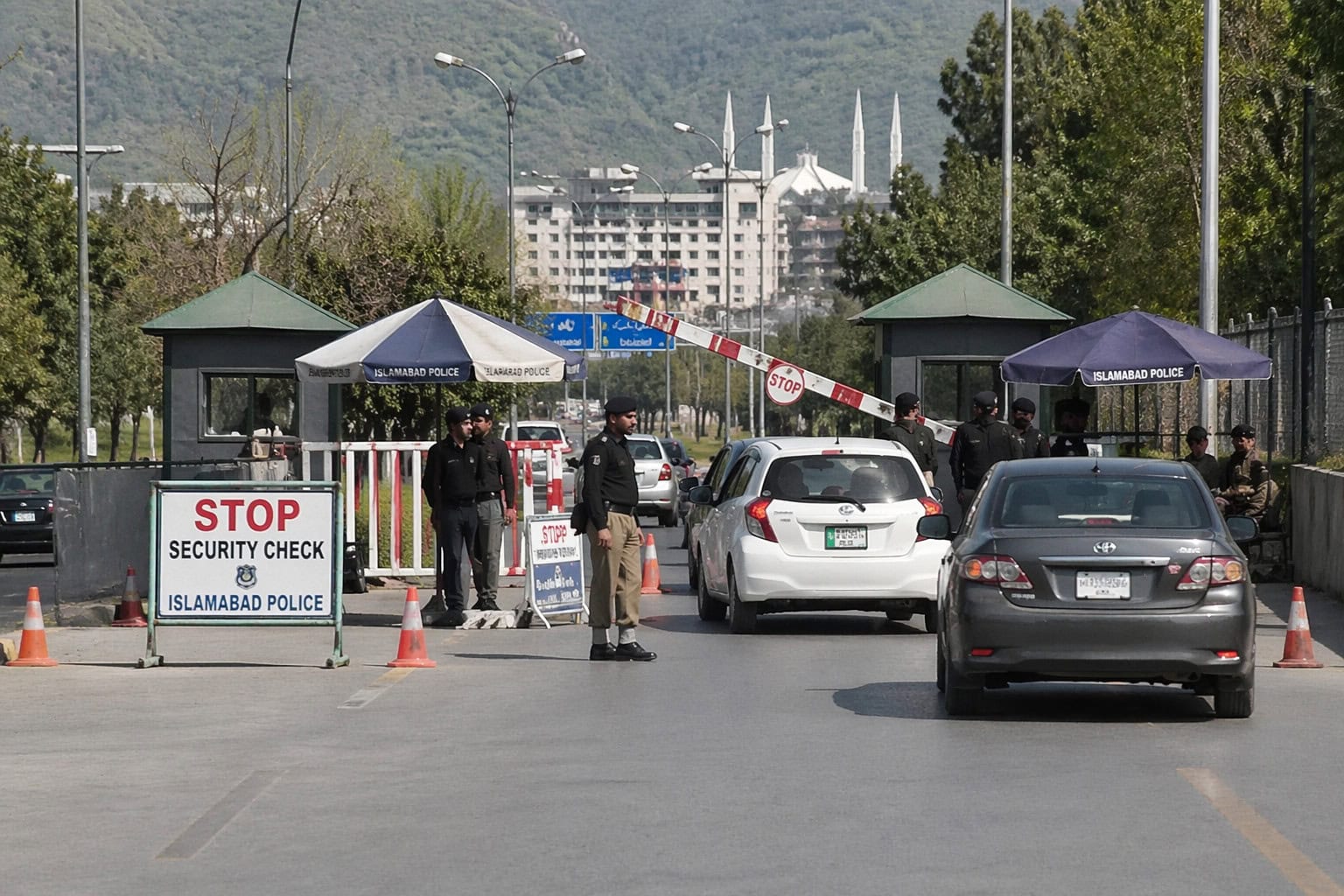
Islamabad has long been regarded as a model capital, planned, organised, and relatively efficient. Yet, in recent years, the experience of moving through the city has become increasingly defined by delays, checkpoints, and uncertainty. What was once a symbol of order now risks becoming a case study in how security, if not carefully managed, can begin to undermine the very ease of life it seeks to protect.
Across Islamabad and Rawalpindi, permanent police posts at entry points and frequent checkpoints within the city have become a daily reality. For many residents, commuting is no longer a straightforward task but a series of stops and starts. Vehicles are routinely halted, often multiple times within short distances, leading to long queues and extended delays. The intention to ensure public safety is valid. However, the execution raises important questions about efficiency and proportionality.
The costs of this system are not insignificant. Hours are lost in traffic, productivity is affected, and fuel is wasted as vehicles idle in long lines. At a time when energy costs are rising and environmental concerns are mounting, such inefficiencies carry both economic and ecological consequences.
Beyond these measurable impacts lies a more immediate, human concern. Not every vehicle is air-conditioned, and in the intense summer heat, children, elderly passengers, and women often endure physically taxing conditions. What should be routine travel becomes a source of discomfort and stress.
The disruption intensifies during special circumstances. Whether it is political protests, long marches, peace talks, or religious gatherings, the twin cities frequently come to a near standstill. Roads are blocked, containers are deployed, and security checks are further tightened. For residents, this translates into missed appointments, delayed workdays, school disruptions, and, in some cases, difficulty accessing emergency services. While such measures may be deemed necessary for maintaining order, their recurring nature places a disproportionate burden on ordinary citizens.
This situation points to a broader issue: the continued reliance on manual, repetitive checking as the primary tool of urban security management. Globally, cities facing similar challenges have moved toward more sophisticated, technology-driven systems. Automated number plate recognition (ANPR), digital vehicle tagging, integrated surveillance networks, and data-informed risk profiling allow for targeted interventions rather than blanket restrictions. These approaches not only enhance security but also minimise disruption to daily life.
The question, therefore, is not whether security measures are needed; they undoubtedly are. Rather, it is whether the current methods are the most effective and sustainable. A system that causes widespread inconvenience, fuels public frustration, and strains resources may ultimately weaken the trust it is meant to build.
Islamabad stands at a point where a shift in approach is both necessary and possible. By investing in smarter technologies, improving traffic management at key entry points, and adopting more targeted enforcement strategies, authorities can strike a better balance between vigilance and accessibility.
A capital city should function smoothly, even under pressure. Security and mobility are not mutually exclusive; with thoughtful planning and modern tools, they can reinforce one another. For Islamabad to retain its character as a livable and efficient city, it is time to move beyond checkpoint-heavy solutions and toward a more intelligent, citizen-centred model of security.

