


- Visit runs April 15–18 amid push for Middle East peace.
- Saudi, Qatar visits to focus on ties, peace and security.
- PM to attend Antalya Diplomacy Forum in Turkiye.
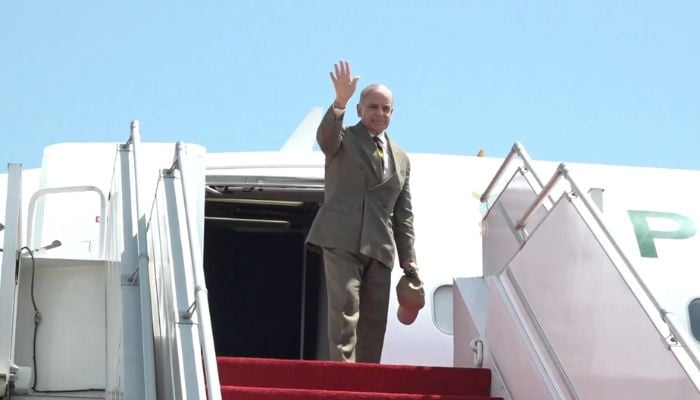
Prime Minister Shehbaz Sharif on Wednesday departed for Saudi Arabia as part of his three-nation visit from April 15 to 18, the Foreign Office said, as Pakistan steps up diplomatic efforts to promote peace in the Middle East.
The prime minister will also travel to Qatar and Turkiye following his visit to the Kingdom, the FO said. It added that the visits to Saudi Arabia and Qatar will take place in a bilateral context, where the prime minister will meet the respective leadership to discuss ongoing cooperation as well as regional peace and security.
During his visit to Turkiye, the prime minister will participate in the Antalya Diplomacy Forum, where he is scheduled to join the Leaders’ Panel alongside other global figures and present Pakistan’s perspective.
The visit follows as Pakistan has taken centre stage as host of high-stakes US-Iran talks in Islamabad, drawing global attention amid rising regional tensions.
On the sidelines of the forum, PM Shehbaz is expected to hold bilateral meetings, including with Turkish President Recep Tayyip Erdogan and other key world leaders, according to the FO.
“Pakistan’s participation in the forum reflects its commitment to constructive diplomacy, multilateral cooperation, and active engagement on global issues,” the FO added.
The prime minister is accompanied by Deputy Prime Minister and Foreign Minister Ishaq Dar, Information Minister Attaullah Tarar, Special Assistant Syed Tariq Fatemi, and other senior officials.
The much-anticipated US-Iran talks in Islamabad, which ran from Saturday into early Sunday and were the first direct engagements between the two countries meeting in more than a decade and the highest-level discussions since Iran’s 1979 Islamic Revolution.
The talks came just days after a ceasefire took effect on Tuesday, aimed at ending six weeks of fighting that has killed thousands across the Gulf, disrupted critical energy supplies and fuelled fears of a wider regional conflict.
Despite 21 hours of intense discussions, the two sides failed to reach a formal agreement. In the aftermath, the US military announced plans to impose a blockade on all maritime traffic entering and leaving Iranian ports and coastal areas, putting the fragile two-week ceasefire at risk.
A second round of talks is expected to be held in Islamabad before the ceasefire ends, with Trump saying it could take place within the next few days.

