


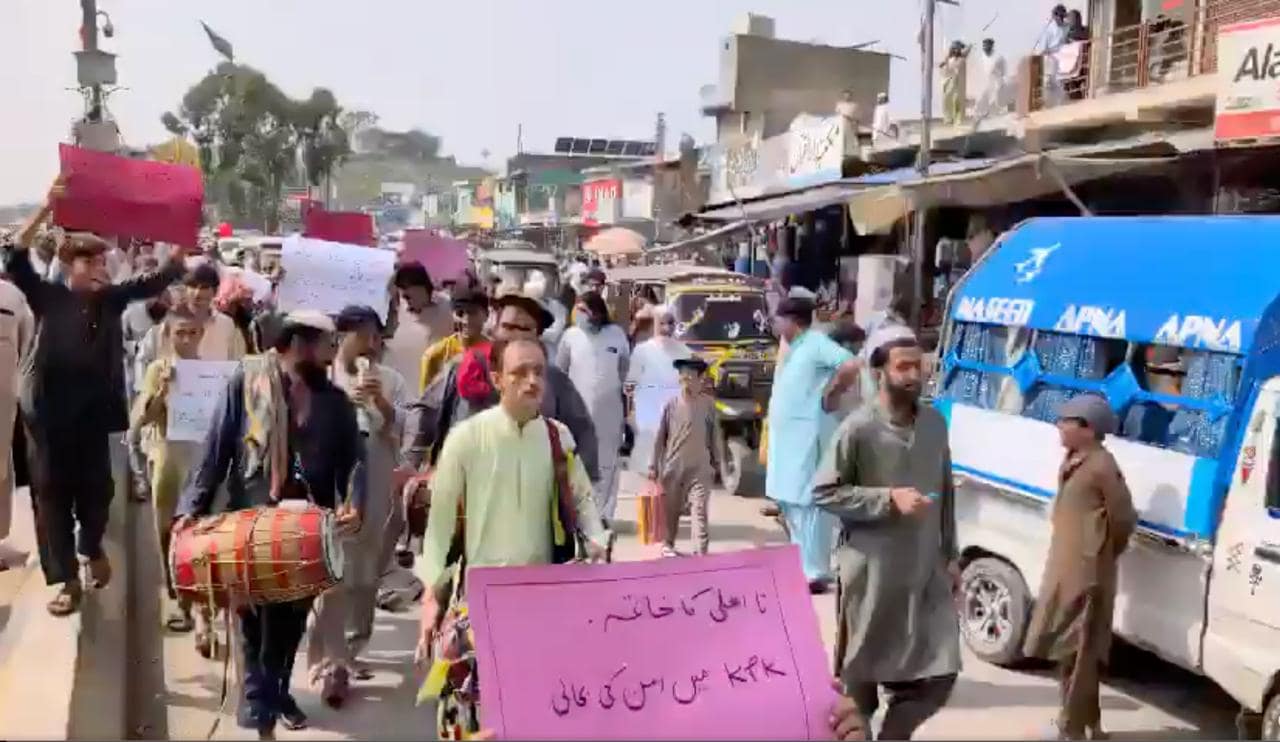
I don’t live in Khyber Pakhtunkhwa, but my friends do, and I spent today watching videos from their province and following what’s coming out of it. Whatever else you think of the emergency declared today, many people there clearly see it as a relief. After looking at the numbers, I think the federal government was right to act.
President Zardari signed the order today under Articles 232 and 234 of the Constitution, citing a sharp rise in terrorist incidents and attacks on government installations, infrastructure and law enforcement. The cabinet that recommended it said the provincial government had deliberately disengaged from the fight against terrorism. The numbers show why the Constitution has a remedy for exactly this situation.
The data behind the decision
The Centre for Research and Security Studies recorded 1,415 violence-linked deaths nationwide in the third quarter of 2026, an 83 percent jump. KP’s own toll rose from 475 to 556 in that quarter. Security forces have lost more than 1,000 personnel so far this year, making the first nine months of 2026 the deadliest such period on record. PICSS counted 1,232 militant attacks across Pakistan in those nine months, with 3,629 deaths, including 591 security personnel, 550 civilians and 60 peace committee members.
Inside mainland KP the trend is worse. In July, deaths doubled from 75 in June to 154, and security personnel deaths rose from 12 to 38. In September, deaths from militant attacks more than doubled again, from 44 to 90, and injuries climbed from 70 to 165. That month also saw three suicide attacks nationwide, which killed 45 people and wounded 138. Every one of those figures is a family that was told the situation was under control when it was not.
A government’s first job is to keep people alive. Instead of putting every resource into policing and security planning, the province’s leadership spent its energy on confrontation with the centre. The long march toward Islamabad began on October 4. The Chief Minister warned that if governor’s rule or an emergency came, he would call people out toward Peshawar. A province facing an insurgency cannot afford leaders busy organising street politics. A police officer at a checkpoint in Hangu or Bannu cannot wait for a political settlement before he gets backup.
Why people are celebrating today
In the videos I have seen from across the province, the mood is hard to miss. People are out in the streets, some are distributing sweets, and others are chanting and hugging. Many of the people on camera are calling today a day of deliverance, Youm-e-Nijat. To them, the end of provincial rule over security is a release from years of fear.
I understand why. They have watched funerals become routine. They are tired of governance by press conference and of being told that terrorism is everyone’s problem except the government’s. They hope a governor with federal resources behind him will fill police posts, deliver armoured vehicles to the southern districts and coordinate properly with the military. For them, this is the first sign in years that someone has taken responsibility for their safety.
The Constitution is on the side of this decision
This is not a coup, and it is not improvised. Article 232 allows an emergency when an internal disturbance is beyond a provincial government’s power to control. That is the situation the province is in. Governor Faisal Karim Kundi had said openly that an emergency could be imposed if necessary to save the province. The measure also comes with safeguards. Article 232 gives no power to the High Court, and Parliament must approve the proclamation.
What must happen now?
I back this step, and I want to see it delivered. Vacant police posts must be filled. Equipment must reach the districts that need it most. Intelligence work must be tightened, and there must be a real plan for the families living in conflict zones. Civil rights must be respected, and power must go back to elected representatives on the constitutional timeline. If those things happen, this emergency will be remembered as the moment the province was finally defended.
The people of Khyber Pakhtunkhwa have waited long enough. A government that cannot protect them has no claim on their patience, and a federal government that steps in to protect them is doing its duty.

