


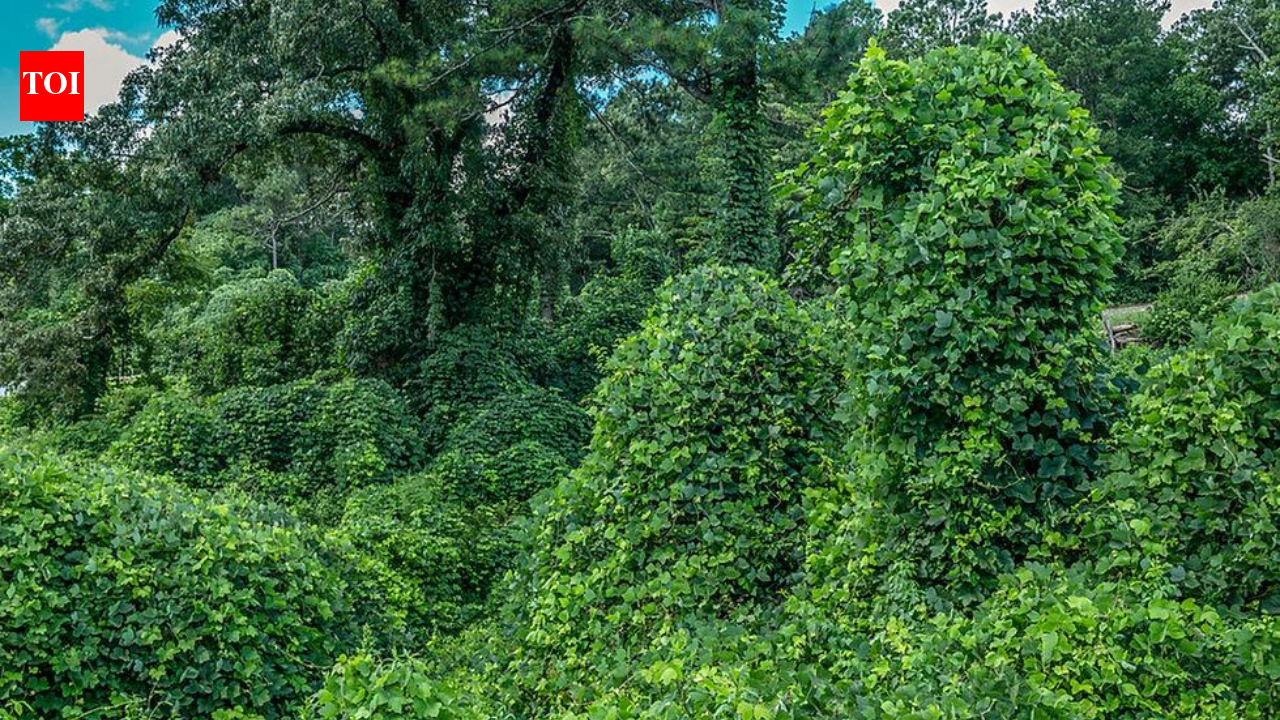
Invasive plants are creating problems across Texas forest ecosystems by competing with native vegetation, altering ecosystems and reducing forest productivity. To help tackle the issue, the Texas A&M Forest Service has launched the Texas Invasive Plant Solutions (TIPS) Cost-Share Program, which reimburses 75% of eligible costs for treating or removing invasive plants, up to $7,000 per landowner. The programme has $140,000 in total funding and is open to landowners, organisations and municipalities across Texas. Applications are being accepted until the available funding is exhausted, while all approved treatment or removal work must be completed before June 1, 2027, to qualify for reimbursement.
Why invasive plants are a problem in Texas forests
Texas A&M Forest Service defines invasive plants as non-native plants that negatively affect the economy, environment or human health. In forest ecosystems, these species can spread rapidly and compete with native plants for resources.The Texas A&M Natural Resources Institute says invasive plants can become particularly abundant because they may lack the natural competitors, predators and diseases that normally keep their populations under control in their native environments. Their spread can consequently affect forest health and productivity.Lindsey Stone, a regional forest health coordinator with Texas A&M Forest Service, said invasive plants can receive less attention than invasive insects and diseases, even though they can cause significant problems in forests.The agency says controlling these plants can improve the health and productivity of forest ecosystems, but treatment can be expensive and labour-intensive. The new cost-share programme is intended to help reduce some of those costs for eligible applicants.
Programme will cover 75% of eligible costs
Under the TIPS Cost-Share Program, eligible applicants can receive reimbursement for 75% of treatment or removal costs, up to $7,000 per landowner or application.The programme has $140,000 in total funding. Applications opened on September 1, 2026, and will continue to be accepted until the available funds are exhausted.However, the programme does not cover every expense. Personal labour is not eligible for reimbursement, and the cost of an individual item must be less than $5,000. Applicants must also provide paid treatment or removal invoices showing a zero balance and the required tax verification documents before receiving reimbursement.
Which plants can qualify
Texas A&M lists a range of invasive plants that may be eligible for treatment under the programme. They include Chinese tallow, Chinese, glossy and Japanese privet, kudzu, Japanese honeysuckle, Japanese climbing fern, Callery pear, chinaberry, Chinese wisteria, tree-of-heaven, salt cedar, Asian bamboo and Brazilian pepper tree.Other species listed by the agency include heavenly or sacred bamboo, King Ranch bluestem, Johnsongrass, McCartney rose, paper mulberry, Russian olive, Siberian elm and silk or mimosa tree.The agency stresses that the list is not exhaustive. A species appearing on the list does not automatically make every infestation eligible because the programme applies specifically to invasive plants in forest ecosystems.
Mechanical removal, herbicides and prescribed fire
The programme supports several approaches to controlling invasive plants. Mechanical control can involve hand-pulling, mowing, cutting, mulching or the use of heavy machinery. According to Texas A&M, mechanical methods can be particularly useful for smaller infestations.Chemical control involves using herbicides and can be effective for larger infestations. Prescribed burning can also be used in fire-adapted ecosystems to reduce certain invasive plant populations and encourage native vegetation. In some situations, combining multiple treatment methods may be the most effective approach.One example is the “cut stump” method. Under this approach, woody invasive plants are cut at ground level and herbicide is promptly applied to the remaining stump. Texas A&M identifies salt cedar and Chinese privet among the species for which this approach can be used.
Landowners must get approval before treatment
Applicants cannot simply remove the plants and then apply for reimbursement. The treatment plan must first be assessed by a Texas A&M Forest Service forester or woodland ecologist.Applicants begin by identifying eligible invasive plant work and contacting their local agency forester or woodland ecologist. They can either carry out the approved work themselves or use an approved contractor, although their own labour cannot be reimbursed.Once the treatment plan has been approved and the application accepted, the work can begin. After completion, the same local forester or woodland ecologist conducts a post-treatment site visit to verify that the approved work was successfully completed.Applicants then submit the required treatment evaluation and paid invoice before receiving the cost-share reimbursement.
Prescribed burns have additional requirements
Landowners choosing prescribed burning must follow additional requirements. Contractors and non-agency consulting foresters or burners must have the appropriate professional credentials.Texas A&M Forest Service must also be notified at least 24 hours before a scheduled prescribed burn and again when the burn is complete.All approved invasive plant treatment and removal work under the programme must be completed before June 1, 2027. Funding will continue to be awarded until the programme’s available money has been exhausted.
How to apply for the Texas programme
The first step for interested landowners is to contact the Texas A&M Forest Service forester or woodland ecologist serving their county. That official will assess the proposed work and help develop or approve the treatment plan.Applicants then submit the TIPS application and a state W-9 form. After receiving approval, they can complete the treatment according to the approved plan. A follow-up site evaluation is required before the reimbursement process can be completed.The programme is intended to give Texas landowners financial assistance while addressing invasive plants that can compete with native vegetation and affect forest ecosystems. With $140,000 available and reimbursements covering up to 75% of eligible costs, the initiative provides funding for approved invasive plant management work through June 1, 2027, or until the programme’s funds run out.

