


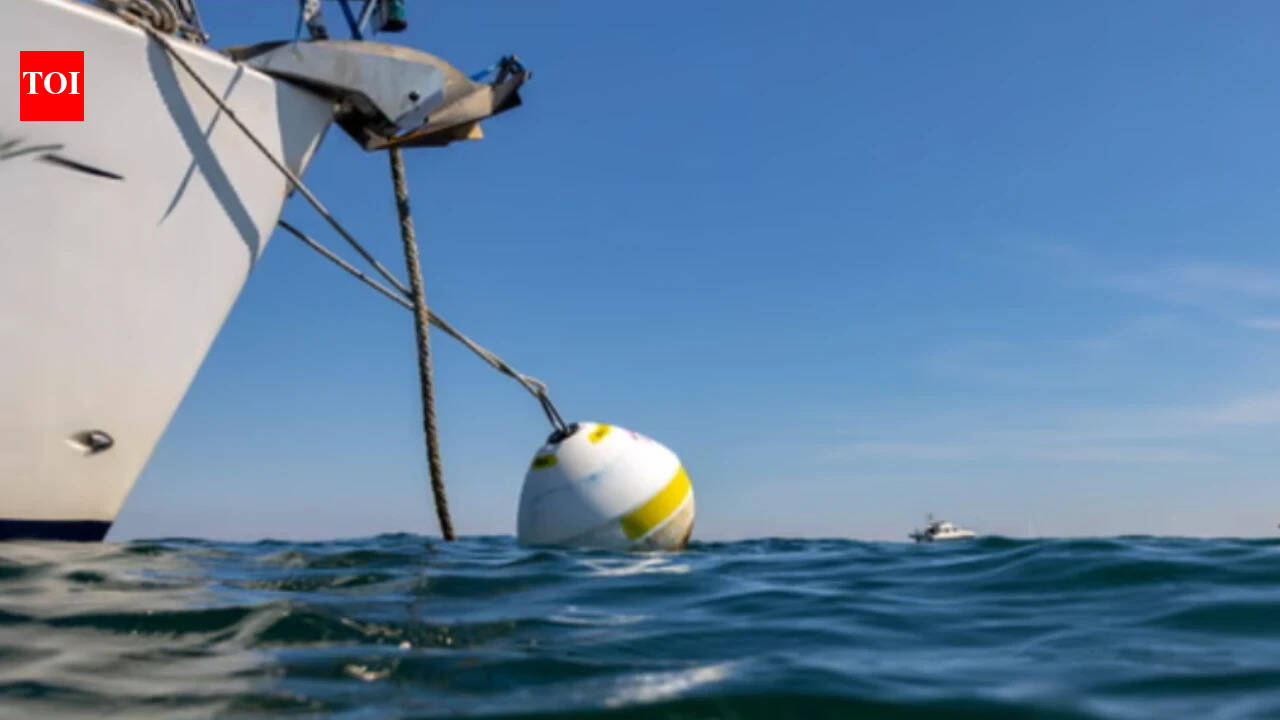
At England’s Studland Bay, damage to seagrass caused by traditional boat anchors has fallen sharply after eco-moorings were introduced, with scars in one trial area shrinking by 94% between 2021 and 2025. Researchers say the recovery is also creating better conditions for marine life, including seahorses.The findings come from research by Kira Dunn, carried out as part of her master’s degree at the University of Southampton, The Guardian reported. Dunn analysed monitoring data collected after the Studland Bay Marine Partnership installed eco-moorings in 2021 to reduce physical disturbance to the seabed.The study focused on areas of seagrass affected by boat moorings. In the area where 10 trial eco-moorings were installed, bare patches in the seagrass shrank by an average of 94% over five years. In another study area, traditional chain moorings remained until 2023, and the scars there reduced by 65%.Studland Bay contains one of the UK’s largest seagrass meadows. The area was designated a marine conservation zone in 2019 and provides habitat for several marine species, including the protected spiny seahorse and the occasionally recorded short-snouted seahorse.
How eco-moorings protect seagrass
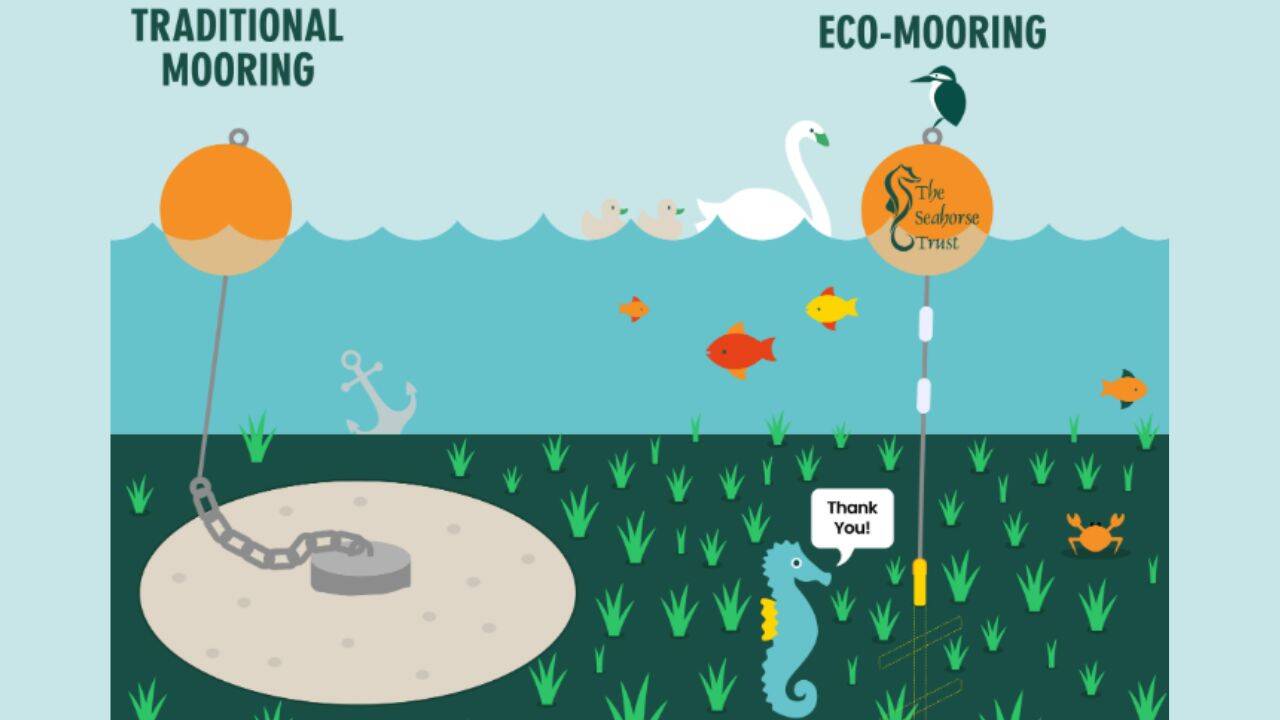
Traditional boat moorings can disturb the seabed as chains move with the tide. This movement can create bare patches or scars in seagrass meadows.The eco-moorings used at Studland Bay are designed to avoid that movement across the seabed. Each system has a 2-metre helical screw drilled securely into the seabed. A 2-metre elasticated riser then connects the screw to a surface buoy.As the tide rises and falls, the riser stretches and retracts. This prevents the mooring equipment from repeatedly scouring the seabed and damaging the seagrass around it.The change has allowed areas that had been physically disturbed to recover. Dunn said the results showed that the seagrass was recovering after the disturbance was removed.“The results clearly show that seagrass is recovering in areas where physical disturbance has been removed. It’s incredibly encouraging to see how quickly this important habitat can regenerate when given the opportunity,” Dunn said.
Seahorses and other marine life return
The recovering seagrass is also being linked with more sightings of marine animals. Volunteer divers who monitor seahorses at Studland Bay have reported increases in their numbers since the eco-moorings were introduced.The meadow provides habitat for the protected spiny seahorse. The short-snouted seahorse has also been recorded there, although it is seen less often.
The recovering seagrass is also being linked with more sightings of marine animals. (Photo: The seahorse trust)
Other creatures found among the seagrass include conger eels, spider crabs and corkwing wrasse. The presence of these animals shows the wider role of the meadow as an underwater habitat.Seagrass meadows are considered valuable ecosystems because they provide shelter and habitat for marine species. They also store carbon and help protect coastlines from erosion.However, seagrass meadows are declining globally. Pollution, coastal development and the climate emergency are among the pressures affecting them. At Studland Bay, the popularity of the area with leisure boaters has added pressure to the seagrass.
Five years of monitoring
The results are based on monitoring carried out after the Studland Bay Marine Partnership introduced the eco-moorings. The partnership includes conservation groups and boating enthusiasts, among other organisations.The comparison between the two study areas provided a way to examine how the seabed changed after physical disturbance from traditional moorings was reduced.In the first area, where 10 eco-moorings were installed in 2021, bare patches decreased by 94% by 2025. In the second area, traditional chain moorings remained until 2023, and the scars later reduced by 65%.The findings suggest that reducing physical disturbance can allow damaged seagrass areas to recover. The research also gives the partnership evidence to assess whether the same type of mooring could be useful in other areas where boats operate close to sensitive seagrass habitats.David Brown, chair of the Studland Bay Marine Partnership steering group and lead ecologist for the National Trust, said the results had gone beyond expectations. “The impact has been beyond our expectations, and thanks to robust monitoring and research, we have the science to prove how the eco-moorings benefit seagrass and all the species that rely on it,” Brown said as quoted by The Guardian.
Wider use for eco-moorings
Ken Collins, emeritus research fellow and diving officer at the University of Southampton and supervisor of the study, said the research provided scientific evidence for using eco-moorings to protect seagrass.“This research provides robust scientific evidence that eco-moorings are an effective tool for seagrass conservation and restoration,” Collins said.He added that the findings supported the continued use and expansion of eco-mooring schemes in Studland and other sensitive marine environments where seagrass habitats are under pressure.

