


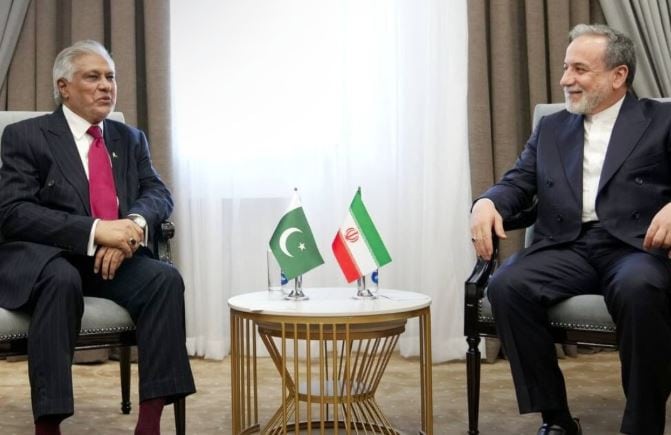
ISLAMABAD – Pakistan raised concerns over growing disruption to key energy and shipping routes as regional tensions continue to choke traffic through the Strait of Hormuz, with Deputy Prime Minister and Foreign Minister Ishaq Dar having word for uninterrupted energy supplies and the safe movement of commercial vessels.
Dar dialed Iranian Foreign Minister Abbas Araghchi on Saturday, and two sides exchanges views on rapidly evolving regional situation and stressed the importance of keeping energy flows moving and ensuring ships can pass safely and swiftly through critical waterways.
Before Iran war started on February 28, around 125 large commercial vessels crossed the strait every day, including oil tankers, gas carriers, bulk carriers and container ships. The waterway normally carried roughly 20% of the world’s daily crude oil and liquefied natural gas supplies, making any prolonged disruption a major concern for global energy markets. Recent shipping data points to a sharp contraction in maritime activity.
Just four commodity vessels crossed Hormuz on Thursday, compared with a 10-day average of about 16 vessels. The latest figure followed six crossings a day earlier. The vessels recorded included two Panamax tankers, a Supramax vessel and a Kamsarmax ship. The situation raised concerns over the security of global energy and supply chains, particularly for countries heavily dependent on imported fuel.
Some vessels may also be avoiding detection by switching off their transponders while travelling through the conflict zone, meaning publicly tracked figures may not capture every movement.
The pressure extends beyond Hormuz as traffic through the Bab el-Mandeb Strait stood at 23 commodity vessels this week, below its recent 10-day average of 26.
For Pakistan, the disruption carries wider economic significance. Dar specifically highlighted the consequences for developing economies and international supply chains, underscoring the need to prevent interruptions to energy and maritime trade. He also stressed dialogue and diplomacy, saying engagement remains essential to achieving peace and stability in the region.
Pakistani and Iranian foreign ministers also agreed to maintain close coordination and are expected to meet in New York on the sidelines of the 81st session of the United Nations General Assembly.

