


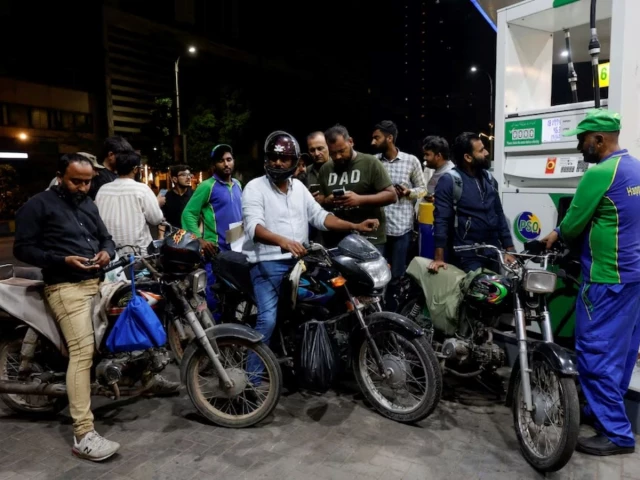
People wait to refuel their motorcycles at a petrol station following the rollout of a fuel relief scheme, which provides a fuel subsidy for eligible motorcycles, rickshaws and vehicles with engines of up to 800cc, in Karachi, Pakistan, September 17, 2026. REUTERS
The federal government on Friday decreased the price of petrol and high-speed diesel (HSD) by Rs1.65 and 88 paisas per litre, respectively, till September 21.
According to a notification issued by the Petroleum Division, the price of petrol was fixed at Rs389.14 per litre, while HSD would cost Rs424.04 per litre from Sept 19 till Sept 21.
The latest revision comes a day after the government increased the price of HSD by Rs3.47 per litre while reducing the price of petrol by 43 paisas for Sept 18.
Read: Govt raises diesel by Rs3.47, cuts petrol by 43 paisas for Sep 18
On July 17, the government announced a new pricing mechanism under which petroleum product prices would be reviewed and notified daily, replacing the weekly pricing mechanism, as renewed tensions between the United States and Iran continued to drive volatility in global oil markets and raise concerns over fuel supplies.
Earlier today, in a bid to provide relief to the public, Prime Minister Shehbaz Sharif directed the immediate inclusion of 20-year-old motorcycles, rickshaws and Qingqi rickshaws in the Prime Minister Fuel Relief Scheme, the Prime Minister’s Office (PMO) said.
The statement further added that all motorcycles, rickshaws and Qingqi rickshaws registered after January 1, 2006, would be eligible for registration in the Prime Minister Fuel Relief Scheme.
وزیراعظم محمد شہباز شریف نے پرائم منسٹر فیول ریلیف سکیم میں عوام کو مزید سہولت فراہم کرنے کی خصوصی ہدایت کر دی.
وزیراعظم فیول ریلیف سکیم میں 20 سال پرانی موٹر سائیکلوں، رکشوں اور چنگ چی رکشوں کو فی الفور شامل کرنے کی ہدایت، یکم جنوری 2006ء کے بعد رجسٹرڈ تمام موٹر سائیکلیں،…
— Prime Minister’s Office (@PakPMO) September 18, 2026
On Sept 17, the government reintroduced austerity and fuel conservation measures amid rising fuel prices, tightening business operating hours and restricting public events.
Under the measures, notified with immediate effect, shops, markets, shopping malls, bazaars, departmental stores, grocery stores, general stores and kiryana shops would close by 9pm throughout the week, according to a notification issued by the Cabinet Division.
Marriage halls, marquees and other commercial venues hosting festive events would close by 10pm, while restaurants, cafes, eateries, food outlets and standalone fruit and vegetable shops would be allowed to operate until 11pm. Takeaway and home delivery services would remain exempt from the timing restrictions.
The notification also said fuel allocations for official vehicles would be reduced by 50pc for three months.
Also Read: Energy disruption hits Bangladesh and Pakistan as Gulf crisis worsens
The government also imposed a complete ban on the purchase of vehicles of all types. Procurement of durable goods had likewise been prohibited, except for information technology-related purchases. Both restrictions would not apply to development projects.
On September 13, PM Shehbaz announced a special relief scheme offering Rs100 per litre off petrol for motorcycles, three-wheeler rickshaws and cars with engines up to 800cc, in an attempt to shield lower-income consumers from the impact of rising petroleum prices.
Under the proposal, an estimated 11.8 million beneficiaries would be covered. Around 10 million two-wheeler users and 800,000 three-wheeler users would be entitled to relief on 20 litres of fuel per month, translating into a maximum monthly benefit of Rs2,000 per beneficiary.
Another one million users of cars up to 800cc would receive relief on 30 litres per month, providing them with a maximum benefit of Rs3,000 each.
The government estimated the monthly fiscal impact of the scheme at Rs24.6 billion — Rs20 billion for two-wheelers, Rs1.6 billion for three-wheelers and Rs3 billion for cars.
Global geopolitical developments continue to pose significant risks. International oil prices are influenced by decisions taken by OPEC+, conflicts in the Middle East, sanctions on oil-producing nations, and disruptions in critical shipping routes such as the Strait of Hormuz and the Red Sea. Any interruption in these supply chains can immediately increase crude oil prices and freight costs. Since Pakistan imports the majority of its petroleum requirements, these developments quickly translate into higher domestic fuel prices.
Oil prices fell on Friday after China, acting on a request from Saudi Arabia, quietly asked Iran to limit attacks by Houthi rebels on Saudi oil infrastructure that had opened up a second chokepoint in energy transit in the Middle East.
Brent crude futures fell by 93 cents, or 0.9%, to $103.89 a barrel by 12:58 pm EDT (1658 GMT). US West Texas Intermediate futures fell $1.17, or 1.2%, to $100.74.
“Right now it’s not a supply problem; it’s a refining problem,” said Phil Flynn, senior analyst for Price Futures Group.

