


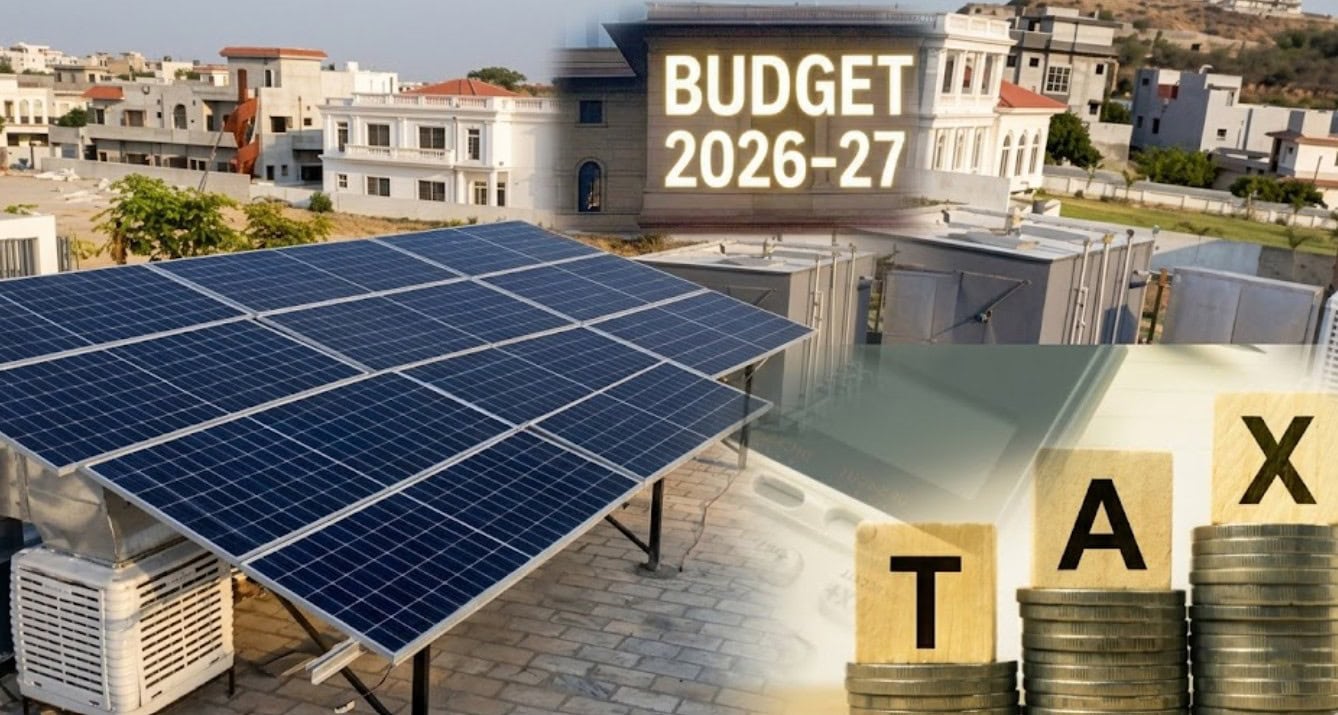
ISLAMABAD – Pakistan witnessed solar boom in recent years amid unaffordable rising electricity bills, but it now finds itself facing a policy crossroads. As Budget 2026–27 is around the corner, there is possibility of increase in GST on solar equipment, from 10% to possible 18%.
The upcoming federal budget 2026–27 is shaping up to deliver one of the most significant shifts in the country’s energy and taxation policy. According to budget preview compiled by Karachi based brokerage house, the federal government is reportedly considering substantial increase in GST on solar panels. If implemented, the move would sharply raise the cost of solar installations across the country at a time when rooftop solar adoption has been accelerating at an unprecedented pace.
The step could slow transition away from grid electricity, while simultaneously easing pressure on traditional power producers by discouraging rapid consumer migration to solar.
The budget, expected in early June 2026, is said to be driven by revenue-raising measures under broader fiscal consolidation efforts. Within this framework, solar taxation has become central point of discussion.
The underlying condition of the upcoming budget seems firmly anchored in revenue generation and deficit management. As a result, existing tax exemptions may come under review, even as selective support for domestic manufacturing is considered.
Alongside taxation measures, the government is also expected to prioritize structural improvements in the energy system, particularly upgrades to the national grid and transmission infrastructure to better accommodate renewable energy integration.
As of early 2026, Tier-1 solar panels from major brands such as Longi, Jinko, Trina, and Canadian Solar are currently trading in the range of Rs33 to 47 per watt depending on technology type, while individual high-capacity modules are typically priced between Rs20,000 and 30,000 or more.
Despite these headwinds, Pakistan’s solar sector has expanded at remarkable pace, driven largely by consumer demand rather than centralized planning. Persistent electricity tariff increases, frequent power shortages, and the availability of relatively low-cost imported panels, predominantly from China, fuelled widespread adoption of rooftop systems across urban and semi-urban areas.
Solar Consumers to pay Rs10,000 for 300 Units under New Net Billing Shock!

