


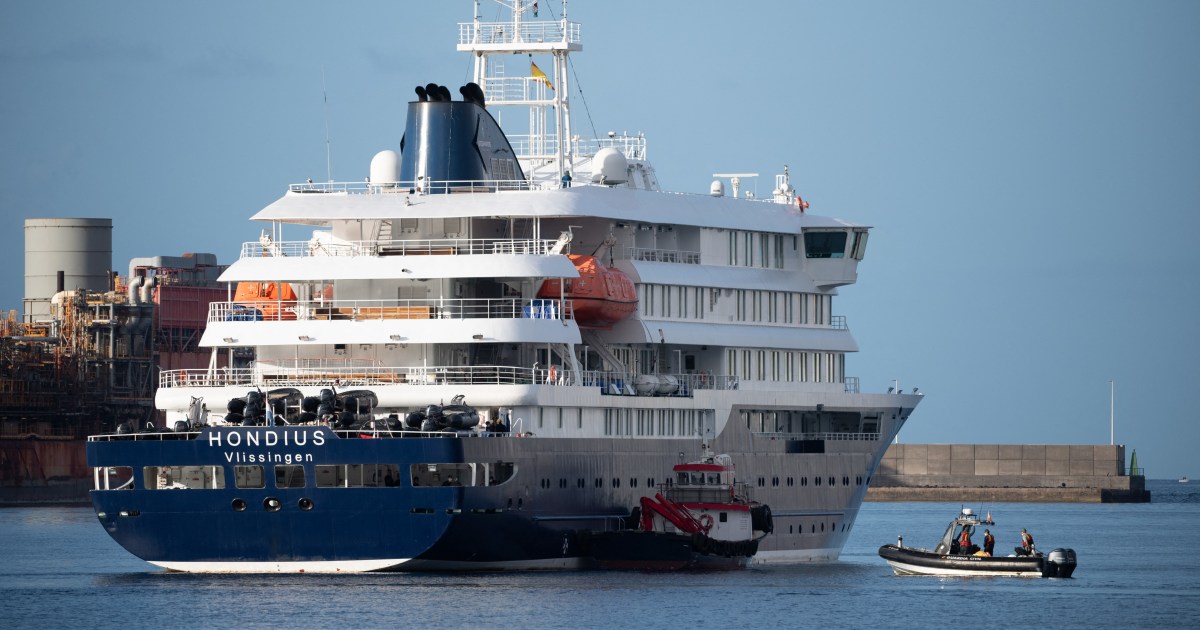
TENERIFE, Spain — Passengers started evacuating the cruise ship at the center of a deadly hantavirus outbreak on Sunday shortly after the vessel arrived off the Spanish island of Tenerife, beginning the process of sending them back to their home countries.
Subscribe to read this story ad-free
Get unlimited access to ad-free articles and exclusive content.

The ship, the MV Hondius, could be seen in the distance around 5:30 a.m. local time Sunday (12:30 a.m. ET) from the Granadilla Port, where a medical tent was set up overnight.
The Hondius has had six passengers with confirmed cases of hantavirus and two with suspected cases, the World Health Organization said Friday.
Three of those people have died, officials said, including two who died while aboard the ship.
An image of passengers disembarking from the ship on Sunday showed people dressed in personal protective equipment being taken to shore aboard a small boat.
After being brought to shore, passengers will be kept cordoned off from the public and taken to repatriation flights, Dr. Maria Van Kerkhove, the WHO’s head of epidemic and pandemic preparedness, said Saturday.
In their home countries, many will be taken onward to isolation facilities. Van Kerkhove said that the WHO is recommending “active monitoring and follow-up” for all passengers and crew for 42 days from their “last point of exposure” to a confirmed case.

Speaking to reporters in Tenerife on Sunday, Monica Garcia, Spain’s Minister of Health, said that all passengers on the ship continue to be “asymptomatic.”
Spanish nationals were expected to be the first to disembark.
Garcia said passengers from the Netherlands would be the next group to leave the vessel, with their plane also carrying German, Belgian and Greek passengers, as well as part of the crew.
Once ashore, the passengers were expected to be transferred onto buses and taken to the local airport.
Passengers from Turkey, France, the UK and U.S. will then be evacuated, followed by six people from “Australia, New Zealand and Asia,” she said, as part of the last flight planned for Monday.

The 17 Americans still aboard the Hondius will be flown to the United States and will be observed at the National Quarantine Unit, a facility on the University of Nebraska Medical Center campus in Omaha that specializes in handling patients with highly hazardous communicable diseases, the medical center said.
“We are prepared for situations exactly like this,” Dr. Michael Ash, CEO of Nebraska Medicine, said in a statement Friday.
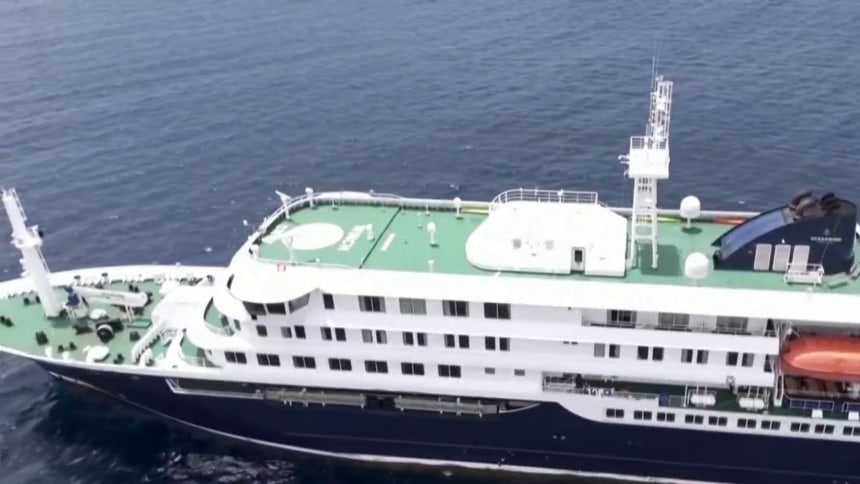
The Dutch-owned ship, along with some crew and the passengers’ luggage, will continue on the five-day journey to Rotterdam in the Netherlands, according to cruise operator Oceanwide Expeditions.
The body of a person who died on board will also remain on the ship, which will undergo a disinfection process in the Netherlands, Spanish Minister of Health Mónica García said.
Health officials have stressed that the risk to the global population and to the residents of Tenerife, off the coast of West Africa, is low.
In a message to Tenerife residents Saturday, WHO Director-General Tedros Adhanom Ghebreyesus addressed concerns about the risk of spread.
“The pain of 2020 is still real, and I do not dismiss it for a single moment, Tedros said. “But I need you to hear me clearly: this is not another COVID. The current public health risk from hantavirus remains low. My colleagues and I have said this unequivocally, and I will say it again to you now.”
People get hantavirus through contact with rodents, especially when exposed to their urine, droppings and saliva. The origin of the first case “suggest possible exposure to rodents during bird watching activities,” the WHO said.
Of the group of viruses, only the Andes — the strain in the Hondius case — is known to spread between people, but those people usually have very close contact with each other, according to the WHO.
On May 2, a month after the ship left Ushuaia, Argentina, “a cluster of passengers with severe respiratory illness” on board was reported to the WHO, the health organization said.
At that time, the ship had 147 passengers and crew, but 34 passengers and crew had previously disembarked, the WHO said.
The report came weeks after the first death, a Dutch man who died on board on April 11. At that point, “the cause of death was unknown and there was no evidence of a virus or contagion on board,” Oceanwide Expeditions has said.
His wife died at a South African clinic on April 26, the WHO said.
The third fatality, a German woman, happened on board on May 2, according to the WHO and Oceanwide Expeditions.
Two days later, hantavirus was confirmed in a passenger who had been medically evacuated to a hospital in South Africa, the company said.
Hantavirus can have a fatality rate of around 40%-50%, the WHO says, and the elderly are particularly at risk. The average age of those aboard the ship is 65 years old, it said.
Phil Helsel reported from Los Angeles, and Mo Abbas and Daniele Hamamdjian from Tenerife.

