


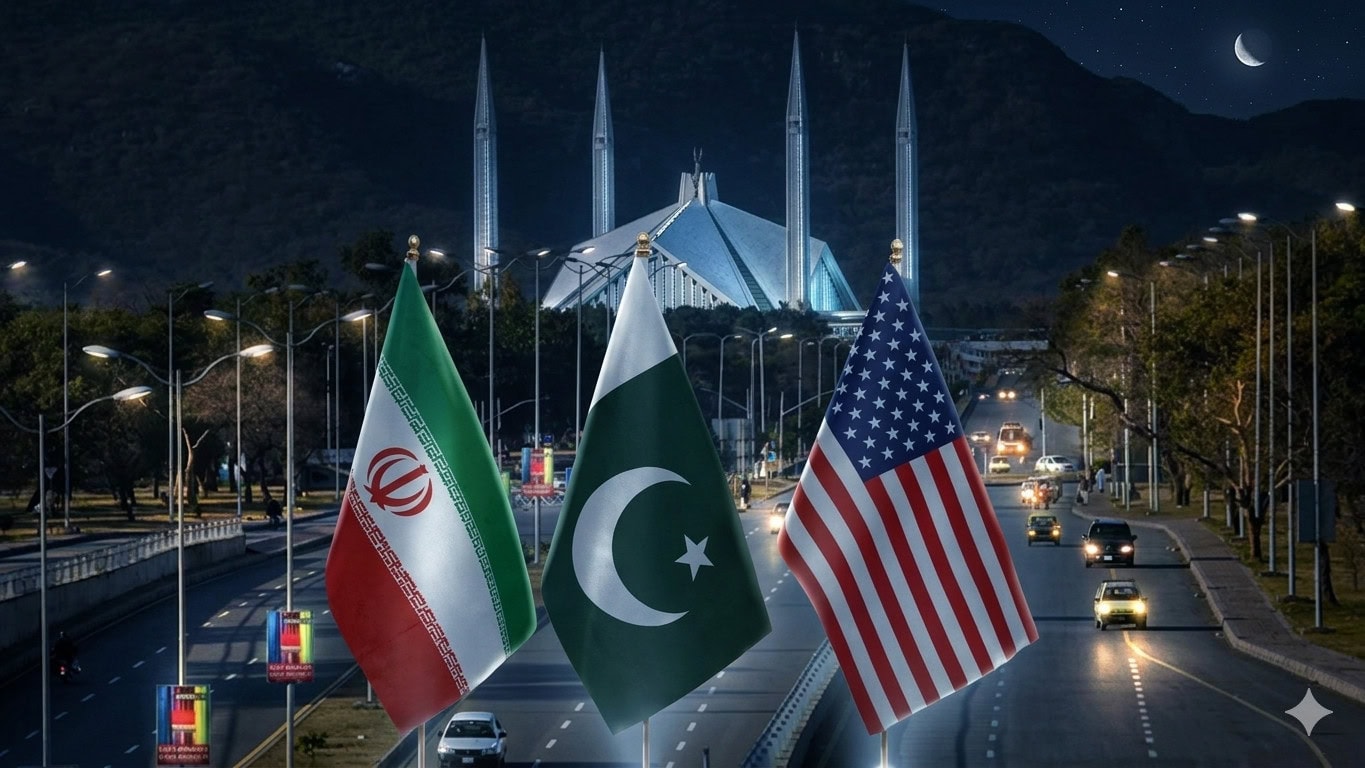
ISLAMABAD – US President Donald Trump named two of his most trusted political allies Jared Kushner and special envoy Steve Witkoff to lead high-level talks in Islamabad, according to US officials.
The surprise move comes just days after JD Vance cancelled a planned visit to Pakistan, raising questions over internal coordination as Washington accelerates efforts to restart dialogue with Tehran amid rising geopolitical tensions.
According to the report, Kushner and Witkoff are expected to arrive in Pakistan this weekend for urgent and high-level discussions involving Iranian Foreign Minister Abbas Araghchi. The talks are being described as a critical attempt to revive diplomatic engagement with Iran at a time when tensions between the two countries are intensifying across multiple fronts.
Despite his absence from the opening round, Vice President Vance is reportedly not fully out of the loop, US officials say he remains on standby and could be flown in if the negotiations gain traction. His staff members are already being deployed on the ground in Pakistan to support the unfolding diplomatic effort.
Behind the scenes, Witkoff and Kushner are said to have been quietly engaged for months in informal communication with Iranian officials, working on a potential framework agreement that centers on Iran’s nuclear materials—a long-standing flashpoint in US–Iran relations and a core issue driving decades of international friction.
Iranian Foreign Minister Abbas Araghchi is also set to arrive in Pakistan tonight for high-stakes regional tour, with key stops scheduled in Pakistan, Oman, and Russia. The timing of the tour is being viewed as highly significant, coming amid growing instability in the Middle East and renewed urgency for diplomatic engagement.
Pakistan, now emerging as a central diplomatic corridor, has already held senior-level discussions with Iranian leadership, urging continued dialogue and stability. Tehran has publicly praised Islamabad’s role as a vital communication bridge between the competing powers.
The broader regional backdrop remains volatile, with maritime tensions in the Strait of Hormuz escalating due to repeated incidents involving vessel seizures and military confrontations.
Araghchi’s scheduled visit to Russia further deepens the geopolitical complexity of the moment. Iran and Russia have recently formalized a sweeping 20-year strategic agreement expanding cooperation across military, political, and economic domains, though stopping short of a formal mutual defense pact.
Russian Foreign Minister Sergey Lavrov has meanwhile praised Pakistan’s mediation efforts in facilitating discussions between Iran and the United States, signaling Moscow’s willingness to back diplomatic initiatives. Reports have also previously suggested deeper Russian–Iranian coordination in military intelligence sharing during ongoing regional tensions.

