


NEWYou can now listen to Fox News articles!
This week, the U.S. Supreme Court will hear arguments in what could be one of the most significant cases of the 21st century: birthright citizenship.
Before the Court is whether the Trump executive order that ends birthright citizenship complies with the citizenship clause of the 14th Amendment, after multiple judges blocked the order from taking effect as it was litigated.
In plain speak, the Court will look at whether someone born on U.S. soil automatically becomes a citizen irrespective of their parents’ status.
ALITO BLASTS LAWYER’S WORD-SALAD BLURRING ASYLUM LAW
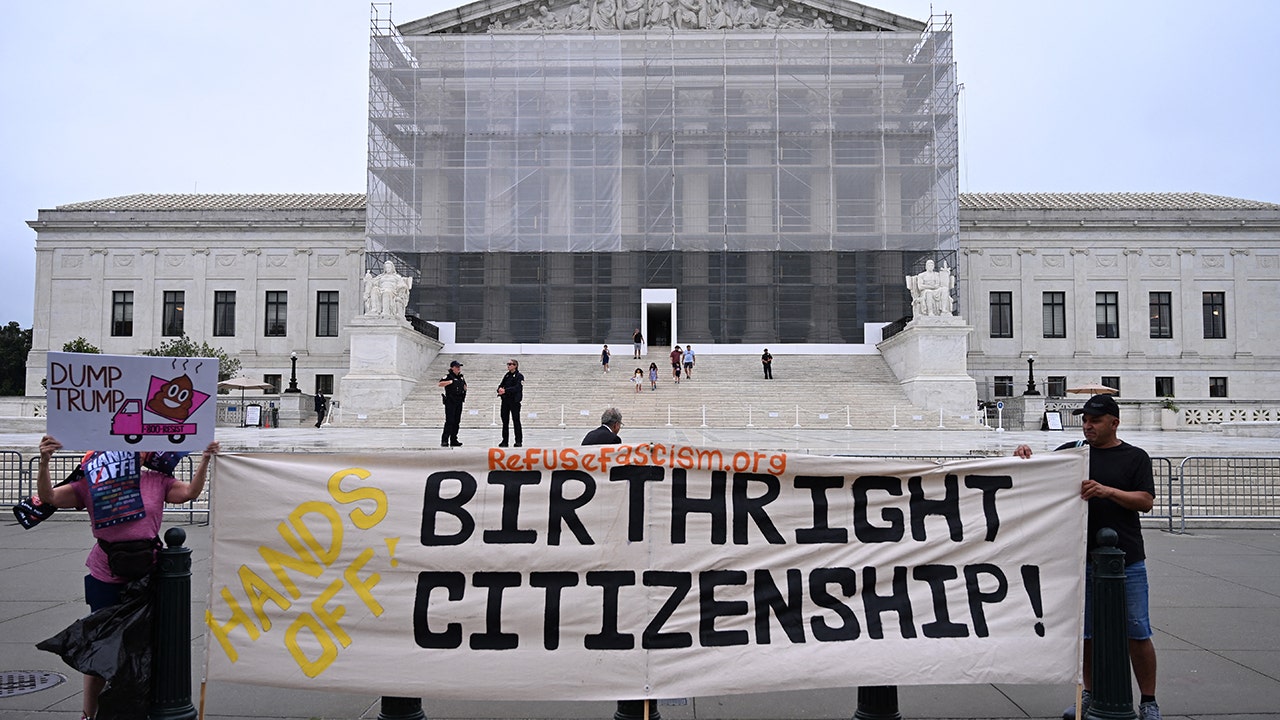
Demonstrators holds up an anti-Trump sign outside the Supreme Court in Washington, DC, on June 27, 2025. (ALEX WROBLEWSKI/AFP via Getty Images)
Given that courts have routinely upheld birthright citizenship for over a century now, the Trump administration faces an uphill battle.
However, the current Court has not shied away from overturning high-profile decisions: think Dobbs overturning Roe (abortion), and Loper overturning Chevron (the administrative state). The mere fact the Court decided to take up this issue at all is very interesting. As always, the devil will be in the details in terms of how broadly, or narrowly, they decide the case – or if they find some way to punt it altogether.
How did we get here?
The Fourteenth Amendment, Section 1 of the Constitution states: “All persons born or naturalized in the United States, and subject to the jurisdiction thereof, are citizens of the United States and of the State wherein they reside.”
SUPREME COURT PREPARES TO REVIEW TRUMP EXECUTIVE ORDER ON BIRTHRIGHT CITIZENSHIP
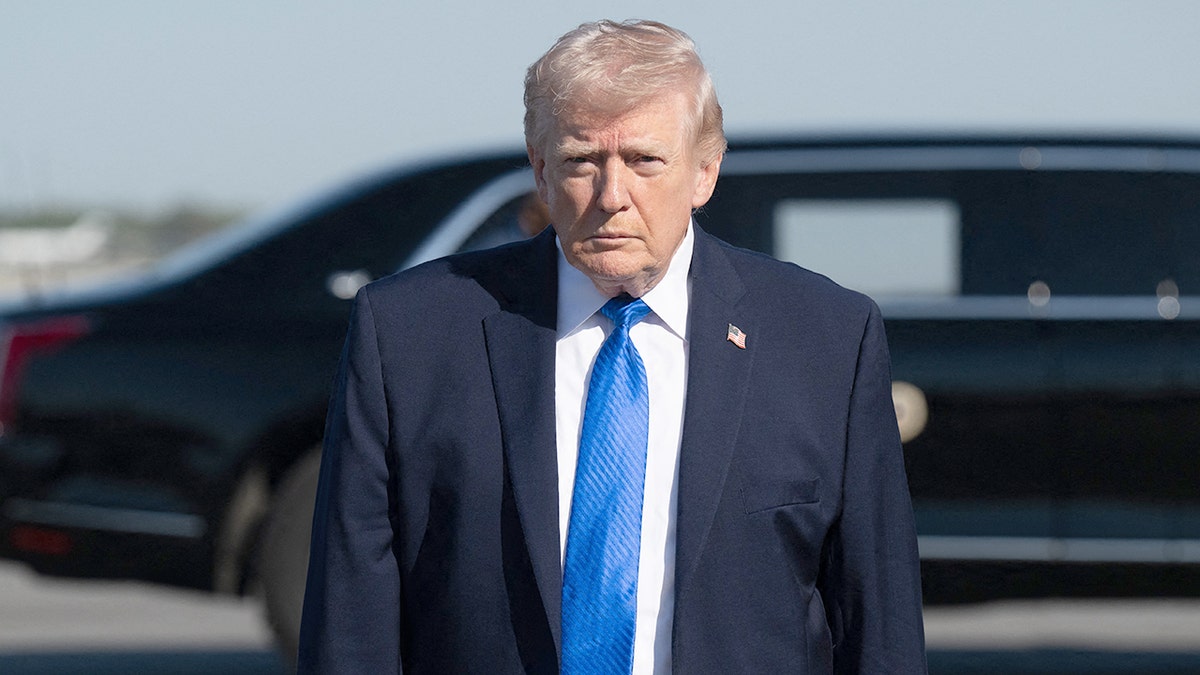
President Donald Trump walks to speak to reporters before boarding Air Force One at Palm Beach International Airport in West Palm Beach, Florida, on March 23, 2026. (SAUL LOEB / AFP via Getty Images)
Its history: The Fourteenth Amendment was ratified in 1868 in response to 1) the end of the Civil War and 2) the 1857 Dred Scott decision, which concluded that enslaved people (and their children) were not American citizens and thus had no rights and couldn’t sue in federal court, among other things. Notably, Michigan Senator Jacob Howard wrote the “subject to the jurisdiction thereof” clause and said in speeches at the time that the clause did not include “persons born in the United States who are foreigners, aliens, who belong to families of ambassadors or foreign ministers.”
Why this matters: In the upcoming arguments, expect a lot of discussion about what “subject to the jurisdiction thereof” means, especially because the subsequent Immigration and Nationality Act of 1952 mirrors the language of the 14th Amendment – that a citizen is someone who is born in the United States and subject to the jurisdiction thereof.
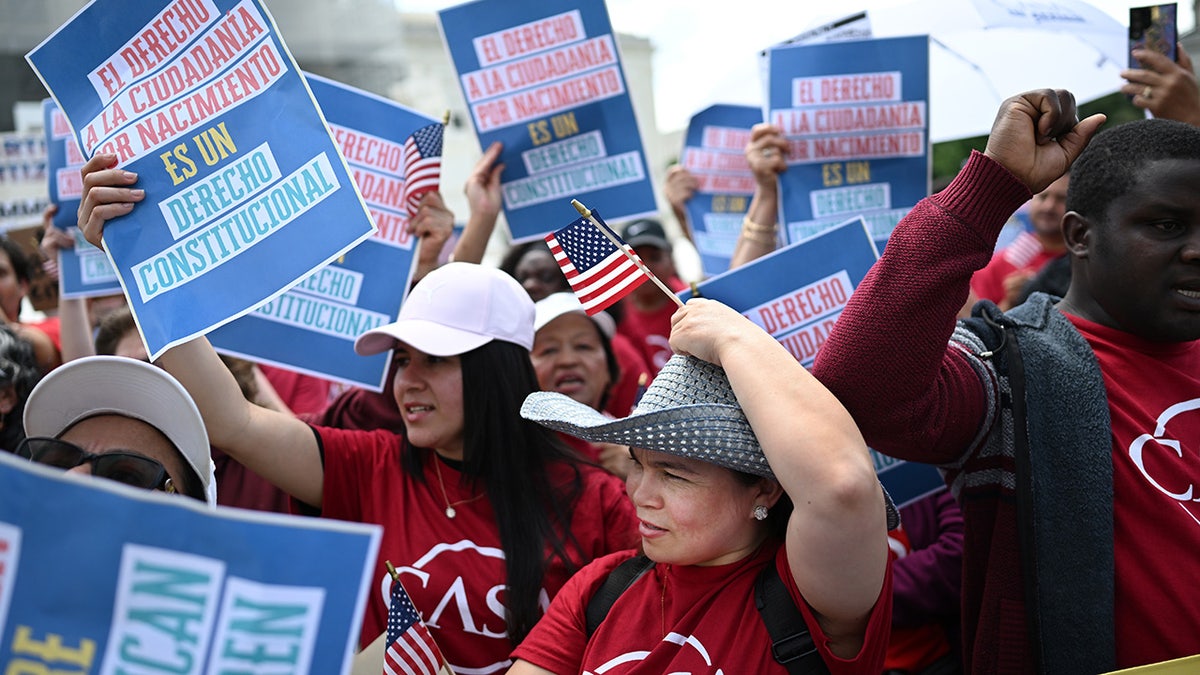
People demonstrate outside the Supreme Court of the United States on May 15, 2025 in Washington, D.C. (Matt McClain/The Washington Post via Getty Images)
Wong Kim Ark: The 1898 U.S. Supreme Court decision that gave us birthright citizenship as we know it today. The case involved the U.S.-born adult child of Chinese nationals – who had been permanently domiciled in the U.S. – who was denied reentry into the U.S. after returning from a trip to China. At the time, it was generally difficult for Chinese nationals to become citizens.
In its decision, the Supreme Court held that children born on U.S. soil are automatically granted citizenship with very few exceptions, such as children of diplomats. It interpreted the “subject to the jurisdiction thereof” to mean subject to the laws of the U.S.
The Court reasoned that citizens and non-citizens alike are subject to the laws of the nation they are in. The Court emphasized that Ark’s parents were “permanently domiciled” in the U.S. This decision was controversial at the time because it ignored previous Supreme Court language that had found children born to alien parents were not citizens. However, in Wong Kim Ark, the Court dismissed that argument in its opinion, finding that previous language was mere “dicta,” i.e., language that was not necessary to those decisions, and thus, did not create binding precedent.
CLICK HERE TO DOWNLOAD THE FOX NEWS APP
The bottom line: This is the blockbuster case of this Supreme Court term. A decision is expected late June.

