


Last Updated:
OpenAI CEO Sam Altman sees India as a future AI leader, with 100M ChatGPT users. OpenAI expands in Delhi ahead of India AI Impact Summit 2026.




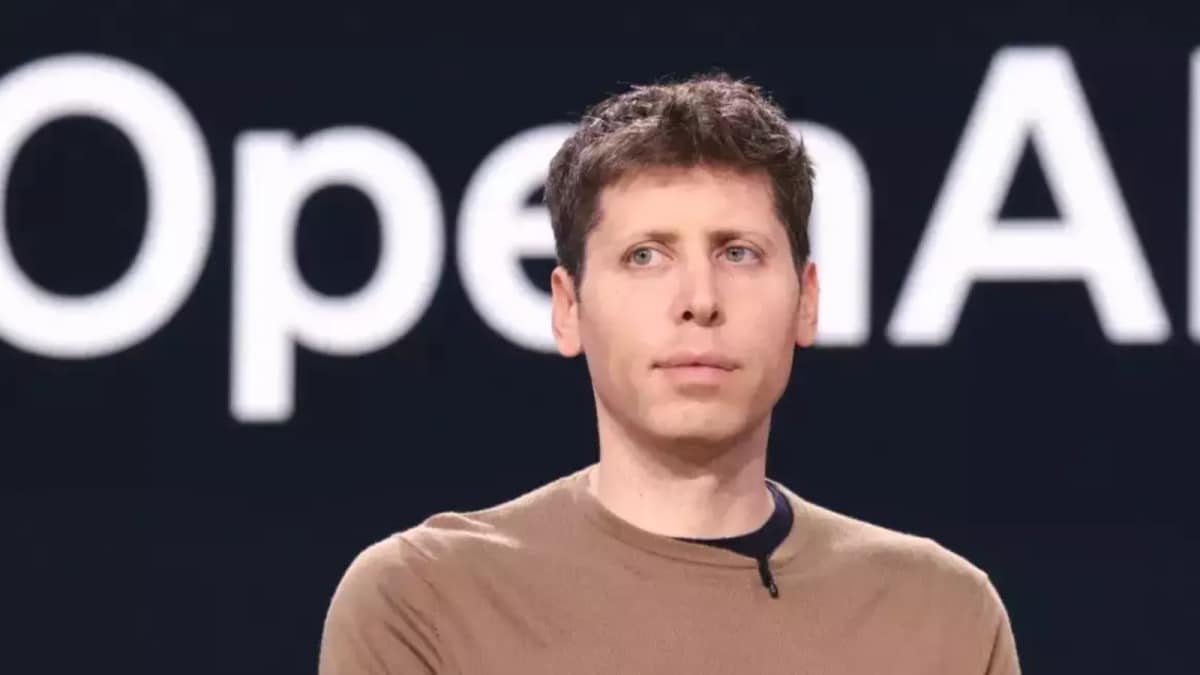
OpenAI co-founder Sam Altman
In a strong endorsement of India’s growing artificial intelligence ecosystem, OpenAI CEO Sam Altman has described India as a potential “full-stack AI leader,” outlining plans to expand the company’s presence and deepen engagement with the government ahead of the Global AI Impact Summit 2026. OpenAI is the creator of popular chatbot ChatGPT.
Writing in The Times of India on Sunday, Altman said India has become OpenAI’s second-largest user base globally, behind only the United States. He noted that the country now has 100 million weekly active users on ChatGPT, with India hosting the largest number of student users worldwide. India also ranks fourth globally in adoption of Prism, OpenAI’s free scientific research and LaTeX-based collaboration tool.
New Delhi is set to host the AI Impact Summit 2026 at the Bharat Mandapam, bringing together some of the biggest names in artificial intelligence and technology from across the world.
The five-day event, scheduled from February 16 to February 20, will mark the fourth global AI summit in an ongoing international series. Registration for the summit has already begun through the official website.
OpenAI Expands India Footprint
Altman said OpenAI opened its first office in Delhi last August and plans to expand operations further this year. He added that the company recently convened more than 200 nonprofit leaders across four Indian cities to train them on using ChatGPT to enhance organisational capacity.
“OpenAI is committed to doing its part to help build AI in India, with India, and for India,” Altman wrote, adding that new partnerships with the Indian government will be announced soon to broaden access to AI tools.
Altman is expected to attend the India AI Impact Summit 2026, scheduled from February 16 to 20 at Bharat Mandapam in New Delhi.
Access, Adoption, And Agency Framework
In his article, Altman outlined a three-part strategy to maximise AI’s benefits: ensuring access regardless of income or education; driving adoption across schools, clinics and small businesses; and building agency through large-scale AI literacy.
He cautioned against a “capability overhang,” where access outpaces user skill, and called for practical fluency in coding and knowledge work.
Altman also highlighted the government’s India AI Mission, approved in March 2024 with an outlay of Rs 10,371.92 crore over five years, aimed at expanding compute capacity, supporting startups and accelerating multilingual applications in sectors such as healthcare and agriculture.
“AI will help define India’s future, and India will help define AI’s future,” Altman wrote, emphasising infrastructure and democratic participation as key differentiators.
 Click here to add News18 as your preferred news source on Google.
February 15, 2026, 14:44 IST
Read More

