


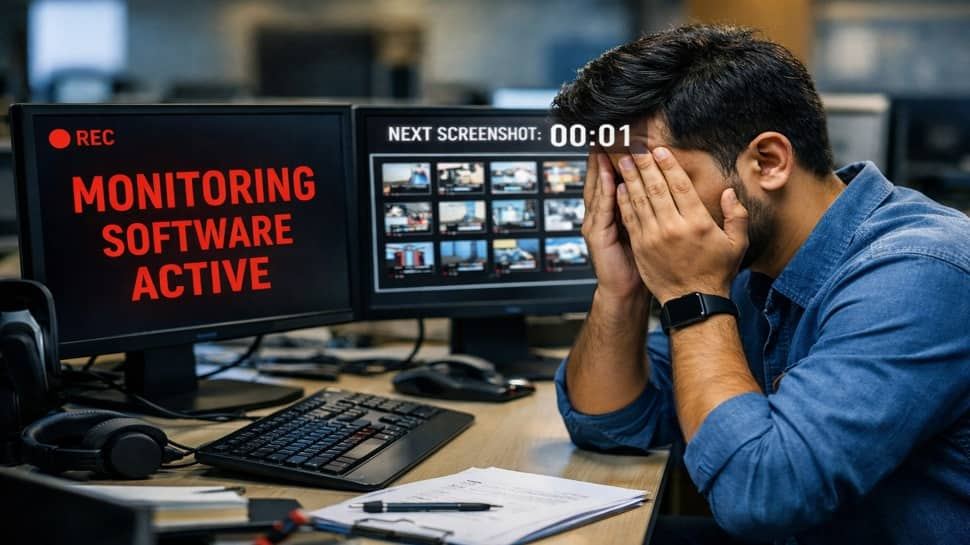
New Delhi: A technology professional recently shared frustration online after their company reportedly skipped annual salary increments while introducing employee-monitoring software that captures screenshots every 10 minutes. The post, shared on social media, quickly gained attention and sparked debate about workplace surveillance and employee morale.
According to the employee, the company described the monitoring tool as a productivity-tracking measure, designed to ensure that employees remain focused during working hours. The software allegedly records screen activity at regular intervals, allowing managers to review how time is spent on work tasks.
The incident triggered strong reactions online, with many users questioning whether constant digital monitoring could undermine trust between employers and employees, especially in remote or hybrid work environments. Some commenters argued that productivity should be measured by output rather than continuous surveillance, while others said companies are increasingly adopting such tools to manage distributed teams.
Employee-monitoring software has become more common in recent years as organisations try to track productivity, improve compliance, and reduce data-security risks. However, the growing use of such tools has also raised concerns about privacy, workplace culture, and job satisfaction in the evolving post-pandemic work environment.
Overall, the viral post reflects a broader conversation about how far companies should go in monitoring employees, particularly when compensation growth slows and workplace expectations continue to shift.

