


Last Updated:
The founder of Dairy Milk, John Cadbury, was a staunch opposer of alcohol who believed that cocoa-based drinks could offer a healthier substitute




The defining moment in Cadbury’s history arrived in 1905 with the launch of Dairy Milk chocolate.
With Valentine’s Day just around the corner, the celebrations begin well in advance, and February 9 is marked as Chocolate Day. For many, the very thought of chocolate instantly brings Cadbury Dairy Milk to mind. As millions exchange the iconic purple bar with friends and loved ones, few pause to consider the long and fascinating journey behind one of the world’s most recognisable chocolate brands.
Cadbury, today the world’s largest chocolate company and a part of Mondelez International, traces its origins back nearly 200 years to the United Kingdom. Interestingly, the brand was born not out of indulgence, but as a moral alternative to alcohol.
The story began in 1824 on Bull Street in Birmingham, where John Cadbury opened a small grocery shop. At the time, there was a strong resistance in the UK against alcohol, and Cadbury was a staunch opposer of alcohol who believed that cocoa-based drinks could offer a healthier substitute.
At his stall, Cadbury sold tea, coffee and drinking chocolate, preparing the cocoa himself using a mortar and pestle. The chocolate drink, promoted as a temperance beverage, quickly gained popularity. By 1831, growing demand pushed Cadbury to move from retail to manufacturing, and he acquired a warehouse to scale up production, with his sons George and Richard joining the business.
By the early 1840s, Cadbury was producing 11 varieties of cocoa and 16 kinds of drinking chocolate. In 1847, when John’s brother Benjamin joined the venture, the business was renamed Cadbury Brothers, and a factory was set up on Bridge Street. Recognition followed soon after. In 1854, Cadbury received a Royal Warrant from Queen Victoria, granting the company the honour of supplying chocolate to the British Royal Family.
The company faced turbulence in the 1860s when John Cadbury’s health declined, forcing him into retirement. Financial losses mounted, but his sons managed to turn the business around. A major breakthrough came in 1866 with the purchase of a cocoa press from the Netherlands, which enabled the extraction of pure cocoa butter. This innovation marked the introduction of unadulterated cocoa to Britain, replacing earlier mixtures that used flour or potato starch.
In 1879, Cadbury relocated its factory to Bournville, on the outskirts of Birmingham. The move was historic not just for the business, but for industrial welfare in the UK. The company built houses, schools, parks and hospitals for its workers, creating a model village with no pubs, reflecting the company’s anti-alcohol roots.
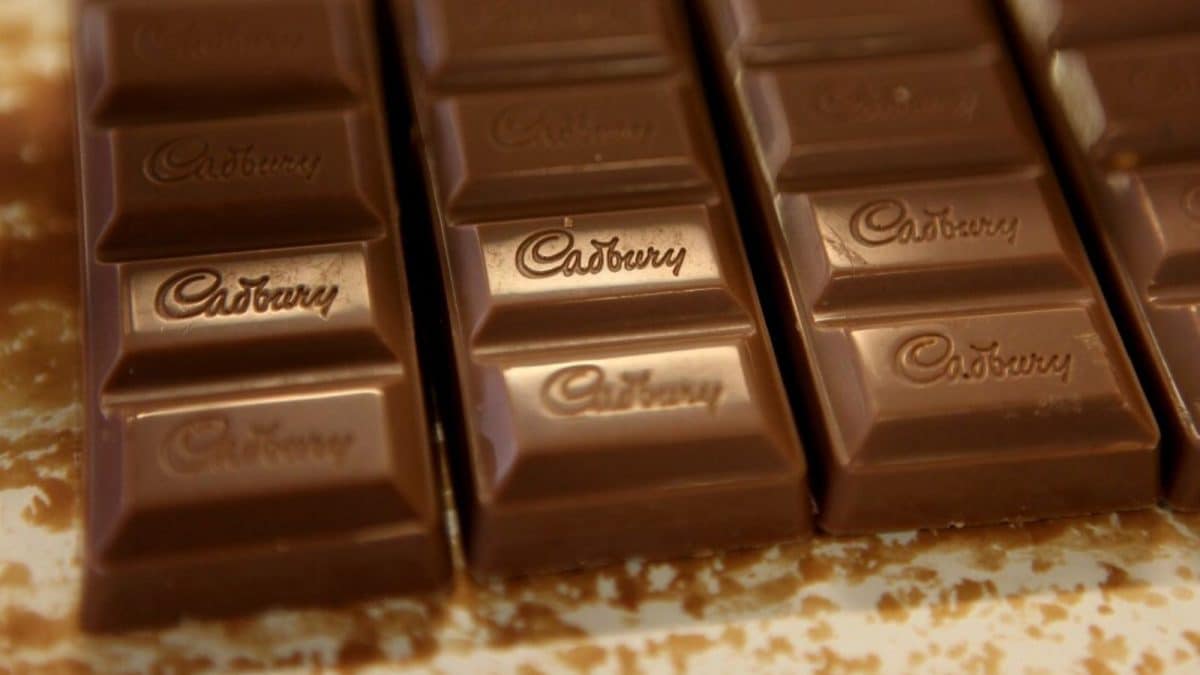
The defining moment in Cadbury’s history arrived in 1905 with the launch of Dairy Milk chocolate. Made with a significantly higher milk content, the bar went on to become the company’s most successful product and remains a bestseller more than a century later.
Cadbury continued to expand through the 20th century, entering partnerships and mergers, including a tie-up with JS Fry & Sons in 1919 and a merger with Schweppes in 1969 to form Cadbury Schweppes. In 2010, the company was acquired by Kraft Foods, now Mondelez International, in a £11.5 billion deal.
Over the years, Cadbury has also left a cultural imprint. It introduced the world’s first heart-shaped chocolate box in 1868, now synonymous with Valentine’s Day. Today, the company produces over 500 million chocolates annually and operates in more than 50 countries. In Birmingham, Cadbury World continues to draw over 6,00,000 visitors every year, offering a glimpse into the chocolate-making process.
In India, Cadbury Dairy Milk has become a household name, woven into celebrations, festivals and everyday moments.
 Click here to add News18 as your preferred news source on Google.
February 09, 2026, 20:39 IST
Read More

