


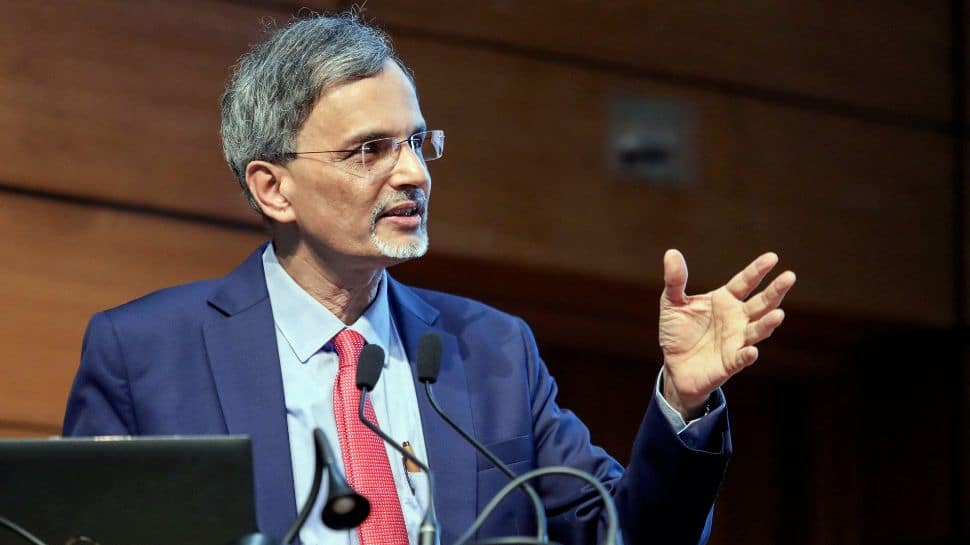
New Delhi: The Economic Survey 2025-26, tabled in Parliament on January 29, 2026, by Finance Minister Nirmala Sitharaman ahead of the Union Budget, highlights India’s economic performance in a challenging global environment. Prepared under Chief Economic Adviser V. Anantha Nageswaran, the Survey reviews growth trends, fiscal management and sectoral developments while flagging global risks such as geopolitical tensions, trade fragmentation and policy uncertainty.
Here are eight key highlights from his remarks.
India Remains the Fastest-Growing Major Economy
India’s real GDP growth for FY26 (2025-26) is estimated at 7.4 per cent, while Gross Value Added (GVA) growth stands at 7.3 per cent, according to the First Advance Estimates. This marks the fourth consecutive year that India has emerged as the fastest-growing major economy. The strong performance comes despite global economic volatility, reflecting the resilience of domestic demand and macroeconomic stability.
Growth Outlook For FY27
Looking ahead, the Survey projects real GDP growth in the range of 6.8 per cent to 7.2 per cent for FY27. Importantly, India’s potential growth rate has been upgraded to around 7 per cent up from 6.5 per cent a few years ago. The improvement is attributed to sustained structural reforms, higher capital formation, labour formalisation, digital infrastructure expansion, regulatory simplification and continuous skilling initiatives.
Consumption And Investment Drive Momentum
Domestic demand continues to anchor growth. Private Final Consumption Expenditure grew by around 7 per cent in FY26 and now accounts for 61.5 per cent of GDP — the highest share since 2012. Low inflation, stable employment conditions, strong agricultural output supporting rural demand, and resilient urban spending have contributed to the consumption boost.
Investment activity has also remained steady. Gross Fixed Capital Formation expanded by nearly 7.8 per cent and remained close to 30 per cent of GDP. Public capital expenditure continues to support infrastructure creation, while private investment is showing signs of revival.
Inflation Remains Well-Anchored
The Survey notes that headline CPI inflation averaged around 1.7 per cent in FY26 (up to December), marking one of the lowest levels in recent years. Core inflation has also remained subdued, reflecting improved supply-side conditions. Lower inflation has helped protect household purchasing power and created a favourable environment for growth.
Fiscal Consolidation On Track
The government’s fiscal consolidation path remains intact. The fiscal deficit for FY25 came in better than budgeted at around 4.8 per cent of GDP, and the target for FY26 has been set at 4.4 per cent. General government debt-to-GDP has declined by about 7.1 percentage points since 2020, even as public investment has been maintained at elevated levels. Strengthening revenue receipts have further supported fiscal stability.
Financial Sector Shows Strength
India’s financial sector continues to remain robust. Gross NPAs have declined to a multi-decadal low of 2.2% as of September 2025. Despite global financial turbulence, the banking system remains well-capitalised, supporting credit growth and overall economic activity.
Sectoral Trends And Structural Focus
The services sector has led the growth momentum with GVA expansion of around 9.1–9.3 per cent, though expansion has been broad-based across agriculture, industry and services. The Survey emphasises the need for people-centric urbanisation reforms to reduce congestion and productivity losses. It also highlights improving manufacturing competitiveness through logistics upgrades, correcting inverted duty structures and leveraging trade agreements such as the proposed FTA with Europe. Export resilience remains a priority amid rising global tariffs and supply chain re-routing.
Global Risks And The Road Ahead
Globally, economies are facing deteriorating fiscal balances, rising bond yields, trade weaponisation and supply chain disruptions. While India retains strong macroeconomic buffers and structural strengths, the Survey calls for caution rather than pessimism. It stresses the need to build resilience against external vulnerabilities, including volatile capital flows and currency pressures. Manufacturing expansion is seen as crucial for strengthening the rupee, while the rise of artificial intelligence also poses new challenges related to skill gaps and structural shifts in the labour market.
Overall, the Economic Survey 2025-26 presents a picture of an economy that remains strong, stable and reform-oriented, even as it navigates an increasingly uncertain global landscape.

