


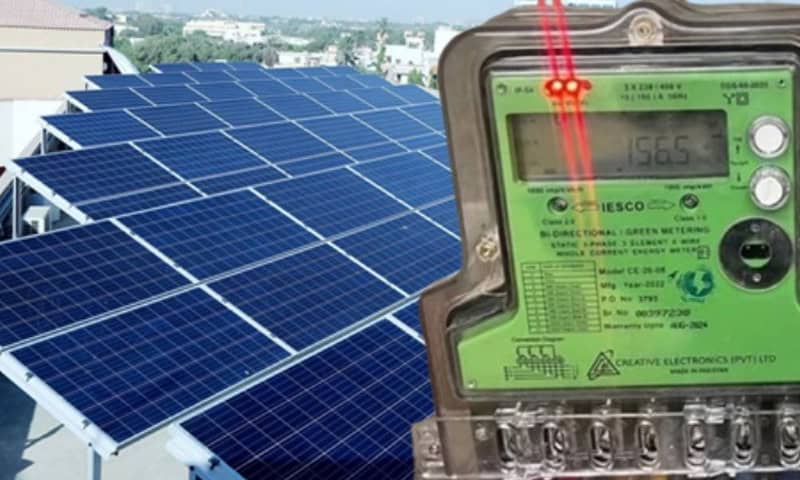
ISLAMABAD – Major update for thousands across Pakistan, solar is source of power for clean, free, and once believed to be a shield against rising electricity costs.
Pakistani government is set to replace current net metering system with harsh new net billing policy, potentially slashing incentives for solar consumers and triggering a surge in electricity bills.
Under existing net metering regime, households and businesses with solar panels could offset electricity they consume from the grid with power they export, effectively balancing imports and exports at near-equal retail rates. This has been a major driver of solar adoption nationwide.
Under proposed net billing model, the electricity drawn from the national grid will be billed at full retail rates, while solar power exported to the grid will be credited at a drastically lower rate. Experts warn that a typical consumer who imports and exports 300 units each could now face a bill of around Rs10,000, a dramatic increase from the near-zero charges previously paid.
Government officials and power distribution companies claim the change is necessary to cover grid maintenance costs and reduce alleged revenue losses. But critics say the policy is punishing consumers who invested in solar to support the nation’s energy needs, essentially undermining the renewable energy sector.
The shift comes amid growing operational chaos, including a backlog of pending net metering applications and thousands of installed solar systems that remain unconnected or unmetered.
Distribution companies like Lesco have stopped installing new solar meters, waiting for directives from the federal ministry.
In December 2025, National Electric Power Regulatory Authority (NEPRA) recommended moving to a gross metering system for rooftop solar users.
Under NEPRA’s proposal. all electricity exported to the grid would be purchased at a fixed feed-in tariff (proposed at Rs11.30 per unit) and electricity drawn from the grid would be billed separately at full retail rates.
Existing net metering customers with valid seven-year agreements would continue to receive Rs22 per unit for surplus power until their contracts expire. NEPRA has opened the proposal for public feedback for 30 days, before finalizing the rules.
LESCO stops Solar Green Meters after Shocking Ministry Directives

