


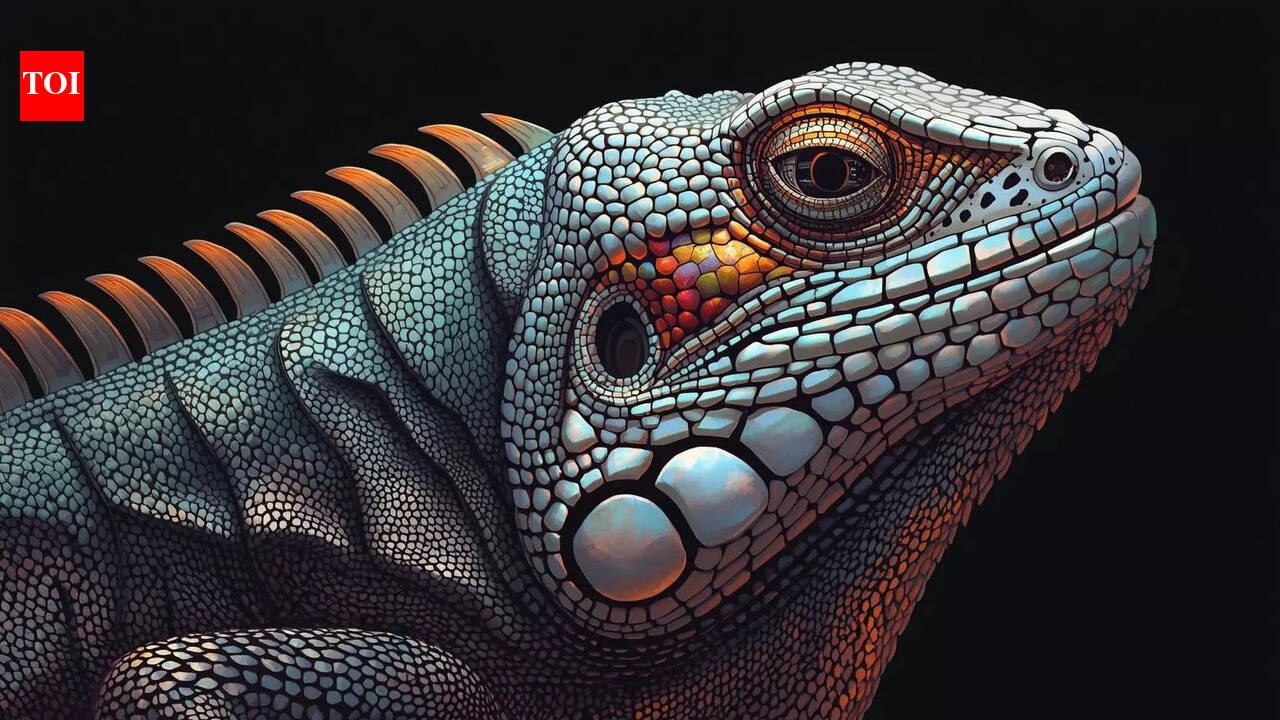
Biologists have long treated the bony plates found in some lizards as an ancient inheritance, passed down and occasionally lost. New research now suggests a different pattern. A study led by the Museums Victoria Research Institute argues that most of these plates, known as osteoderms, appeared much later and did so repeatedly. The work draws on fossils, modern scans and genetic relationships across hundreds of species. Rather than a single origin, armour seems to have been rebuilt again and again, sometimes long after earlier forms vanished. The findings change how scientists read the lizard record and how they think about adaptation. They also place Australia’s monitor lizards at the centre of a broader story about loss, return and evolutionary flexibility over deep time periods.
Armour in lizards seems to have evolved, disappeared, and then evolved again independently
For decades, textbooks implied that early lizards carried bony skin plates and that later groups either kept or discarded them. The new study, named “Lizards in chain mail: reconstructing the enigmatic past of dermal armour in squamate reptiles” challenges this view. By reconstructing evolutionary histories across squamate reptiles, which include lizards and snakes, researchers found that the earliest lizards almost certainly lacked osteoderms.The trait remained absent for tens of millions of years after lizards first appeared. Armour did not fade from a common starting point. Instead, it arrived late and unevenly.
Multiple origins reshaped the lizard family tree
The research team examined 643 living and extinct species across roughly 320 million years. Using CT scan data, fossil evidence and molecular relationships, they tracked where osteoderms were present or missing.Their results suggest that bony plates evolved at least thirteen times in modern lizard groups. Many of these gains occurred during a narrow window around the Late Jurassic and Early Cretaceous, about 140 million years ago, as major lineages began to diversify. This pattern points to repeated innovation rather than inheritance.
Monitor lizards show loss and return
Monitor lizards stand out within the findings. Evidence suggests that their ancestors lost osteoderms around 72 million years ago. This likely coincided with a shift toward a more active hunting style that favoured speed and flexibility. Early monitors, including the ancestors of Australian goannas, appear to have traded protection for movement. Heavy armour would have slowed pursuit hunting.Much later, during the Miocene, osteoderms returned in several Australian and Papuan monitor lineages. These later forms were lighter and looser, offering some protection without limiting motion.
Environment may have shaped the armour’s comeback
The study suggests that changing environments played a role in the return of armour. As monitor lizards spread into drier regions of Australia, osteoderms may have offered new advantages.Beyond defence, these bony plates can help reduce water loss, store calcium, and support the body during climbing. In this sense, armour may have been reselected for different functions than before. This makes monitor lizards one of the clearest examples of evolutionary re-innovation seen in modern reptiles.
Bony plates serve many quiet functions
Osteoderms are not part of the skeleton. They form within the skin and vary widely in shape and placement. In crocodiles, they help regulate blood chemistry during long periods underwater by releasing calcium.In lizards, their roles are less well understood but appear equally varied. They can act as thermal regulators, water retention structures or simple protection against attack. Despite their importance, their developmental origins remain unclear. This study provides a framework for exploring how such structures form again and again.
Similar looks can hide different histories
The findings help explain why unrelated lizards can look alike. The Gila monster of North America and Australia’s shingleback lizard both appear heavily armoured, yet their similarities arose through different evolutionary paths. This mirrors other repeated innovations in nature, such as flight, which evolved separately in insects, birds and bats.By mapping when and where osteoderms appeared, researchers have added depth to the story of lizard evolution. The picture is uneven and complex. Armour comes and goes. Sometimes it returns. And sometimes, it arrives quietly, shaped by pressures that only become clear much later.

