


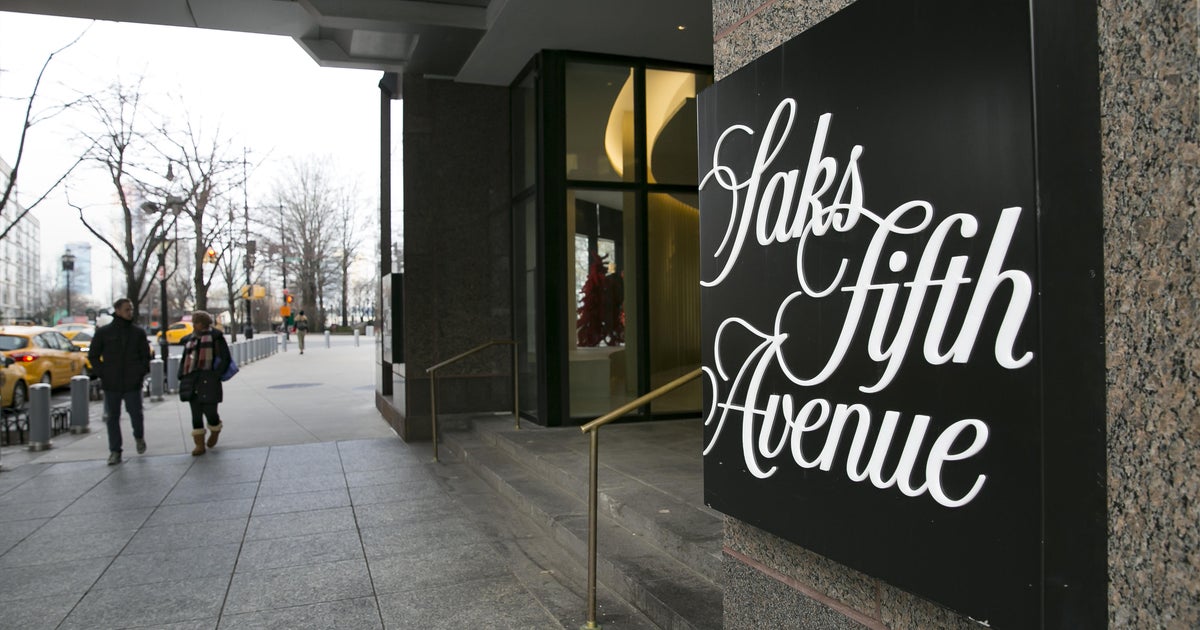
Saks Global filed for bankruptcy protection late Tuesday, according to court documents filed in U.S. Bankruptcy Court in Houston, throwing the future of the roughly century-old high-end department store chain into doubt. Saks Global is the parent company of Saks Fifth Avenue, Neiman Marcus and Bergdorf Goodman.
Saks also said it had secured a $1.75 billion financing package that will enable it to keep its stores open.
Saks recently missed a debt payment stemming from a 2024 deal by its parent company, Hudson’s Bay Company, to buy rival luxury retailer Neiman Marcus for $2.65 billion, The Wall Street Journal reported in late December, citing people familiar with the matter.
Hudson’s Bay raised $2 billion in debt to complete that deal, while Apollo Global Management affiliates provided an additional $1.5 billion in financing. Amazon also took a minority stake in Saks Global to facilitate the deal.
Saks recently missed a more than $100 million interest payment to bondholders, according to The Wall Street Journal, which also said the retailer has fallen behind on payments to vendors. Some suppliers have responded by withholding shipments, leaving Saks with thinner merchandise offerings.
New York-based Saks launched in 1924, opening its first store in Manhattan, according to a historical account of the company posted on its website. The company expanded quickly between the 1970s and 1990s before being purchased by Hudson’s Bay in 2013. Saks’s brands include luxury retailer Bergdorf Goodman, which was acquired as part of the deal for Neiman Marcus; retailer Saks Off 5th, and home furnishings seller Horchow.
Saks also announced the naming of former Neiman Marcus chief executive officer Geoffroy van Raemdonck as CEO, effective immediately. He succeeds Richard Baker, who stepped down from his role as Saks executive chairman and CEO on Jan. 13. Saks had announced on Jan. 2 that Baker would succeed CEO Marc Metrick as chief executive.
Brick-and-mortar retailers face ongoing competitive challenges from e-commerce and “fast-fashion” sellers such as H&M and Uniqlo. More than 8,100 stores closed across the U.S. in 2025, up roughly 12% from the previous year, according to retail industry analytics firm Coresight Research.

