


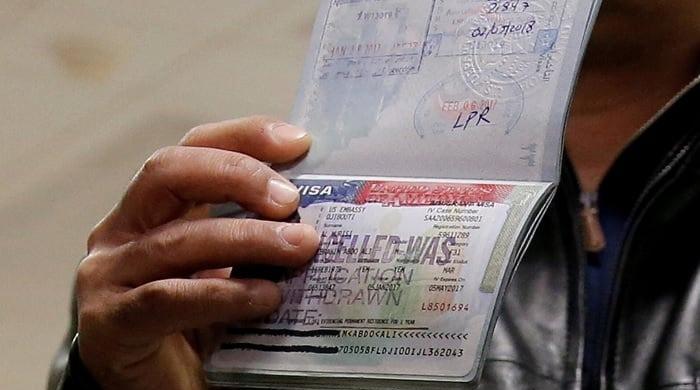
- US embassy warns arrests can revoke student visas.
- Embassy cites deportation risk and future visa ineligibility.
- “A US visa is a privilege, not a right,” embassy says.
The US embassy in India warned on Thursday that arrests or violations of US laws can lead to student visa revocation, deportation and future ineligibility for US visas.
In a post on X, the embassy’s account @USAndIndia said: “Breaking US laws can have serious consequences for your student visa.”
“If you are arrested or violate any laws, your visa may be revoked, you may be deported, and you could be ineligible for future US visas. Follow the rules and don’t jeopardise your travel. A US visa is a privilege, not a right,” it added.
The warning follows other recent messaging by the US embassy in New Delhi on visa compliance.
In December, the embassy said it would deny tourist visa applications if consular officers believe the trip is primarily aimed at giving birth in the United States to secure US citizenship for a child.
“This is not permitted,” the embassy said in a post on X.
Gulf News reported the move added to uncertainty for Indian visa holders, including professionals who account for over 70% of H-1B approvals and nearly 90% of H-4 visas with work authorisation.
The US Embassy in India has also rescheduled visa interviews for some applicants, issuing fresh appointment dates extending to mid-2026.
Separately, the Trump administration in September proposed changes to rework the H-1B visa selection process to favour higher-skilled and better-paid workers, a Federal Register notice said.
The proposal followed a White House proclamation introducing a $100,000 fee for the visas.
If annual requests exceed the statutory limit of 85,000, the notice said, heavier weight would be given to applications by employers who pay high wages, with the stated aim of protecting Americans from unfair wage competition from foreign workers.
President Trump, a Republican, sought to reshape the H-1B process during his 2017–2021 presidency, but was stymied by federal courts and limited time at the end of his presidency.
Tighter US immigration policies are also feeding into wider concerns in India.
Matchmakers, academics and prospective brides and grooms say families are less inclined to marry their children to Indian citizens based in the US, citing fears that potential partners could lose their job or immigration status. There is no official government data on marriages between Indian citizens living at home and overseas.
Indian government figures put the US Indian diaspora at around 2.1 million Non-Resident Indians (NRIs). Since returning to office in January, Trump has launched a broad immigration crackdown, including efforts to limit legal pathways to residency.
Indians accounted for 71% of H-1B visas last year, while US Citizenship and Immigration Services data show that about 75% of H-1B visas issued to Indian citizens in 2024 were awarded to men.
For students, US Immigration and Customs Enforcement data show there were 422,335 Indian students in the US in 2024, with visa-policy uncertainty prompting many to rethink the “American Dream”.

