


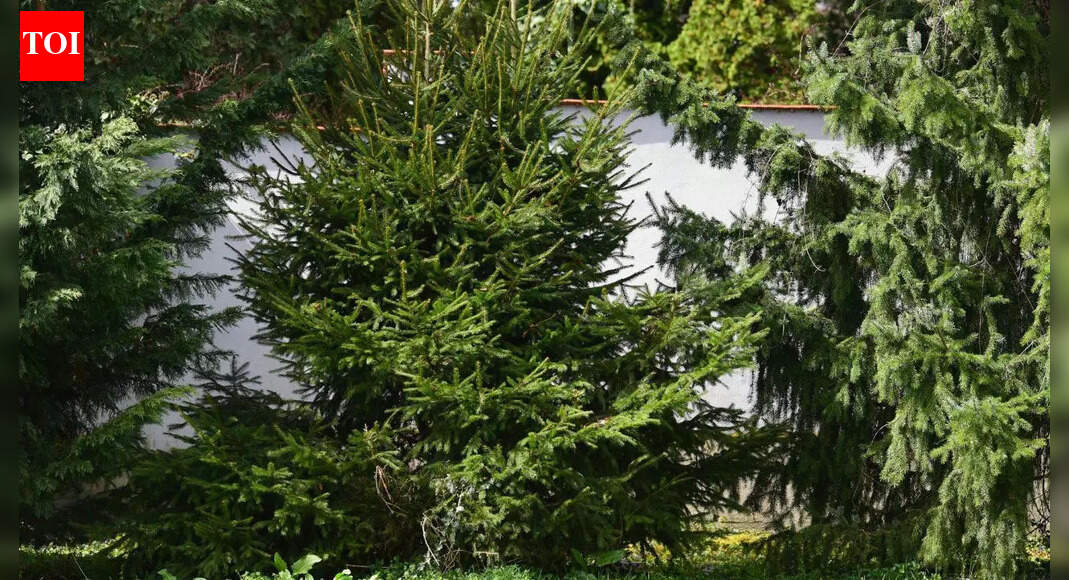
Life on Earth relies upon an astonishingly short list of elements. Carbon, hydrogen, and oxygen compose the essential structure of all living things, trace amounts of metals like iron and calcium serving specific biological roles. But gold certainly cannot be one of them. This is why scientists were left aghast by the discovery of minute particles of solid gold present inside the needles of the Norway spruce trees. And how, wondered scientists, does a living tree contain a metal that is one of the most valuable on Earth? The answer may lie elsewhere, specifically in a hitherto unknown relationship between the tree and minute bacteria.
Mystery of gold nanoparticles forming inside plant tissue
According to Springer Nature Link, it is essential to note that gold is an inactive and rare element in the biological realm. Although it is no secret that plants can absorb metals present in the soil, these metals are likely in a dissolved ionic form and not in a particulate or solid state. Initially, when scientists observed gold nanoparticles in spruce needles, it defied prevailing assumptions about the presence of metals in a living organism.They knew that gold was dissolved in the soil as ions. These ions were able to move easily with the groundwater. When a tree pulls water up its root system, trace amounts of metal ions would migrate up with the water into its leaves and needles. It would normally isolate these in a non-toxic form by encapsulating these ions in a chemically inactive compound. The part that presently cannot be explained is how these scattered ions were being reduced to solid particles of gold without the use of heat, pressure, or machinery.
How microbes were identified as the source of gold nanoparticles
In 2025, the most logical explanation came from a study published in Environmental Microbiome. The study compared Norway spruce trees with gold nanoparticles to those that did not have gold nanoparticles. The results were stark. Only the Norway spruce trees with gold nanoparticles had dense aggregations of certain bacteria in their needles.There were three different bacterial species consistently present surrounding the gold particles. These bacteria were absent in trees with no gold deposits, and this makes it very clear that they are indeed involved in the process of making gold on the trees. Instead of the tree being responsible for making its own gold, metalworking microbes are believed to convert the ions of dissolved gold to solid nanoparticles.
How microbes may be turning ions into solid gold
The actual biochemical process is still being discovered, but it is believed to happen during bacterial biofilm formation. Biofilms are shields that microbes develop to protect themselves. It is during this process that the environment around the bacteria becomes chemically conducive to gold ions falling out of solution and forming gold particles.In short, the tree sustains the gold ions in the tree, while the bacteria create the conditions in which the gold ions can be solidified. This unseen partnership enables the gold to coagulate in concentrations that are harmlessly embedded in the living tissue.
What the gold-bearing trees mean to modern geology
The fact that plants take in metals from the soil is no new finding either. For a long time, geologists have been using plants as a method for finding mineral deposits under the earth, which can be done in biogeochemical exploration using an analysis of a leaf, a skin, or a needle.However, this approach has always been constrained by a lack of understanding about metal behavior within plants. The finding of active bacterial participation in the process of mineral formation could revolutionise such estimates. Much more can now be learned about bacterial processes, such that future assessments could include more evaluation of plants, thereby obviating the need for core samples. These effects are not limited to mineral prospecting. The phenomenon seen on these spruce trees is an example of biomineralisation, whereby living organisms can precipitate dissolved minerals to form solid minerals,” said the expert. This process can be used to clean soil and water that contains toxic metals.Abandoned mine sites, industrial sites, and polluted waterways tend to have perilous amounts of these metals. Plants and beneficial microbes need to learn to leverage each other to remediate these elements by converting them into solid form. However, it has become crucial to learn that plants cannot do it by themselves.

