


ISLAMABAD:
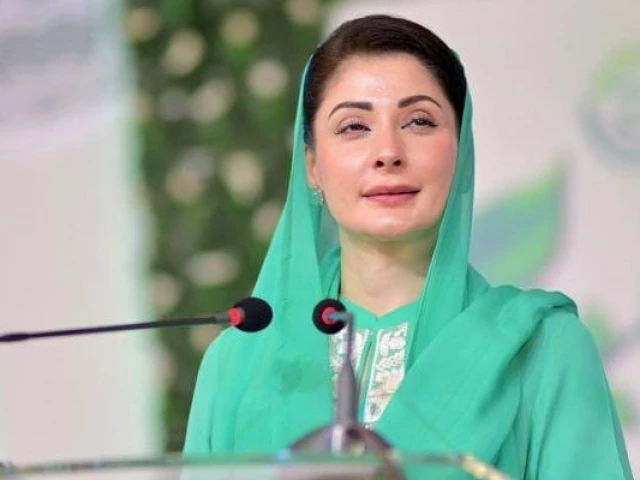
In 2021, when her party, the PML-N, was going through hard times, with both her father, Nawaz Sharif, and uncle, Shehbaz Sharif, behind bars, Maryam Nawaz highlighted the link between resistance and dialogue.
Maryam, who now serves as Punjab’s first female chief minister, had then said that “only if there is resistance will there be reconciliation”. She had positioned herself as a leading voice of resistance within her party.
“Power talks to power. The powerful do not speak to the weak. The moment you show weakness, your enemy will hit you hard. You don’t get anything on a tray; you have to fight for your rights,” she had reportedly said.
Maryam had apparently made these remarks in response to calls from sections of her party urging her to soften her rhetoric and pursue reconciliation.
That hard-line approach adopted by Maryam and her father, Nawaz Sharif, was believed to have played a key role in persuading the then powers that be to engage with the PML-N and other opposition parties.
Fast forward to 2025, and the same philosophy is now being professed by a section of the PTI, which is going through an even tougher time, with its founder Imran Khan in jail and the party struggling to find political ground for dialogue.
Following the conviction and sentencing of Imran Khan and his wife in the Toshakhana-II case, the former prime minister has urged the nation to “prepare for a street movement,” declaring that “there is no alternative left” and that “the entire nation will have to rise for its rights”.
The responsibility for mobilising this movement now rests with Khyber-Pakhtunkhwa (K-P) Chief Minister Sohail Afridi, whose mantra closely mirrors that of Maryam: reconciliation without resistance is not an option.
Before wrapping up his three-day visit to Lahore, Afridi said the PTI would use street protests to bring the government to the negotiating table.
“We will be at a loss if we enter into dialogue without resistance. So, the protest movement will continue until the rulers come to the table after recognising the opposition as an equal partner,” he said.
The strategy has inevitably drawn comparisons with the PML-N’s approach when it was on the receiving end of state pressure. However, PTI leaders reject any such similarity.
Speaking to The Express Tribune, senior PTI leader and former National Assembly speaker Asad Qaiser said Maryam Nawaz’s struggle could not be compared to the PTI’s resistance.
“Maryam Nawaz is an uneducated woman, and we do not accept her. She has neither a vision nor is she an ideal for us. We have our own narrative, our own strategy, and we believe that we are struggling for our rights and will continue to do so,” he said.
Senior journalist Ihtishamul Haq agreed that the PTI appeared to be following the same template Maryam adopted when the PML-N was in opposition. “There is no doubt that Imran Khan still enjoys a strong fan following. He remains popular, but his party is on weak footing,” he said.
He added that the PTI did pursue a policy of resistance, but it has so far failed to deliver results. Ihtisham noted that the situation was different when the PML-N was in opposition, as the PTI now appears increasingly isolated.
“All institutions are against them (PTI). Most political parties are not in their favour,” he said, adding that ultimately the PTI would have to find some space for itself through talks.
Senior journalist Sohail Warraich offered a more nuanced view of the contrast between the two. Speaking to The Express Tribune, he said that in a democracy, whenever there is a problem, the answer is more democracy.
“Similarly, if there is an issue with reconciliation, the solution is more reconciliation. Resistance, on the other hand, is about controlling the state or its institutions. Since the state has a monopoly on violence, no political party or individual can directly fight it,” he added.
Commenting specifically on the PTI, Warraich said the party’s strategy at present revolves entirely around resistance, with no room for reconciliation.
He said life offers two ways to deal with obstacles: offering resistance or exploring alternatives. “The PTI, however, has not explored any alternatives. Their street power has largely diminished, and while their vote bank still exists, it has limited impact as long as elections are not held.
“They need a strategy to organise their votes and party structure. If they truly want to agitate, it must be done in an organised manner.”
According to Warraich, the party has so far been unable to do that. In Punjab, he said, there is no effective PTI organisational structure. “Rallies and processions mostly take place in K-P, while in Punjab, nothing significant happensnot even a ripple,” he added.
As the PTI embraces resistance as a precondition for dialogue, the key question remains whether the public will respond to the party’s call for protests, and more importantly, whether the powerful quarters will change their course towards the embattled PTI and its jailed leadership.

