


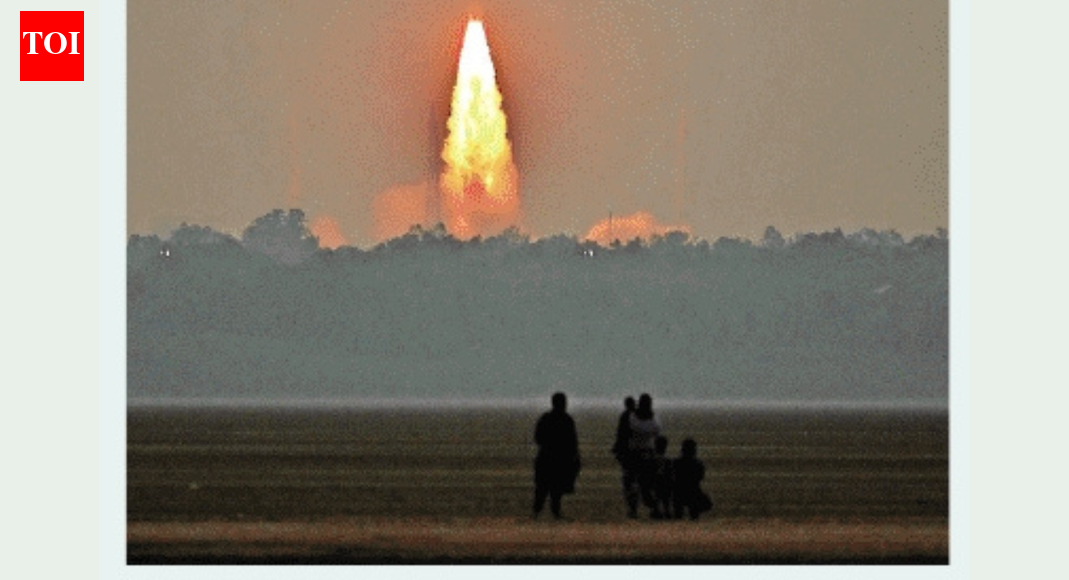
1 Ship to breach Earth’s CRUST Next year, a 600-foot Chinese research vessel will set sail to find the perfect site from where it will start drilling down to the Mohorovicic Discontinuity (Moho), the boundary between Earth’s crust and mantle. Scientists have been trying to breach Moho since 1961 to study tectonic activity. Moho lies 30-50 km below continents, but is just 5-10 km under oceans. The Chinese vessel has been designed to reach 11,000 metres below the sea surface.2 Solar blasts Our Sun is set to hit peak ‘solar maximum’ in 2026, a period of coronal mass ejections or CMEs. In 2022, one CME knocked down 38 satellites. This time, India’s Aditya L1 observatory will be near the Sun to image CMEs, with a special scope that lets it isolate the Sun’s outer edge, for analysis. Aditya’s data will be used to warn infrastructure of an incoming CME.3 Fight against rare diseasesIn early 2025, KJ Muldoon, a baby from Philadelphia, became the first person in the world to receive a personalised CRISPR geneediting therapy for a rare disorder that had left him unable to process protein in his diet. The team that treated KJ may seek a nod next year to trial gene-editing therapies in more children with rare metabolic disorders. Another group is set to ask for permission to trial the therapies in those with serious immune disorders.4 Blood test for 50 cancersResults from a UK clinical trial of a blood test that can detect nearly 50 types of cancers are expected in 2026. Over 1,40,000 people were in the trial for the test, which scans the blood for pieces of damaged DNA that have come off tumours. In a previous trial of 25,000 people in the US, the test gave one in 100 people a “positive”. And in 62% of these cases, a cancer was confirmed later.5 First private PSLV launches soonEarly next year, all eyes will be on PSLV-N1, the first ever PSLV developed by the private sector — a consortium led by HAL and L&T. N1 is expected to carry earthobservation satellite EOS-10 into orbit, and is being seen as a key step towards a domestic space industry.6 Americans head to the moon, againNasa is preparing to send four astronauts on a 10-day trip around the Moon for its Artemis II mission, the first time humans will go beyond low-Earth orbit since 1972, when the Apollo programme ended. The crew will test systems for future lunar stays.

