


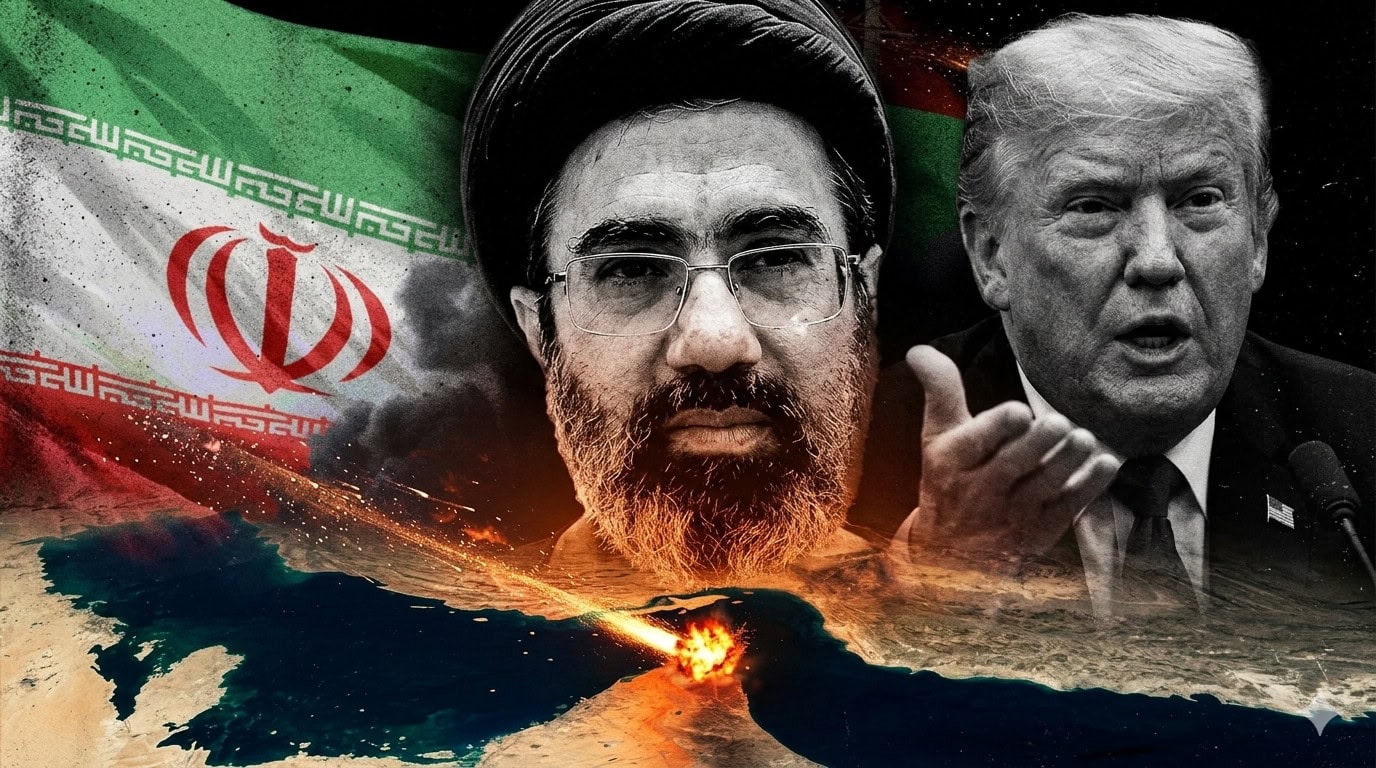
TEHRAN – Iran and US are locked in tense exchange after 48-hour ultimatum tied to key Strait of Hormuz. US President Donald Trump issued stark warning, prompting immediate counter-threats from Tehran, while the wider region, already shaken by missile strikes involving Israel, waits anxiously as the confrontation edges closer to open conflict.
Iran responded immediately with an equally forceful counter-threat. Iranian military’s operational command, Khatam al-Anbia, vowed that if the US or its allies strike Iran’s energy infrastructure, Tehran will retaliate by targeting American and allied energy networks, information technology systems, and desalination plants across the region.
This dramatic exchange of threats comes as the Middle East conflict enters its fourth consecutive week, with tensions already boiling over into direct military exchanges.
The situation turned increasingly volatile as Iranian missiles struck two populated areas in southern Israel overnight, causing widespread destruction. Multiple buildings were damaged or destroyed, and dozens of civilians were injured. The strikes occurred alarmingly close to Israel’s central nuclear research facilities, raising fears of potential escalation toward critical strategic infrastructure.
The attacks coincided with reports of an earlier strike on Iran’s Natanz nuclear enrichment facility in Tehran, further fueling a cycle of retaliation between arch-rivals.
Iranian officials celebrated the strike as a demonstration of growing military reach. Iran’s parliamentary speaker Mohammad Bagher Ghalibaf, stated on social media that the failure of Israel’s defenses in heavily protected zones effectively signals the conflict has entered a new and more dangerous phase.
Meanwhile, international nuclear authorities reported no detected radiation leaks or damage to Israel’s nuclear facilities, easing immediate fears of a nuclear incident but doing little to calm the broader geopolitical alarm.
Israel’s military leadership warned that the conflict is far from over. General Eyal Zamir stated that the war shows no signs of nearing its conclusion, underscoring expectations of prolonged hostilities.
Beyond the battlefield, the consequences of the conflict are already rippling across the global economy. Rising food and fuel prices are being reported worldwide, as instability in one of the world’s most critical energy corridors disrupts supply chains and market confidence.
Uncertainty also surrounds the internal power structure within Iran. Questions remain about decision-making authority, particularly as Supreme Leader Ayatollah Mojtaba Khamenei has not been seen publicly since his appointment.
Iran threatens attacks on Middle East Water supplies in response to Energy Strike risks

