


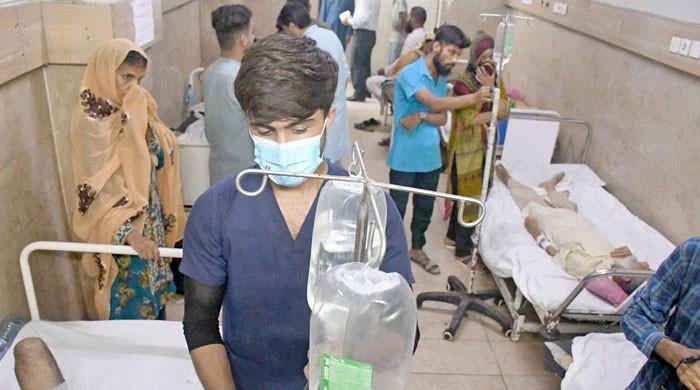
- Patients must visit multiple centres for surgery and therapies.
- Many terminal patients lack access to proper palliative care.
- Fragmented care delays treatment and raises costs for families.
Cancer patients across Sindh, including Karachi, are facing serious difficulties as no public sector hospital in the province provides complete cancer treatment for all types under one roof.
Due to this gap, patients are forced to visit multiple facilities for surgery, chemotherapy, and radiotherapy, while many terminally ill individuals lack access to proper palliative care to relieve their suffering, The News reported.
Health officials and oncologists say the fragmented system of cancer care means patients are frequently referred from one hospital to another, delaying treatment and increasing the financial and emotional burden on families already struggling with the disease.
Pakistan records more than 180,000 new cancer cases every year, according to health experts, with Sindh accounting for a significant proportion due to its large population and better diagnostic facilities that detect cancers more frequently than other regions.
Despite Karachi being Pakistan’s largest city and the healthcare hub of the province, no single government hospital currently provides complete cancer care, including surgery, chemotherapy, radiotherapy, and palliative care services. As a result, patients often begin treatment at one institution but are referred elsewhere for other components of therapy.
A recent case involving a 55-year-old man from Hyderabad diagnosed with stomach cancer illustrates the ordeal faced by many families seeking treatment.
According to a senior official of the Sindh health department who recently retired, the patient was initially referred to the Sindh Institute of Urology and Transplantation (SIUT) in Karachi after being diagnosed in Hyderabad. However, after visiting its Reagent Plaza facility and the main hospital near Civil Hospital Karachi, he was advised to seek treatment at Jinnah Postgraduate Medical Centre (JPMC).
At the JPMC, doctors in the cancer ward examined the patient but referred him to the Karachi Institute of Radiotherapy and Nuclear Medicine (Kiran), a specialised cancer treatment centre run by the Pakistan Atomic Energy Commission.
When the patient reached Kiran hospital, the administration referred him back to the JPMC after determining that the cancer had spread to other organs and had reached stage four, making curative treatment unlikely.
According to the health official, oncologists at the JPMC then advised the patient’s relatives to seek palliative care at the Aga Khan University Hospital because no public sector hospital in Sindh offers dedicated palliative care services for terminal cancer patients.
“After wandering between hospitals for several days, the patient returned to Hyderabad and is now waiting for death at home. Cancer causes immense pain and suffering, but in the largest city of Pakistan, no one was able to relieve his symptoms,” the official said.
The absence of palliative care services in public hospitals means many patients with advanced or metastatic cancers spend their final days in severe pain without proper symptom management.
Another major challenge is the limited availability of strong pain medications. Doctors say oral and injectable morphine, considered the standard treatment for severe cancer-related pain, is rarely available in public hospitals. Similarly, fentanyl patches used to manage chronic cancer pain are difficult to obtain.
Due to strict regulatory controls and limited supply, many hospitals either do not stock these medicines or face hurdles in procuring them, leaving patients to suffer uncontrolled pain.
Officials within the Sindh health department acknowledge that cancer treatment services are scattered across several institutions in Karachi.
At JPMC, patients can undergo cancer surgery while chemotherapy is arranged through financial assistance programmes such as Pakistan Bait ul Maal for those who cannot afford the expensive medicines. Hospital officials say the JPMC also has one of the country’s major radiotherapy facilities but lacks structured palliative care services.
Despite the rising cancer burden, Sindh has yet to establish a comprehensive public sector cancer hospital that provides diagnosis, surgery, chemotherapy, radiotherapy, and palliative care under one roof.
This is despite the provincial government spending hundreds of millions of rupees to support specialised procedures such as bone marrow transplants at institutions like the Dow University of Health Sciences and the National Institute of Blood Diseases in Karachi.
Repeated attempts were made to obtain the version of Sindh Health Minister Dr Azra Pechuho through her personal staff, but she was not available for comment. She has, however, stated on several occasions that Sindh has some of the best healthcare facilities in the country and that the province’s achievements in the health sector are often not highlighted.
Meanwhile, patients and their families continue to bear the brunt of the fragmented system, with many forced to sell property, borrow money, or seek help from charities to continue treatment.
Health experts warn that without integrated cancer treatment centres and proper palliative care services in public hospitals, thousands of patients in Sindh will continue to struggle not only to receive treatment but also to find relief from the pain caused by advanced stages of the disease.

