


Last Updated:
The Maharashtra government presented a budget that seeks to balance economic expansion with social welfare, while laying the groundwork for the state’s long-term economic goals




According to Fadnavis, the state’s revenue deficit has consistently remained below 1% of the GSDP.
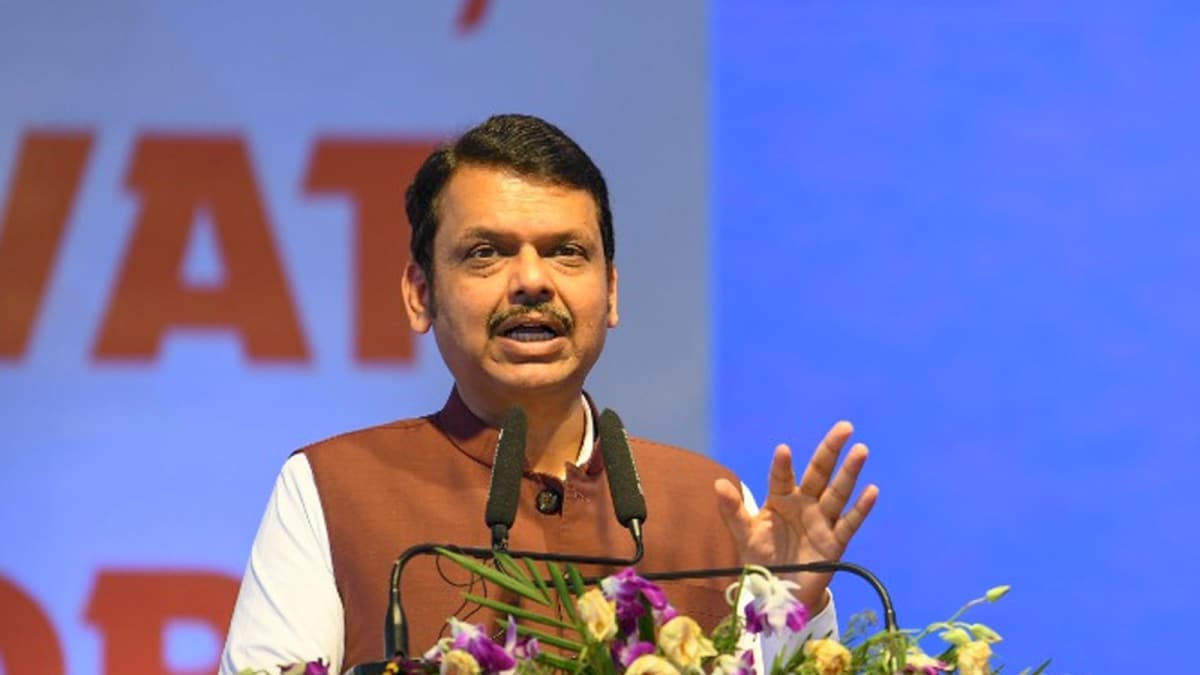
Maharashtra CM and Finance Minister Devendra Fadnavis on Friday, March 6, presented the state budget for 2026-27 in the Assembly, announcing a series of measures spanning agriculture, infrastructure, industry, urban development, health, and social welfare. The Maharashtra Budget 2026, with a total outlay of Rs 7.69 lakh crore, lays out an ambitious roadmap to accelerate the state’s economic growth while expanding welfare schemes for farmers and women.
From farm loan waivers and incentives for timely repayments to large-scale infrastructure projects and plans to reshape urban development across the state, the budget outlines the government’s vision of building a progressive, sustainable and inclusive Maharashtra.
The Maharashtra government has also set a long-term goal of helping the state economy move toward becoming a one trillion-dollar economy in the coming years and a $5 trillion economy by 2047.
There were also emotional moments in the Maharashtra Assembly as Fadnavis began presenting the budget. Members raised slogans of “Ajit Dada Amar Rahe”, paying tribute to former state finance minister Ajit Pawar, who died in an air crash in January. Fadnavis announced that a memorial will be built for the late NCP leader.
Relief for farmers: Loan waiver and incentives
One of the most significant announcements in the Maharashtra budget was a farm loan waiver scheme aimed at easing financial pressure on farmers. Under the Punyashlok Ahilyadevi Holkar Shetkari Karjmafi Yojana, crop loans of up to Rs 2 lakh taken until September 30, 2025 will be waived for eligible farmers. The government also announced a Rs 50,000 incentive for farmers who regularly repay their crop loans on time.
Alongside financial relief, the government also unveiled plans to strengthen the agricultural sector through technology and sustainability. Natural farming will be promoted across 5 lakh hectares, while value chains for 10-15 crops will be strengthened to help farmers access global markets.
Artificial intelligence (AI) and digital platforms will be introduced in farming practices, and AI innovation centres will be set up at four agricultural universities to support research and technological advancement in agriculture.
Women’s welfare schemes to continue
The government confirmed that the Mukhyamantri Majhi Ladki Bahin Yojana, launched in 2024, will continue with adequate funding. Under the scheme, eligible women from economically weaker sections receive Rs 1,500 per month as financial assistance. The government also plans to expand initiatives aimed at creating more “Lakhpati Didis”, with a target of developing 25 lakh new women entrepreneurs in 2026-27.
Major push for education, startups and health
In the education sector, the state government proposed the development of a large EduCity in Navi Mumbai, which will house six international universities. In addition, eight to ten educational cities will be developed across Maharashtra.
To boost entrepreneurship, the government plans to nurture 1.25 lakh entrepreneurs and strengthen 50,000 startups over the next five years, strengthening the state’s innovation ecosystem.
In healthcare, a Maharashtra Institute of Public Health will be established in Nagpur. The Mahatma Phule Jan Arogya Yojana will also be expanded to cover more treatments and hospitals. The government also announced a Rs 4,500 crore rural disease detection programme, supported by the Asian Development Bank, which will focus on early screening for cancer, diabetes, and heart disease in rural areas.
Water, irrigation and rural development
The government announced plans for river-linking projects and measures to improve water availability across the state. By 2047, the aim is to ensure 55 litres of water per person per day in rural areas and 135 litres per person per day in urban areas.
In rural infrastructure, villages with populations of more than 1,000 people will be connected by concrete roads, improving connectivity and accessibility.
Mumbai and urban development roadmap
A significant part of the budget focused on the development of the Mumbai Metropolitan Region (MMR) and the broader urbanisation strategy for Maharashtra. With projections suggesting that 70% of the state’s population may live in urban areas in the coming decades, the government has proposed large-scale expansion and digitisation of civic services.
One of the most ambitious plans is the development of “Fourth Mumbai” or Mumbai 4.0 at Vadhavan in Palghar, which will function as a major logistics and warehousing hub. The government is also planning “Third Mumbai” (Mumbai 3.0) in the Atal Setu area, which is expected to become another major urban centre.
To prevent the formation of new slums in Mumbai, the government will introduce a “No New Slum Framework” using GIS technology, and this model may later be extended to other cities across Maharashtra. The Slum Rehabilitation Authority will prepare a plan to redevelop about 20 lakh slum houses and construct 10 lakh affordable homes under various housing schemes.
Transport and infrastructure expansion
Metro rail projects in Mumbai and Pune will continue, and the government plans to expand the metro network to 1,200 kilometres in the coming years. Progress on the Mumbai-Ahmedabad bullet train project was also highlighted. The government aims to complete work on three stations up to Thane and Talasari by 2027, with separate development plans for areas around Dadar, Thane, and Virar bullet train stations.
Additional expressways and transport corridors are also planned to strengthen connectivity across the state.
New growth hubs and industrial expansion
To boost industrial growth and employment, the government plans to establish 18 mega industrial hubs across the state. In addition, MSME centres will be set up in every district, which the government estimates could help generate up to 50 lakh jobs.
A major steel hub is proposed in Gadchiroli, expected to attract significant investment and strengthen the state’s industrial base. With support from NITI Aayog, the government also plans to develop separate growth hubs in Pune, Nashik, Nagpur, and Chhatrapati Sambhajinagar, following the development model being implemented in the Mumbai Metropolitan Region.
Another project under consideration is the creation of a world-class stadium and innovation hub on 130 acres in Taloja.
Green energy and sustainability push
The government aims to achieve 50% green energy by 2029 and 65% by 2035. The plan includes large-scale tree plantation drives and rooftop solar initiatives to promote sustainability.
Budget figures and fiscal targets
For the financial year 2026-27, the state budget estimates:
- Revenue receipts: Rs 6,16,099 crore
- Revenue expenditure: Rs 6,56,651 crore
- Revenue deficit: Rs 40,552 crore
The fiscal deficit is estimated at Rs 1,50,491 crore, and the government said it has kept the fiscal deficit below 3% of the Gross State Domestic Product (GSDP). According to Fadnavis, the state’s revenue deficit has consistently remained below 1% of the GSDP.
The government also aims to expand the Mumbai Metropolitan Region’s economy from the current $140 billion to $300 billion, positioning it as a major global economic hub.
Through a combination of welfare schemes, large-scale infrastructure investments, and ambitious urban development plans, the Fadnavis government has presented a budget that seeks to balance economic expansion with social welfare, while laying the groundwork for Maharashtra’s long-term economic ambitions.
Maharashtra, India, India
March 06, 2026, 18:29 IST
Read More

