



10 Morning stretches you should try: Starting your day with slow, mindful movement can improve circulation, reduce stiffness, and energise you naturally, without reaching for caffeine first. These simple in-bed stretches signal your muscles, joints, and brain to wake up gradually, setting a positive tone for the rest of the day.
1. Full Body Stretch (The “Morning Yawn” Stretch)
Lie on your back, extend your arms overhead, and stretch your legs in the opposite direction, as if trying to make your body longer. Hold for 5–7 seconds, release, and repeat 3 times. This stretch activates the nervous system, improves blood flow, and gently lengthens the spine after hours of stillness.
Benefits: Improves circulation, reduces morning stiffness, boosts alertness.
2. Knee-To-Chest Hug
Bring one knee toward your chest while keeping the other leg relaxed. Hold the shin and gently pull closer without straining. Switch sides, then try both knees together. This releases tension in the lower back and massages digestive organs.
Benefits: Relieves lower-back tightness, supports digestion, reduces bloating.
3. Gentle Spinal Twist
With knees bent, drop both legs slowly to one side while turning your head to the opposite side. Keep shoulders relaxed on the mattress. Hold for 20 seconds and switch. Move slowly and breathe deeply.
Benefits: Improves spinal mobility, releases trapped tension, aids posture.
4. Cat-Cow (Modified In Bed)
Come onto hands and knees on the bed. Inhale as you arch your back and lift your chest (Cow), exhale as you round your spine (Cat). Move slowly with your breath for 6–8 rounds.
Benefits: Awakens the spine, improves flexibility, enhances oxygen flow.
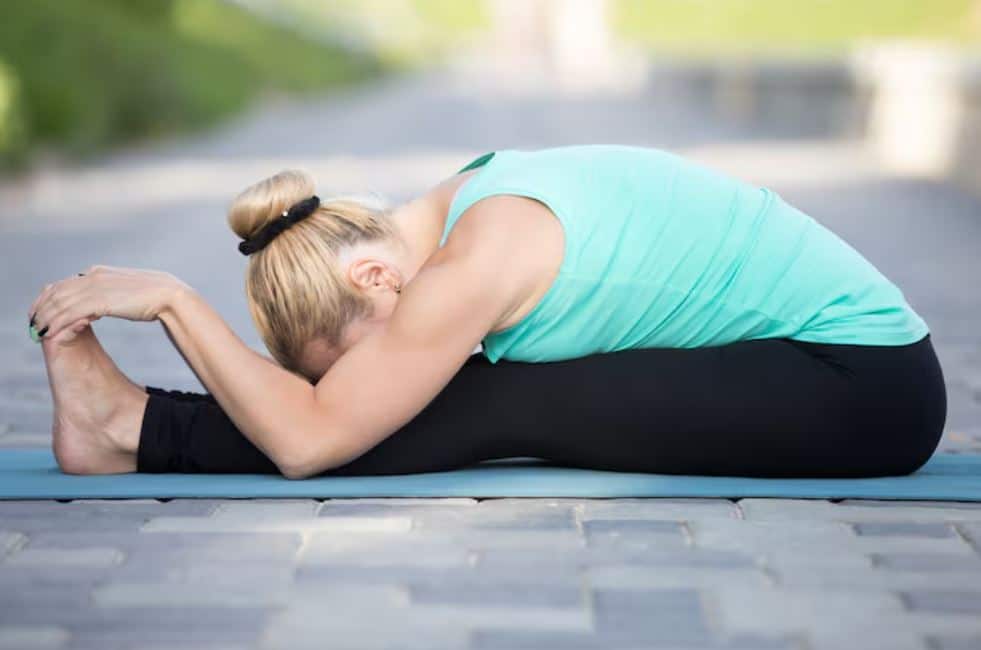
5. Seated Forward Fold
Sit up, extend your legs, and gently reach toward your knees, shins, or feet. Don’t force the stretch—just lean forward until you feel mild tension. Let your neck relax.
Benefits: Stretches hamstrings, improves circulation, reduces leg heaviness.
6. Figure-4 Hip Stretch
Lie back, cross one ankle over the opposite knee, forming a “4” shape. Gently pull the uncrossed leg toward you. This opens tight hips caused by long sitting hours.
Benefits: Releases hip stiffness, supports lower-back health, improves mobility.
7. Ankle and Toe Flexes
While lying down, point your toes away from you, then flex them back toward your face. Add gentle ankle circles. Repeat for 30 seconds.
Benefits: Boosts blood circulation, reduces morning swelling, wakes up leg muscles.
8. Side Body Stretch
Reach both arms overhead and slowly move them to one side while shifting your legs slightly to the same direction, creating a banana shape with your body. Repeat on the other side.
Benefits: Opens rib cage, improves breathing capacity, relieves side stiffness.
9. Neck Release Stretch
Keeping your head on the pillow, slowly turn it side to side, then nod gently up and down. Avoid forcing movement—this is about easing tension, not stretching deeply.
Benefits: Reduces neck stiffness, prevents tech-neck pain, improves circulation to the brain.
10. Deep Belly Breathing With Arm Expansion
Place one hand on your belly, inhale deeply through the nose while opening your arms outward, and exhale slowly while bringing them back. Focus on expanding the abdomen rather than the chest.
Benefits: Calms the nervous system, improves oxygenation, reduces morning stress hormones.
Why Morning Bed Stretches Matter More Than You Think
After 6-8 hours of sleep, muscles shorten, joints stiffen, and circulation slows. These gentle movements rehydrate tissues, stimulate lymphatic flow, and transition the body from rest mode to active mode without shock. Unlike intense workouts, they support long-term flexibility, reduce injury risk, and improve energy naturally.
(This article is based on information available in the public domain and on input provided by experts consulted.)

