


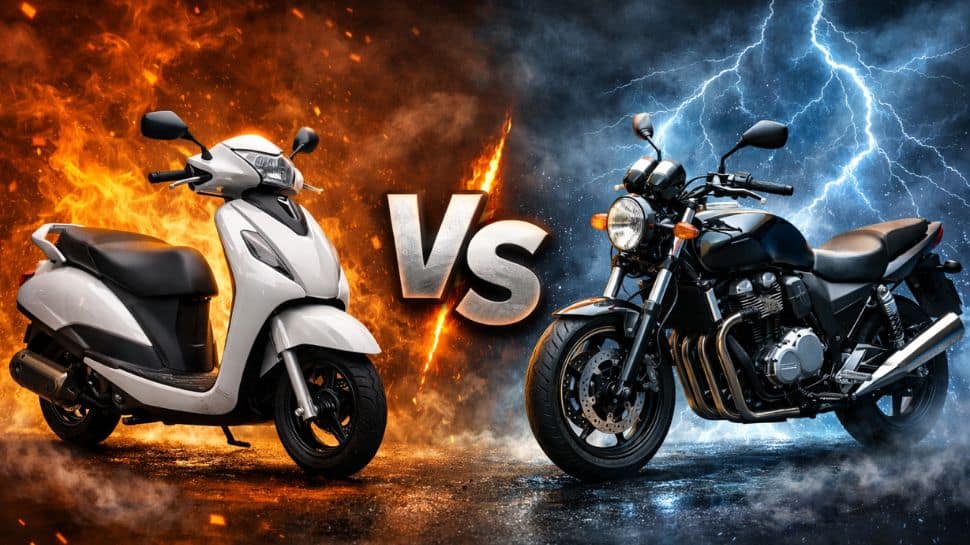
Why scooty has no gear: Scooters, popularly known as scooties in India, are among the most common two-wheelers on city roads. From students to office-goers, many riders prefer them for daily commuting. One common question many buyers ask is: why do scooties not have gears like motorcycles? The answer lies in scooty’s design, technology, and purpose.
Most modern scooters use a system called Continuously Variable Transmission (CVT). Unlike traditional motorcycles that have manual gears operated by the rider’s foot and clutch lever, a CVT automatically changes the gear ratio based on speed and throttle input. This means the rider does not need to shift gears manually.
The CVT system uses a belt-and-pulley mechanism that adjusts smoothly as the scooter accelerates or slows down. Because of this setup, scooters offer a twist-and-go riding experience. This makes riding a scooty convenient in heavy traffic, where frequent stopping and starting are common.
City convenience
Scooters are mainly built for short-distance city commuting. Manufacturers focus on comfort, ease of use, and practicality. Removing manual gears makes scooters easier to ride, especially for beginners and those who do not want the hassle of clutch control.
The gearless system also reduces rider fatigue in traffic. With no need to constantly change gears, riders can focus more on the road. This user-friendly nature has made scooters popular among young riders, women, and senior citizens.
Simple mechanics
Most scooters have smaller engines compared to motorcycles, usually ranging from 100cc to 125cc. These engines are designed for smooth and steady city performance rather than high-speed highway riding. An automatic transmission suits this power range well.
In addition, having no manual gearbox simplifies the riding mechanism. It reduces the learning curve and makes the scooter more accessible to a wide range of users. In simple terms, scooters do not have gears because they are designed to be easy and convenient for everyday use.

