


Indians’ love for land is never-ending and the real estate developers have been catering to those aspirations for a long time. Since the Delhi-NCR is highly populated and densely packed and land is a costly affair in Noida, Gurugram and Delhi, people are moving towards other cities of Haryana and Rajasthan. To decongest Delhi, the regional rapid transit system or Namo Bharat corridor has also been planned till Alwar via Gurugram, benefitting regions like Manesar, Bawal and Neemrana. The 196 kms long corridor will have 22 main line stations. Then there is the Delhi-Mumbai Expressway that is ushering in a revolution along its corridor.
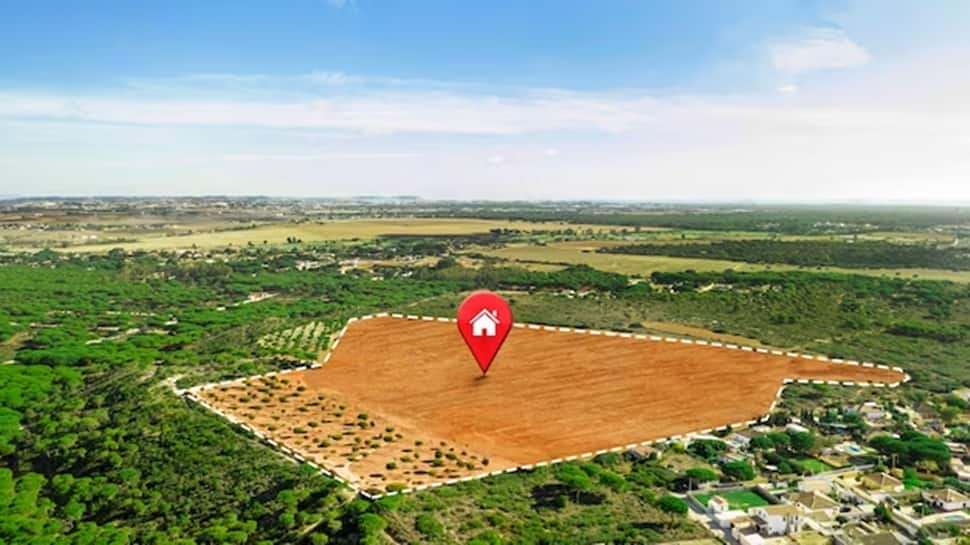
With land being in demand, the developers have also come out with farmlands or agri land parcels in a 100 to 200km radius of Delhi. Developers in parts of Rajasthan and the adjoining NCR are promoting agricultural land parcels along highways and rural roads as lifestyle “farm zones,” pitching them as long-term investment opportunities tied to expressway-driven growth.
Developers in parts of Rajasthan and the adjoining NCR are promoting agricultural land parcels along highways and rural roads as lifestyle ‘farm zones’, pitching them as long-term investment opportunities tied to expressway-driven growth.
“Decongesting NCR is no longer a policy choice — it is an economic and environmental necessity. Delhi cannot absorb infinite population, freight, housing, or pollution. The Delhi–Mumbai Expressway has opened a once-in-a-generation opportunity to structurally rebalance growth away from the NCR core and create new, planned urban anchors along its exits,” said Vardan Singh Chaudhry, Founder of Corridor Assets.
At Alwar, the Delhi–Mumbai Expressway directly touches two notified urban local bodies — Ramgarh and Baroda Meo — where master plans are already in place. “The Rajasthan Government is actively positioning new city development on the outer edge of NCR. China executed this same playbook through satellite cities like Tongzhou and Xiong’an around Beijing, and Kunshan and Jiashan around Shanghai. This kind of decentralised urban expansion is inevitable — the government is now on the cusp of building new cities here; it is only a matter of time,” said Robin Mangla, President M3M India.
Experts feel that the Delhi–Mumbai Expressway has the potential to structurally decongest the NCR by decentralising growth beyond its traditional urban cores. Improved regional connectivity is enabling the emergence of new growth corridors that integrate seamlessly into the wider NCR economic ecosystem. Over time, this transition is expected to ease pressure on saturated markets such as Gurugram and Delhi, while supporting the development of well-planned residential, commercial, and employment hubs along the corridor. In the long term, such connectivity-led expansion can drive more balanced urbanisation, enhance liveability, and encourage sustainable real estate development across the extended NCR region.
“Gurgaon has given NCR a remarkable growth story, but the Delhi–Mumbai Expressway offers a unique opportunity to decentralise NCR’s growth more equitably and sustainably. Anchoring new growth around ULBs like Ramgarh and Baroda Meo in Alwar can unlock well-planned residential, industrial and logistics hubs, while easing pressure on Gurgaon. With faster connectivity, lower land costs and cooperative local government, these new nodes can serve as independent urban centres not only generating jobs but also bringing in investments and enhancing the overall quality of life in NCR,” said Anil Godara, Founder and Managing Director, J Estates.
While upcoming projects or farm parcels emphasise scenic settings and future appreciation, real estate experts caution investors to carefully verify the land’s legal clearances and planning status before investing. Experts also stress the need to verify construction rights, noting that only land with approved land-use status and building permissions permits lawful development of farmhouses or short-stay accommodations. Parcels lacking such approvals may invite regulatory action, including construction halts or demolition, as seen in past enforcement drives across NCR regions. Therefore, while these deals may appear lucrative, a due diligence is always needed.

