


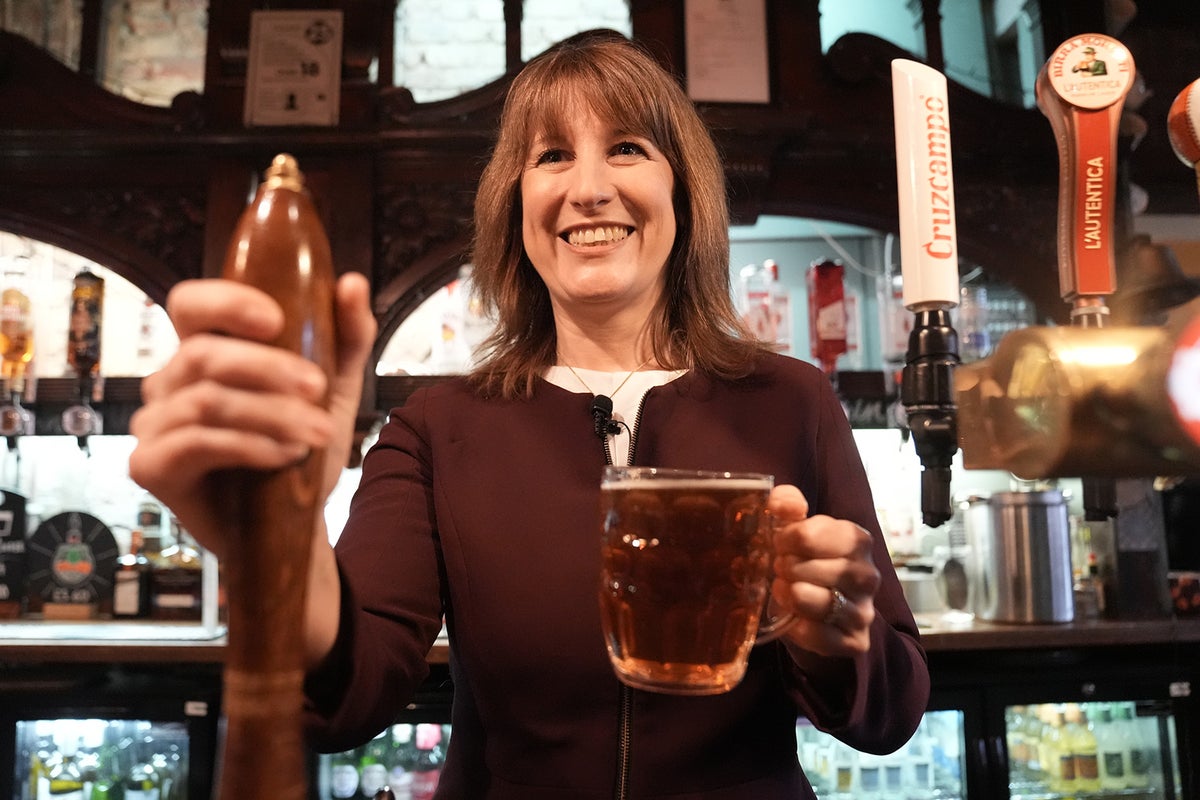
Rachel Reeves is facing a backlash from Labour MPs, pub landlords and business owners over the “wholly inadequate” 15 per cent cut in business rates bills.
The support, which the Treasury has said is worth £1,650 for the average pub next year, came after warnings that a decision in the chancellor’s Budget to end the rate relief brought in during the Covid pandemic would lead to mass closures and job losses.
The anger prompted a national campaign of pubs led by TV presenter Jeremy Clarkson, barring Labour MPs from their premises.
The Independent first revealed that the government would U-turn on the plan to end the relief earlier this month, and the Treasury finally confirmed pubs and music venues would get 15 per cent off their business rates bills from April as part of a major support package.
However, other hospitality businesses such as hotels, restaurants and cafes will not receive additional support despite their own concerns over soaring tax bills.
The Independent has seen a letter from 50 Labour MPs, organised by Labour Knowsley MP Anneliese Midgley, a member of the culture select committee, warning that the change is not enough.
The letter, also signed by former minister Justin Madders, and leading Labour MPs Stella Creasy, Dan Carden, Sharon Hodgson, Alex Sobel, Kerry McCarthy and others, warns that music venues are still under threat.
They said: “The UK Music industry is one of our most important cultural and economic assets, delivering world-renowned artists, venues, festivals, studios and generating significant international soft power. In 2024, it contributed £8bn to the economy.
“Many of us have been contacted by constituents in recent months who use and run these critical music spaces, explaining that they will be severely impacted by the 2026 business rates revaluation, scheduled to take effect on 1 April 2026.
“According to the Music Venue Trust, 84 grassroots music venues in England face rateable value increases of between 45 per cent and 275 per cent from 2025-26 to 2026-27. These increases do not represent marginal adjustments but existential threats.”
Announcing the support in the House of Commons on Tuesday, Treasury minister Dan Tomlinson said the property tax bills for pubs and music venues in England will be reduced by 15 per cent in 2026-27 and then be “frozen in real terms” for the next two years.
But responding to the announcement, Ms Creasy urged ministers to revisit the exclusion of cafes, soft plays and community centres from its plans, claiming it could lead to their closure.
She said: “I’m sure he does not want to be the minister responsible for sending toddlers into pubs, because the other places that their parents might take them during the day have closed down. That would not be in anybody’s interest.”
The Treasury’s intervention comes after an intensifying backlash from industry bosses and MPs over impending tax increases.
However, industry bodies UKHospitality and the British Beer and Pub Association (BBPA) had warned that pub business rates bills in England would still increase by an average of 15 per cent, or £1,400, in April without intervention.
They said this would have led to an average rise of 76 per cent, or £7,000, by the 2028-29 financial year.
And not all landlords were convinced. Dom Jacobs, founder and managing director of the Ardent Pub Group in London, said: “Rachel Reeves’s latest U-turn may be welcome, but it is wholly inadequate.
“Hospitality continues to shoulder an excessive tax burden, and this half-measure does nothing to change that.
“Instead of backing a sector capable of delivering real growth and jobs, the government has once again missed the mark, a failure that will inevitably push many brilliant publicans out of business.”
Matthew Todd, landlord of The Wonston Arms near Winchester, Hampshire, said: “I don’t see how it’s going to save the venues that are going to close – it’s actually a very small amount that’s being talked about. It’s woefully not enough, I’m afraid.”
Andy Lennox, who runs The Old Thatch in Wimborne, Dorset, said the rates relief was a “discount on a bill rise” and did not go far enough.
He said, “This is a bill that we can’t afford to pay anyway. It’s been discounted down, but it’s still going up. And essentially, we have always argued that there needs to be meaningful tax reform in line with Europe, so VAT cut to 13 per cent.
“So ultimately, whilst it is welcomed that the government is listening, we don’t think it goes far enough.”

