


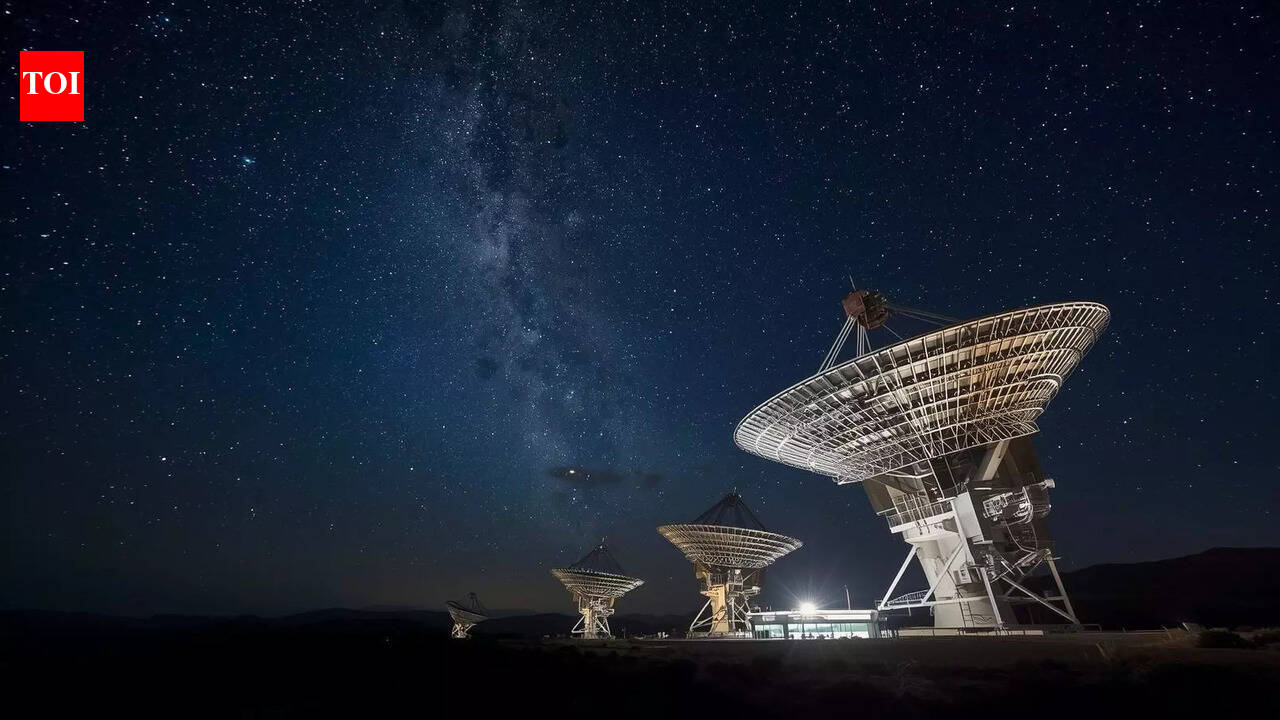
The European Space Agency has quietly added a major piece to its global space communications network with the inauguration of a new deep space antenna in Western Australia. The structure doesn’t change the missions’ appearance or destination, but it does affect Europe’s ability to hear them. Located near the small town of New Norcia, north of Perth, the antenna is part of ESA’s long-running Estrack network, which supports spacecraft operating far beyond Earth orbit. Its opening reflects a steady rise in the amount of data being sent back from space and a desire to handle that flow without relying too heavily on external partners. For ESA, the antenna represents infrastructure rather than spectacle, but infrastructure that shapes what missions can realistically attempt in the years ahead.
Europe’s latest space phone line can hear spacecraft billions of kilometres away
The new installation, known as New Norcia 3, is a 35-metre-diameter antenna designed to communicate with spacecraft travelling across the solar system. It is the fourth deep space antenna in ESA’s Estrack network and the second located at the New Norcia site. Once it enters service in 2026, it will support a wide range of current missions, including Juice, Solar Orbiter, BepiColombo, Mars Express and Hera. It will also play a role in future projects such as Plato, Envision, Ariel, Ramses and Vigil. The antenna increases the network’s capacity to receive large volumes of scientific data and send commands over very long distances, reducing scheduling pressure on existing ground stations.
Western Australia offers a strategic location
New Norcia sits in a geographical position that allows long tracking windows for deep space missions. Together with ESA’s stations in Spain and Argentina, it helps provide near-continuous coverage as Earth rotates. With the addition of the new antenna, New Norcia becomes ESA’s first ground station equipped with two deep space antennas. The site is operated locally by Australia’s national science agency CSIRO, which also manages NASA’s deep space complex near Canberra. This arrangement reflects a long-standing cooperation between European and Australian space organisations, built around shared technical expertise rather than short-term projects.
Technology built for weak signals and long distances
The antenna is the most technologically advanced deep space antenna ESA has built to date. Some of its components are cryogenically cooled to around minus 263 degrees Celsius, close to absolute zero. This extreme cooling allows the system to detect very faint signals sent from spacecraft millions or billions of kilometres away. For transmitting, a powerful radio frequency amplifier enables commands to be sent reliably across deep space. Advanced timing systems and radio frequency tools help ensure accuracy, which becomes increasingly important as missions operate farther from Earth and generate more complex data streams.
A role in international cooperation
Although the antenna strengthens Europe’s independent capabilities, it is also designed to support international collaboration. Through cross-support agreements, the New Norcia antenna can assist missions operated by agencies such as NASA, Japan’s JAXA and India’s ISRO, as well as selected commercial spacecraft. This shared use can improve efficiency and reduce duplication of infrastructure. ESA officials have described the antenna as a practical asset rather than a symbolic one, but it also signals Europe’s intention to remain a reliable partner in global space exploration.
Investment brings local and industrial benefits
The antenna has an estimated construction cost of 62.3 million euros, which includes upgrades to station buildings and services. The Australian Space Agency contributed three million euros towards the development of the New Norcia station. Construction was led by European industry, with Thales Alenia Space and Schwartz Hautmont as prime contractors, while several Australian companies were involved in on-site work. Australian space officials expect the project to generate long-term economic value and employment over its projected fifty-year lifetime.
New Norcia continues to expand its role
Beyond deep space communications, the New Norcia station supports other aspects of ESA’s activities. Smaller antennas track European launch vehicles as they pass over Australia after lift-off from French Guiana, capturing critical telemetry. The site also hosts a transponder used to calibrate ESA’s Biomass mission, which surveys Earth’s forests. These roles are less visible than deep space missions, but they contribute quietly to the reliability of Europe’s space programme. As more spacecraft travel farther and collect more data, the importance of places like New Norcia is likely to grow without much attention beyond specialist circles.

