


China’s economy grew by 5% last year, as record exports helped the world’s second largest economy meet its annual target.
Beijing had set a goal of “around 5%” economic growth in 2025, despite struggles to boost domestic spending and a prolonged property crisis.
China reported the world’s largest-ever trade surplus last week – the value of goods and services sold overseas compared to its imports – of $1.19tn (£890bn), driven by a rise in exports to markets outside the US, as President Donald Trump continued his tariffs policy.
But official figures released on Monday also showed that China’s economic growth slowed to a rate of 4.5% in the final three months of 2025 compared to a year earlier.
As well as China’s exporters moving away from the American market, China’s economic resilience was helped by lower-than-expected US tariffs after Beijing and Washington agreed a tariffs pause.
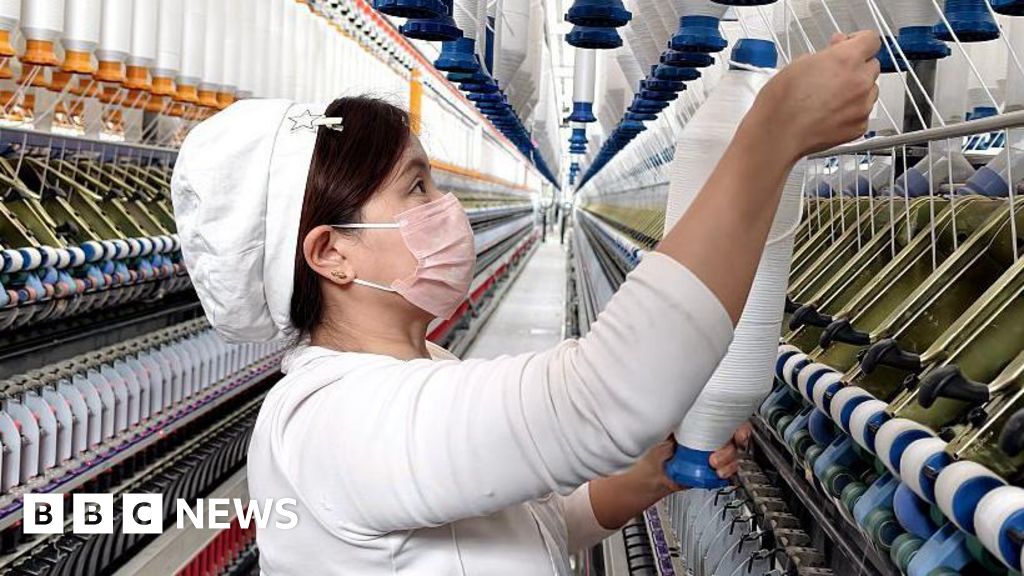
While China’s manufacturers continued to boost exports, the country is grappling with a number of issues in its domestic economy.
The country has been struggling with an ongoing property crisis and rising local government debt, which has made businesses more hesitant to invest and consumers cautious about spending.
Other new data on Monday showed that new home prices continued to fall in December, as the government struggled to stabilise the property market. Prices dropped 2.7% last month compared to a year earlier, the sharpest decline in five months. Property investment also fell 17.2% last year.
At the same time retail sales rose by just 0.9% in December, the slowest rate in three years.
But the country’s factory output increased by 5.2% in December from a year earlier, beating the 4.8% growth in November.
China’s leaders have pledged “proactive” policies this year as they look to increase domestic spending and shift reliance away from exports and investments.

