

PMIF26 to promote mining awareness, boost economic activity, and attract sustainable investment in Pakistan
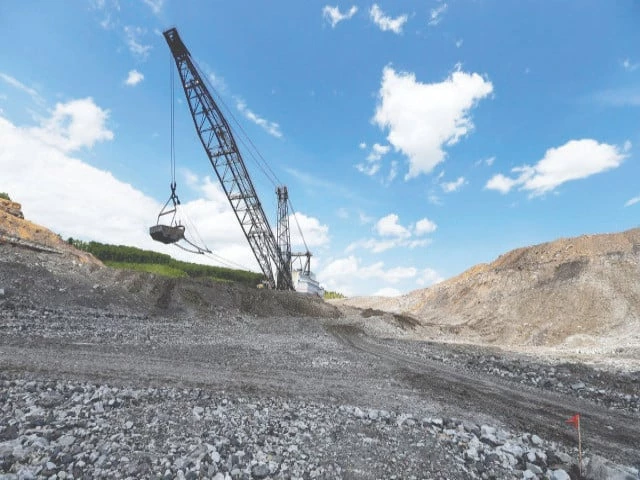
According to sources, Lersten proposed collaboration to assess reserves and secure offtake agreements for expedited mineral extraction. Photo: Reuters
Pakistan sits on vast untapped mineral wealth, including copper, gold, lithium, cobalt, rare earths and gemstones yet exports remain minimal and local communities see limited benefits. In a blog published in The National Interest, the author, Saima Afzal, notes that “Pakistan‘s policy reforms aim to align it with international standards and position itself as a responsible partner in the global minerals market”.
Building on PMIF25, which drew 5,000 delegates from over 50 countries and resulted in 14 MOUs, PMIF26 will host a Strategic Conference, Technical Sessions, an International Gemstone Exhibition, and a resource library for investors.
The Second Pakistan Minerals Investment Forum PMIF26 to be held April 8-9 in Islamabad is central to this strategy. Federal Minister for Petroleum Ali Pervaiz Malik said, “PMIF26 will serve as a key platform for promoting mining awareness, stimulating economic activity, and attracting sustainable investment into Pakistan’s mineral sector”.
Read: Pakistan’s minerals wealth: opportunities and risks
Mineral deposits in Balochistan, Khyber-Pakhtunkhwa and Gilgit-Baltistan, including the Reko Diq site with over 5.9 billion tonnes of ore, have long been underexplored. If utilised effectively, it can produce billions of dollars in revenue, provide thousands of job opportunities, and positively change the trade of the area.
The government recently released a national policy framework for gemstones, targeting 1 billion dollars in exports over five years with modernised certification and improved value addition. Prime Minister Shehbaz Sharif has approved “international standard laboratories, certification systems, and centers of excellence for gemstones” to boost credibility and draw private investment.
Reforms aim to empower local miners and entrepreneurs with better market access and fair pricing. They include skill development, modern technology use and collaboration with global industry players to improve product quality and export potential.
Countries like Chile, Australia, and Canada have leveraged their mining sectors through structured policy, transparency, and international collaboration.
Chile accounts for nearly one-third of global copper production, while Australia has developed lithium, cobalt, and rare earth exports. PMIF26 seeks to reduce Pakistan’s historical lag, showcasing investment-ready projects and reforms that meet global standards for extraction, transparency, and environmental management.
PMIF26 positions Pakistan as a regional center for critical minerals essential for energy transition, high-tech manufacturing, and industrial development. A recent MOU between US-based Strategic Metals (USSM) and Pakistan’s Frontier Works Organisation demonstrates potential for technology transfer, mineral production, and integration into global supply chains.
Read More: Govt begins outreach for Minerals Investment Forum
Experts predict that developing Pakistan’s mineral and gemstone industry could boost GDP by $5-7 billion annually over the next decade, creating tens of thousands of jobs. Strategic foreign investment, local reforms, and technological improvements could transform underutilized resources into a major economic driver.
Environmental protection and social safeguards are part of the agenda, with discussions on ESG compliance and worker safety integrated into PMIF26 proceedings.
By aligning policy with international standards and creating a transparent investment platform,
With rising demand for critical minerals, Pakistan aims to turn “untapped potential into measurable economic and social impact” and make its mineral sector a strategic engine of growth. PMIF26 is not merely a forum, it is a strategic milestone turning untapped potential into measurable economic and social impact.

