


 BBC
BBCAbbie Harvey’s gambling addiction was so severe that she could not drive for 20 minutes without pulling over to bet – and felt the urge became worse just before and during her period.
“To get over being emotional, I would use gambling as a coping strategy,” said Abbie, who lost more than £20,000 during her decade-long struggle with the addiction.
Abbie is not alone. Kiki Marriott, also a former gambling addict, noticed an increase in her gambling habits during the week before her period.
Both women have received treatment at the Parkland Place Rehabilitation Centre in north Wales, where clinical staff say they believe the menstrual cycle can have an impact on gambling behaviours.
Researchers at the University of Birmingham are now working with the Gordon Moody gambling harms charity to establish whether there is a link between hormonal fluctuations – caused by periods, ovulation, menopause and childbirth – and gambling addiction.
Warning: This article contains references to suicide
Abbie would predominantly gamble on her phone using online slots.
“The scheming, the lying, it just took over my whole life,” the 34-year-old from Barry in south Wales said.
“I would do it at four o’clock in the morning, I would do it at two o’clock in the afternoon. I would wake up in the middle of the night and all I wanted to do was gamble online.
“I’d be driving home from my sister’s, which is like 20 minutes away from me, and I couldn’t even wait 20 minutes before pulling over and doing online slots.”

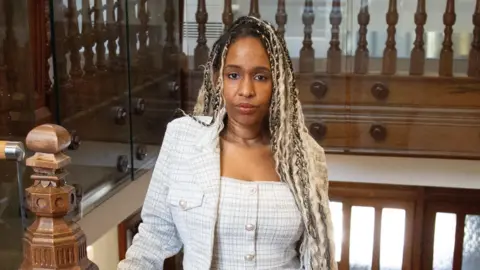
Like Abbie, Kiki would also gamble on her phone, often for more than 24 hours until she ran out of money.
The 40-year-old said her gambling addiction made her feel suicidal.
“I didn’t care whether I lived or died. It was like a slow and painful death,” Kiki told the BBC.
“I used to pray to die and just think ‘I can’t wait for this to be over’.
“Your mindset was just to do anything that you needed to do to still enable you to gamble.
“I was going without food shopping, I didn’t have gas, the only reason why I had electric and wi-fi is because I needed that to gamble.”
Kiki noticed her gambling habit became worse during the week before her period.
“Impulsivity and compulsive behaviours are more likely to shine bright in the week before my period – and that’s when I’d make even worse decisions around that week,” said Kiki from Woolwich in south-east London.
“I think there is a big connection between poor decision-making and impulsive behaviour during your menstrual cycle.”
Kiki said she reached her “catastrophic point and rock bottom” when she stole a considerable amount of money from her former partner’s bank account to gamble with.
“I wrote letters to the train driver, to the passengers, and apologised for the trauma that I was about to cause them by ending my life at the train station,” she said.
Instead, Kiki called the GamCare National Helpline – an organisation that provides free support for anyone affected by gambling harms.
“I knew that my death would have caused more trauma on other people and I just couldn’t do it,” she said.

The BBC has been given rare access to Parkland Place, a rehabilitation centre in Colwyn Bay, Conwy county, where Abbie and Kiki both received treatment for their addictions.
Run by the Adferiad gambling charity, it is a 16-bed unit which focuses on gambling, alcoholism and drug addiction through group sessions and one to one counselling.
Despite being mixed gender, only 25% of people arriving for treatment are women.
Cheryl Williams, manager of the centre, acknowledged the challenges women could face while attending a six-week programme.
“It could be that they’re the main caregivers for the children,” she said.
“There’s the stigma because they’re also seen as the homemakers so they can’t then necessarily afford the time for them to come into rehab.
“But actually, that’s a fraction of their life really, compared to what they’ve missed out on while they’ve been gambling.”
Cheryl said the team at Parkland Place recognised the impact of the menstrual cycle on gambling behaviours.
“We’ve noticed the females who are due on their menstrual cycle, gambling increases before the cycle has kicked in,” she said. “We take that into consideration while they’re here.”
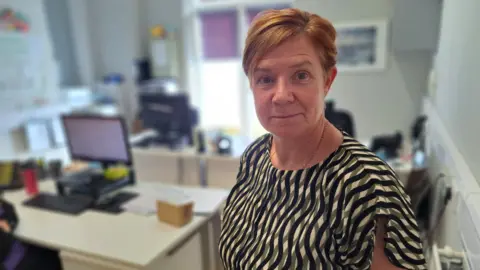
The Gordon Moody gambling harms charity, which has residential treatment centres across the country, said the number of women gambling in the UK – and the number of women with gambling addictions – was at an all-time high.
Dr Rosalind Baker-Frampton, clinical director of the charity, said she had noticed women were more likely to gamble in a harmful way during a hormonal fluctuation.
“You’re more likely to engage in risky behaviours around the time of ovulation, so that’s when an egg is released,” she said.
“That’s the time you’re most fertile. We also know of that before a women’s period, when she’s had a drop in progesterone.
“That includes things like chasing losses, spending more money than they want to spend, staying longer than they’d otherwise decide to stay.
“They end up spending more money and making more risky choices around gambling and not stopping at other points in their cycle.”
The charity said its research project with the University of Birmingham would take about four years to complete.
“We’re going to be looking at women who come into our treatment centre in Wolverhampton, so everyone who comes in will have the option to participate in the research,” said Rosalind.
The Gambling Commission, which licences and regulates commercial gambling, has said they are “always interested in new research” to “help inform our ongoing drive to make gambling safer”.
Researchers will also explore whether hormone-regulating medication could help with addiction.
“We have a theory that women who are on the pill or who are on hormone replacement therapy, because their hormones are at a more stable level throughout the month, may be less likely to experience these severe gambling cravings,” Rosalind added.
Kiki said she now recognised her triggers and her likelihood to gamble during certain points of her menstrual cycle, and has a strategy for tackling them.
“For me, it’s made a massive difference in how I handle situations in those particular weeks of my cycle,” she said.
“I know I need to pour love into myself the week before my period, I know I have to use my tools more, I have to be around other women in recovery, I have to lean on my group.”
She is encouraging further research into women’s health and addiction.
“I think there’s a hell of a lot more work to be done when it comes to your menstrual cycle and addiction and how that can correlate to making those bad decisions.”
If you have been affected by the issues raised in this story, the BBC’s Action Line contains a list of organisations who can provide support.

