


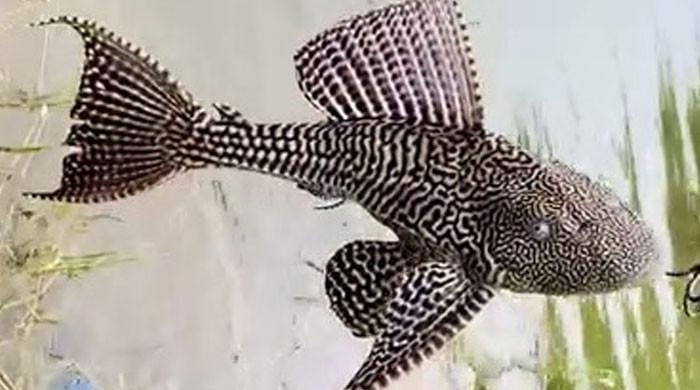
WWF-Pakistan has warned that an invasive fish species has been spotted in the waters of Sindh and Lower Punjab, posing a threat to biodiversity and the fisheries economy.
In a statement, the environmental organisation said that on January 4 an unusual fish was brought to Karachi Fish Harbour from a dhand near Sukkur, which was termed an “alien”, as no one was able to identify it.
It was an Amazon sailfin catfish.
This fish, it said, which has a thick, armoured body covered with bony plates, is an exotic species that was accidentally introduced into natural water bodies and is now found in the provinces of Sindh and Lower Punjab.
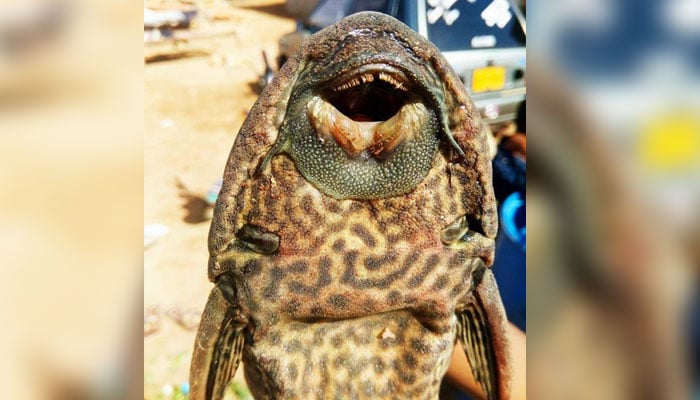
“The Amazon sailfin catfish is native to Latin America and is popular around the world as an aquarium fish. This species is known to be a highly successful invader, and since this species is now widely spread in Pakistan, its eradication and control are impossible,” the statement mentioned.
The organisation said that this species is among the 26 invasive fish species that have been introduced in Pakistan accidentally or deliberately, and have become invasive, have a detrimental impact on the aquatic biodiversity of Pakistan, and are threatening the delicate balance and function of the ecosystem.
Invasive fish species are known to severely disrupt aquatic ecosystems by outcompeting natives for food and space, preying on them, introducing diseases, and altering habitats, leading to biodiversity loss, economic damage to fisheries, and even ecosystem collapse, with impacts ranging from increased water turbidity to native fish extinctions and significant losses in commercial fishing revenue, WWF-Pakistan said.
It added that the spread of invasive species is considered a serious threat to delicate aquatic ecosystems in natural water bodies, including rivers, streams, and lakes in Pakistan.
Brown trout and rainbow trout were the first two exotic fish species that were introduced in the Khyber Pakhtunkhwa areas of Pakistan in 1928.
To enhance fish production and to control undesirable weeds in Pakistan, several exotic fish species, including Mozambique tilapia, common carp, goldfish, and grass carp, were also introduced in the 1960s, but all of these species became invasive and seriously affected local fish fauna.
In the 1980s, silver carp, bighead carp, Nile tilapia, and blue tilapia were also introduced, whereas grass carp was reintroduced to enhance aquaculture production.
All these species have also established themselves in natural ecosystems in Pakistan, affecting other fauna and flora. All these species were aimed at enhancing aquaculture production; therefore, their negative impacts on the environment were not given due consideration.
However, there is no disagreement that these introductions, including those of trouts, have affected aquatic biodiversity and the natural ecosystem.
Introduction of tilapias in the 1960s has devastating impact on the indigenous fish fauna of the natural water bodies, resulting in partial or total eradication of commercial fishes from some of the most important water bodies in warm water areas of Pakistan.
“Fish production from Manchar and Keejhar Lakes was drastically reduced due to prolific breeding and growth of tilapias, having a serious socio-economic impact on the fishermen of the area.”
The organisation said that in the last 30 years, several catfishes, including North African catfish, walking catfish, magur catfish, blunt-toothed African catfish, and Channel catfish, have been introduced in Pakistan, which are spreading profusely in Pakistan and have a serious impact of local fish fauna.
In addition to deliberate introductions for enhancing fish production, many species, such as the Amazon sailfin catfish, guppies, and mollies, have been introduced into the natural ecosystem due to improper handling in the aquarium trade.
“These fish are creating havoc in natural water bodies, especially around cities and towns, throughout Pakistan. WWF-Pakistan is cognizant of the ill effects of the introduction of exotic and known invasive species in the country.”

