


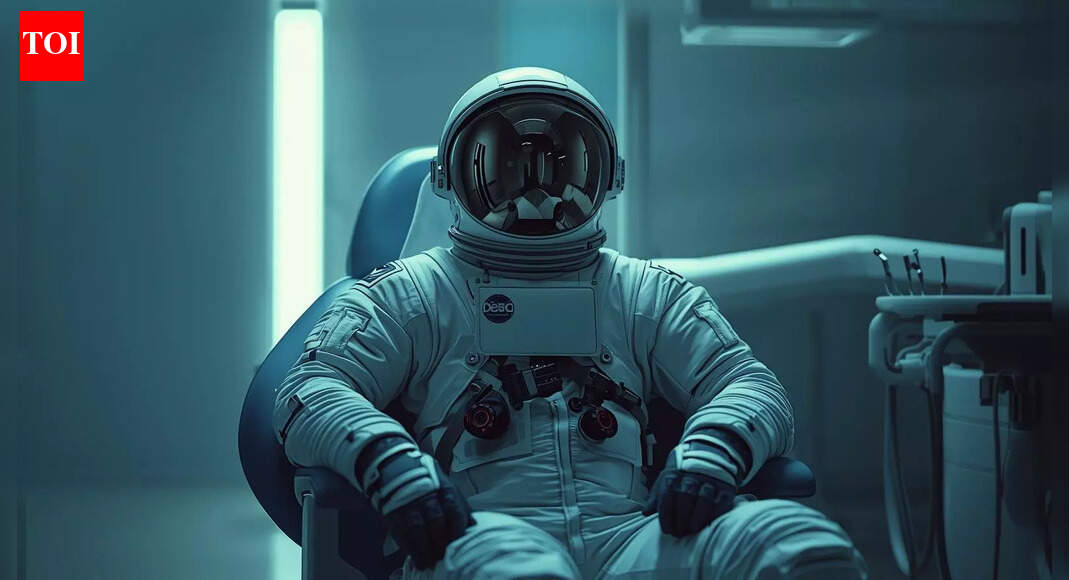
Dreams of space travel often start with rockets and starry views, not dental chairs. Yet for astronauts, small and ordinary parts of the body can become serious concerns once Earth is far behind. Shubhanshu Shukla, the first Indian to travel to the International Space Station, recently spoke about one such detail that rarely makes headlines. Before launch, he had healthy wisdom teeth removed. There was no pain, no infection, and no emergency waiting to happen. The decision was made quietly, long before the countdown. In space, even minor problems can grow complicated. Medical help is limited, gravity is absent, and some procedures simply cannot be done. Dental care sits firmly in that category, making prevention part of preparation.
Wisdom teeth and space missions: Unexpected surgery astronauts must undergo
Wisdom teeth are unpredictable. They may sit quietly for years, then swell, crack, or become infected without much warning. On Earth, this is inconvenient. In orbit, it can be dangerous. Astronauts cannot walk into a clinic or call in a specialist. Painkillers help only so much. Infection carries risks that are harder to manage in closed, weightless environments. Removing wisdom teeth early reduces the chance of sudden pain that could affect focus, sleep, and mission tasks.
What did Shubhanshu Shukla reveal about dental checks
Speaking at an event at IIT Mumbai, Shukla explained that dental health is treated with unusual seriousness during astronaut selection. He shared that two of his wisdom teeth were removed before his mission, not because they hurt, but because they might one day cause trouble. He noted that astronauts train for many medical scenarios, yet dental surgery is not one of them. The tools, precision, and conditions required simply do not exist aboard spacecraft.
Is dental surgery really impossible in orbit
In theory, astronauts receive basic medical training. In practice, dental surgery is a different matter. Blood behaves unpredictably in zero gravity. Fluids do not drain or settle as expected. Sterile conditions are harder to maintain. Even a routine extraction could become risky. Because of this, space agencies avoid the issue altogether by removing potential dental problems well before launch.
Do all astronauts lose their wisdom teeth
Shukla mentioned that fellow astronauts had multiple teeth removed during training. These decisions are made after scans, reviews, and risk assessments. If a tooth looks likely to cause issues later, it is often removed. The goal is not comfort but reliability. Space missions depend on stable health, sometimes down to the smallest detail.
Why is prevention so important for long missions
Short missions already involve risk. Longer stays raise the stakes further. Astronauts on the ISS spend weeks or months in orbit. Planned missions to the Moon or Mars would last even longer. A minor dental issue early on could become a serious distraction over time. Preventive care reduces uncertainty and keeps attention on work rather than pain.
What does this say about astronaut training overall
Shukla’s experience highlights how astronaut training extends far beyond fitness and simulations. Mental resilience, routine discipline, and preventive healthcare all play a role. Teeth, eyesight, bone density, and even sleep habits are monitored closely. Space travel demands a body that is not just strong but predictable.

