


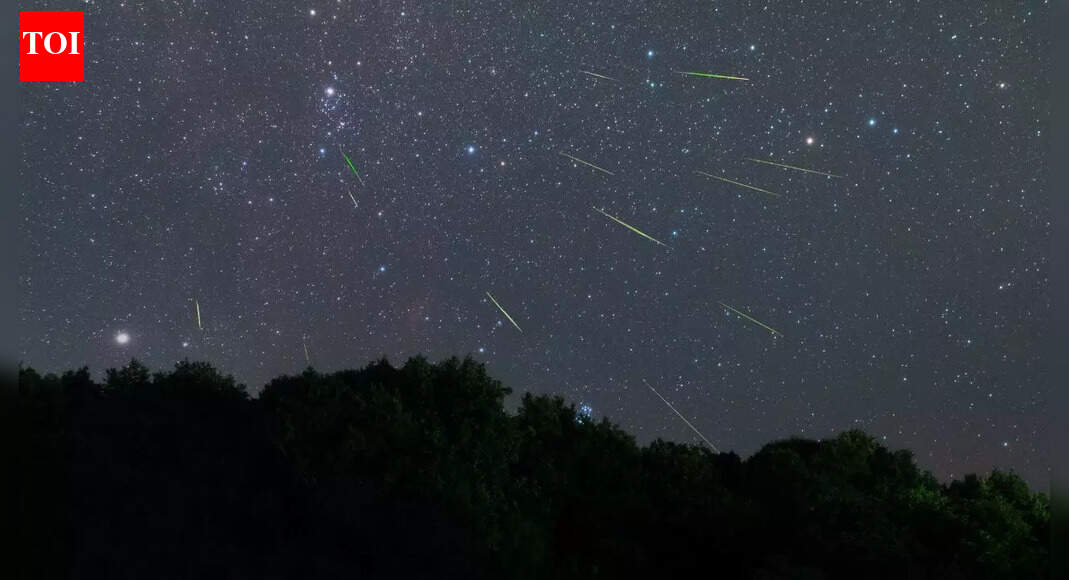
Meteor showers promise a diverse and exciting year for sky gazing in 2026, ranging from brief and bright outbursts at rapid rates to prolonged and faint displays spread throughout the year. These phenomena are produced when Earth intersects with trails of debris trailed by comets and asteroids, which then result in the fragmentation and ignited flash trails across the nighttime sky.These phenomena are the result of Earth passing through trails of debris left behind in the path of comets and asteroids, resulting in the fragmentation and ignition of these particles, which are then displayed as flash trails across the nighttime sky. While some showers are spectacular and forecastable, other showers provide the opportunity for observers to gain an insight into the “night sky at its most dynamic and varied.”
Meteor shower calendar 2026
Meteor Shower 2026: When and where
Quadrantids
The Quadrantids are the first major meteor shower of the year and are characterised by their fast, sharp meteors. Their peak is always brief, often only a few hours, but activity during this window can be impressive. They best appear from northern latitudes because the early morning hours favour the shower as the radiant point climbs higher in the sky. Despite cold winter conditions, the Quadrantids are worth the effort because of their brightness and sudden flurries.
Lyrids
Coming at the end of April, the Lyrids offer more steady and relaxed viewing. While their hourly rate is modest, this shower can occasionally present the observer with bright fireballs. The Lyrids may be seen from both hemispheres and are one of the oldest meteor showers on record, with historical accounts reaching back over 2,700 years.
Eta Aquariids
The Eta Aquariids peak in early May and are best seen from the Southern Hemisphere. These meteors are swift and bright, many leaving a glowing trail behind. Coming from Halley’s Comet, the shower is strongest just before dawn, when the radiant rises higher into the sky. Viewers in the Northern Hemisphere may still catch a limited display near the horizon.
Delta Aquariids
The Delta Aquariids appear in late July, a long shower that builds up and decays over several weeks. The individual meteors are slower and less exciting, but the long period of activity allows for relaxed observations. The peak counts come from locations far south of the equator and there under dark skies.
Perseids
The Perseids remain the most anticipated meteor shower of the year. Peaking in mid-August, they combine high meteor rates with warm summer nights, making them especially accessible. Bright fireballs are common, and the shower performs reliably year after year, particularly across Europe, North America, and parts of Asia.
Draconids
The Draconids are unusual in that they peak in the early evening rather than after midnight. While this shower is typically poorly active, it is capable of brief, sharp outbursts. Their slow-moving meteors are easily seen, especially from northern latitudes in the first week of October.
Orionids
Later in October, the Orionids return; once again, these are associated with Halley’s Comet. These meteors are fast and usually bright, appearing after midnight as Earth moves deeper into the debris stream. The Orionids are visible from both hemispheres and often leave persistent trails.
Taurids
The Taurids peak in early November and are known more for quality than quantity. While meteor counts are low, the shower is noted for sometimes producing large, slow-moving fireballs. Activity spans a period of several weeks, which allows for casual sightings.
Leonids
Historically, the Leonids have produced meteor storms, although such events are rare. Even during quiet years, their meteors are exceptionally fast and can be quite dramatic. Best seen after midnight, Leonid meteors produce sharp streaks and glowing trails across the sky.
Geminids
The Geminids are thought by many to be the best meteor shower of the year. Unlike most showers, they originate from an asteroid, rather than a comet, and thus produce denser, brighter meteors. Their peak in mid-December permits evening viewing of the shower; the Geminids are thus accessible even before midnight.
Ursids
The Ursids peak close to the winter solstice and give a modest, yet very charming finale to the meteor calendar. Activity is low, although there are times when observers under clear and dark skies can be surprised by bright meteors.
How to get the best viewing experience in 2026
Successful meteor watching is a matter of patience and preparation rather than of equipment. Give your eyes at least 30 minutes to adapt to darkness, find locations far from city lights, and keep expectations realistic. Under the right conditions, 2026 promises to be a rewarding year of celestial moments that link us with ancient rhythms of the solar system.

