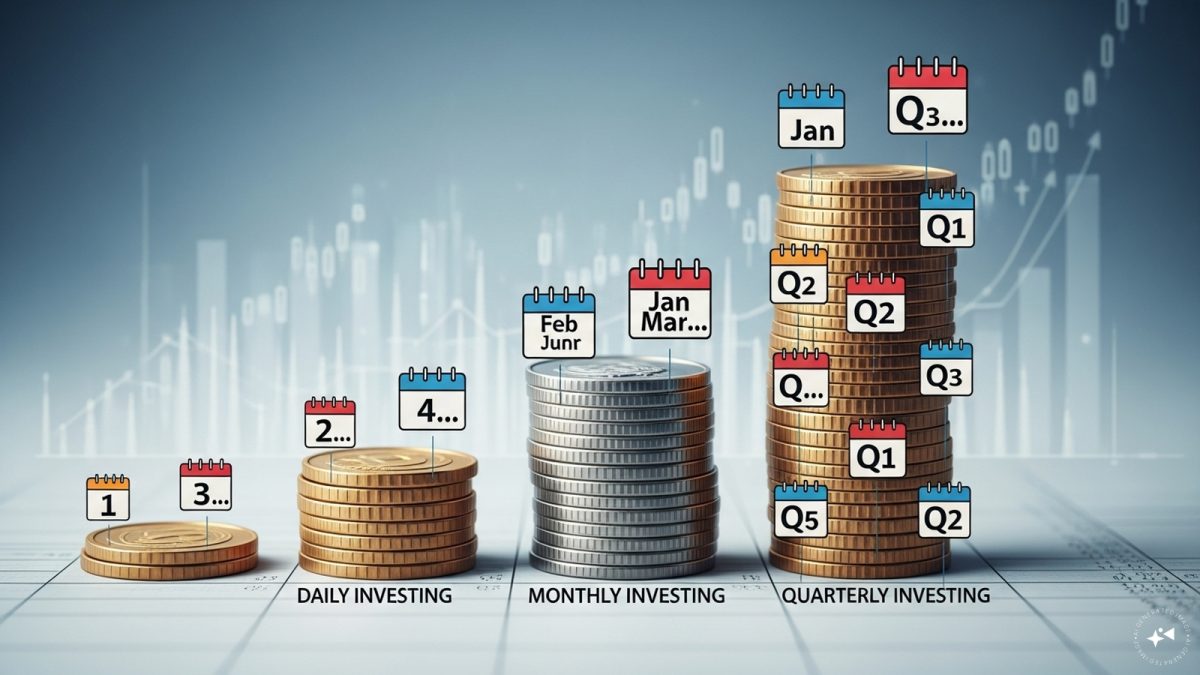
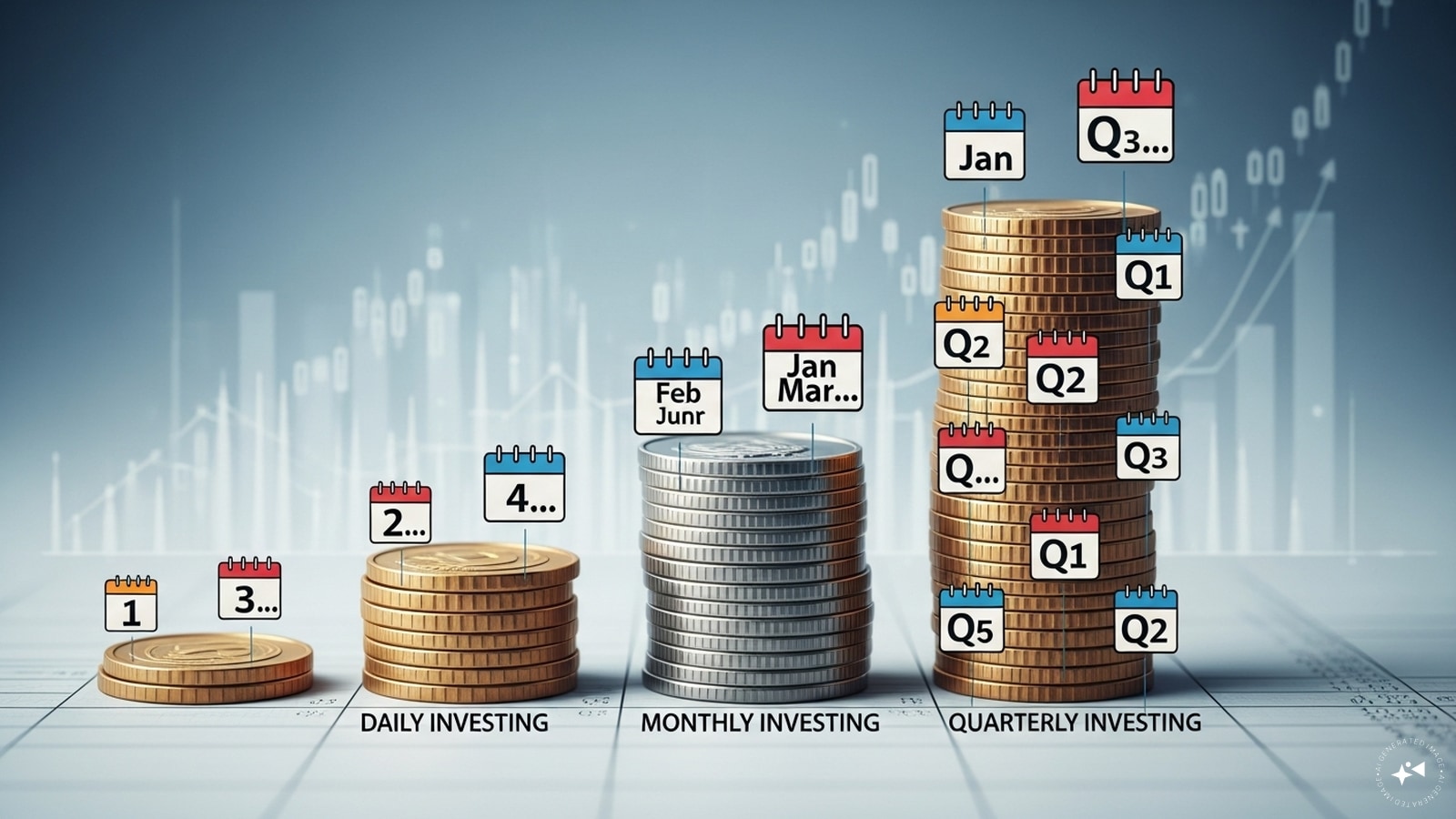
Many believe daily SIPs grow money faster. But 15 years of data shows SIP frequency has little impact on long-term returns.
How the Comparison Was Done: To test this, daily, monthly, and quarterly SIPs were compared over 15 years in the Nifty 50 Index. The investment period ran from December 1, 2010, to December 1, 2025, with the total investment amount kept exactly the same across all three options.Investment Breakdown: In the daily SIP, ₹1,000 was invested every day, resulting in 3,719 instalments over 15 years. In the monthly SIP, ₹20,547 was invested each month across 181 instalments. In the quarterly SIP, ₹60,967 was invested every quarter, totalling 61 instalments.The Final Returns: After 15 years, the results were almost identical. Daily SIP grew to ₹1.15 crore with an Extended Internal Rate of Return (XIRR) of 13.83%. Monthly SIP reached ₹1.14 crore with 13.80% returns. Quarterly SIP also ended near ₹1.15 crore, delivering 13.80% XIRR.Why Were Returns So Similar? Despite different frequencies, all SIPs went through the same market cycles—rallies, corrections, and recoveries. Over the long term, what matters most is how long your money stays invested and how the market performs, not how often you invest.Disclaimer: This information is for general awareness only. News18 or its management is not responsible for investment decisions. Please consult a certified financial advisor before investing.
Stay Ahead, Read Faster
Scan the QR code to download the News18 app and enjoy a seamless news experience anytime, anywhere.
Most mutual fund investors invest through monthly SIPs. But a common question is—if you invest daily instead of monthly, will your returns be higher? Many assume yes, because the money gets more time to grow. The reality, however, is different.