



NEWYou can now listen to Fox News articles!
A study from Sweden’s Uppsala University discovered a link between microplastics and multiple sclerosis (MS).
The research, published in the journal Environmental International, discovered that exposure to two common environmental contaminants, PFAS and PCBs, could increase the risk of the autoimmune disease.
PFAS, or per- and polyfluoroalkyl substances, known as “forever chemicals,” are used in some common household products, such as non-stick cookware, textiles and cleaning products. They have also been found in drinking water throughout the U.S., according to the U.S. Environmental Protection Agency.
COMMON CLEANING CHEMICAL TIED TO SPIKE IN LIVER DISEASE ACROSS US, RESEARCHERS SAY
PCBs, or polychlorinated biphenyls, are toxic industrial chemicals once widely used in electrical equipment before being banned decades ago, as stated by the National Institute of Environmental Health Sciences.
The new study findings were based on blood samples of 1,800 Swedish individuals, including about 900 who had recently been diagnosed with MS, according to a university press release.
PFAS, or per- and polyfluoroalkyl substances, known as “forever chemicals,” are used in some common household products, including non-stick cookware. (iStock)
The first phase of the trial studied 14 different PFAS contaminants and three substances that appear when PCBs are broken down in the body. These were then investigated for a link to the odds of diagnosis.
‘FOREVER CHEMICALS’ FOUND IN US DRINKING WATER, MAP SHOWS ‘HOT SPOTS’ OF HIGHEST LEVELS
“We saw that several individual substances, such as PFOS and two hydroxylated PCBs, were linked to increased odds for MS,” lead study author Kim Kultima said in a statement. “People with the highest concentrations of PFOS and PCBs had approximately twice the odds of being diagnosed with MS, compared to those with the lowest concentrations.”
The researchers then examined the combined effects of these substances and found that the mixture was also linked to increased risk.
CLICK HERE FOR MORE HEALTH STORIES
Fellow researcher Aina Vaivade noted that risk assessments should consider chemical mixtures, not just individual exposures, because people are typically exposed to multiple substances at the same time.
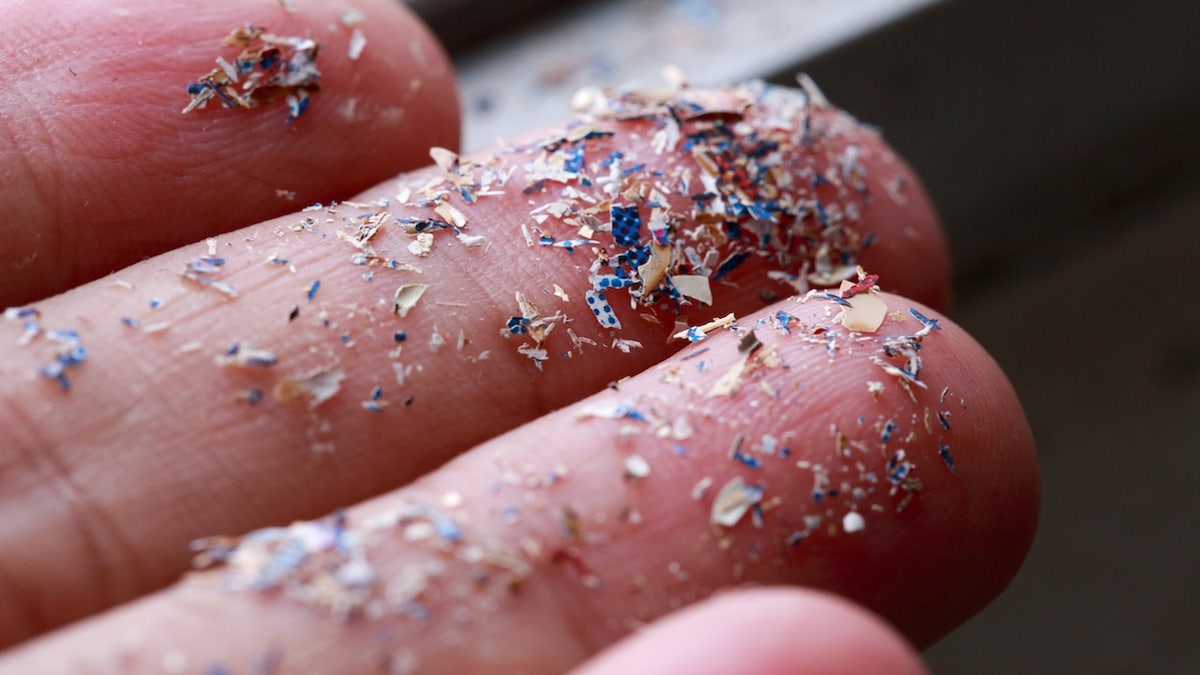
“We saw that several individual substances, such as PFOS and two hydroxylated PCBs, were linked to increased odds for MS,” the lead study author said. (iStock)
The final phase of the study investigated the relationship between inheritance, chemical exposure and the odds of MS diagnosis, revealing that those who carry a certain gene variant actually have a reduced MS risk.
However, individuals who carried the gene and had higher exposure to PFOS — a singular type of chemical in the PFAS family — had an “unexpected” increased risk of MS.
CLICK HERE TO DOWNLOAD THE FOX NEWS APP
“This indicates that there is a complex interaction between inheritance and environmental exposure linked to the odds of MS,” Kultima said.
“We therefore think it is important to understand how environmental contaminants interact with hereditary factors, as this can provide new knowledge about the genesis of MS and could also be relevant for other diseases.”

Multiple sclerosis is a disease that leads to the breakdown of the protective covering of the nerves, according to Mayo Clinic. (iStock)
Fox News senior medical analyst Dr. Marc Siegel commented on these findings in an interview with Fox News Digital.
“MS is a complex disease that is somewhat autoimmune and somewhat post-inflammatory,” said Siegel, who was not involved in the study. “Epstein-Barr virus infection greatly increases the risk of MS.”
TEST YOURSELF WITH OUR LATEST LIFESTYLE QUIZ
“There is every reason to believe that environmental triggers play a role, including microplastics, and this important study shows a correlation, but not causation — in other words, it doesn’t prove that the microplastics caused MS.”
The study had some limitations, the researchers acknowledged, including that the chemical exposure was measured only once, at the time of blood sampling. This means it may not accurately represent participants’ long-term or past exposure levels relevant to MS development.
“There is every reason to believe that environmental triggers play a role.”
Fox News Digital reached out to several industry groups and manufacturers requesting comment on the potential link between PFAS chemicals and multiple sclerosis.
Several have issued public statements, including the American Chemistry Council, which states on its website that “manufacturers and many users of today’s PFAS are implementing a variety of practices and technologies to help minimize environmental emissions.”
In April 2024, the EPA enacted a new federal rule that sets mandatory limits on certain PFAS chemicals in drinking water, aiming to reduce exposure. The agency also aims to fund testing and treatment efforts.

A woman working out outdoors takes a sip of water from a plastic bottle. (iStock)
Multiple sclerosis is a disease that leads to the breakdown of the protective coverings that surround nerve fibers, according to Mayo Clinic.
CLICK HERE TO SIGN UP FOR OUR HEALTH NEWSLETTER
The immune system’s attack on these nerve sheaths can cause numbness, weakness, trouble walking and moving, vision changes and other symptoms, and can lead to permanent damage.
There is currently no cure for MS, Mayo Clinic reports, but treatment is available to manage symptoms and modify the course of the disease.

