


Pakistan has termed India’s recent unilateral suspension of the Indus Water Treaty (IWT) in the aftermath of April’s Pahalgam attack a threat to the country’s food and economic security which “could trigger a severe humanitarian crisis”.
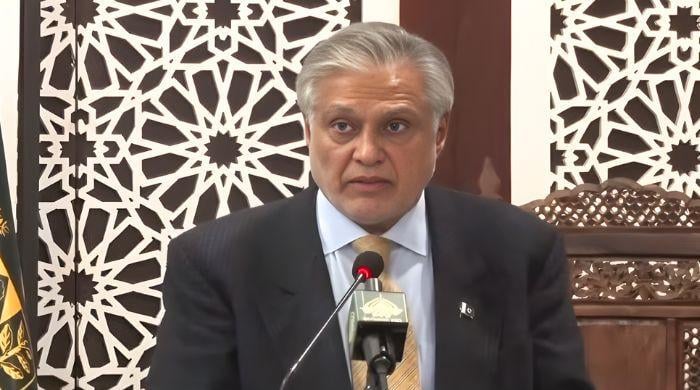
During a briefing to foreign diplomats, Deputy Prime Minister and Foreign Minister Ishaq Dar condemned India’s move to suspend the treaty in April 2025, describing it as a clear example of weaponising water resources.
He warned that such actions threaten Pakistan’s food security and have the potential to trigger a severe humanitarian crisis.
“Indian manipulation of water at critical time of our agriculture cycle directly threatens the lives and livelihoods as well as food and economic security our citizens,” Dar said.
“The Indus Water Treaty is a cornerstone for peace and stability in South Asia,” he added, noting that India has halted the exchange of hydrological data and disrupted the joint monitoring mechanism agreed upon under the treaty, further escalating tensions.
The statement came only a day after Pakistan demanded an answer from India over its continued and abrupt variations of the flow of River Chenab, asking the international community to take notice of India’s continued disregard of a bilateral treaty as New Delhi once again resorted to “weaponisation of water”.
Spokesperson Tahir Andrabi, during the weekly media briefing on Thursday, pointed out that Pakistan had observed abrupt variations in the flow of the River Chenab during the past week, particularly 7 December onwards.
In today’s presser, the deputy prime minister said that millions of people in Pakistan who rely on the river for agriculture, water, sanitation, and healthy ecosystems are being adversely affected, with their rights to work, livelihood, water, food, and an adequate standard of living being undermined.”
“On the one hand, it (suspension) threatens the inviolability of international treaties, and on the other, it poses serious risks to regional peace and security, as well as principles of good neighbourhood and norms that govern interstate relations,” he added.
DPM Dar said that the Permanent Court of Arbitration (PCA) has reaffirmed the continuing validity of the Indus Water Treaty in its June and August 2025 rulings. He recalled that the court ruled that the treaty and its dispute resolution mechanism remain binding on both parties and made clear that India cannot claim immunity from its provisions.
He stated that Pakistan remains committed to resolving disputes with India peacefully but will not compromise on the water rights essential to its citizens.
DPM Dar also urged the international community, particularly members of the UN Security Council, to take immediate action to address the situation.
Indus Water Treaty
The nuclear-armed neighbours signed the Indus Water Treaty in September 1960, which was mediated by the World Bank. The agreement split the Indus and its tributaries between the two countries and regulated water sharing.
India was granted the use of water from three eastern rivers — Sutlej, Beas, and Ravi — while Pakistan was granted most of the three western rivers — Indus, Jhelum, and Chenab.
There is no provision in the treaty for either country to unilaterally suspend or terminate the pact, which has clear dispute resolution systems.
Following the tensions between Islamabad and New Delhi after the killing of 26 people in Indian Illegally Occupied Jammu and Kashmir (IIOK) in April 2025, New Delhi unilaterally held the IWT in abeyance.
New Delhi accused Islamabad of orchestrating the deadly militant attack, an allegation that Pakistan denies.

