


Last Updated:
The CEPA offers near-zero duty access for Indian exports, major services openings, enhanced mobility for professionals, and new opportunities in trade, investment and jobs.
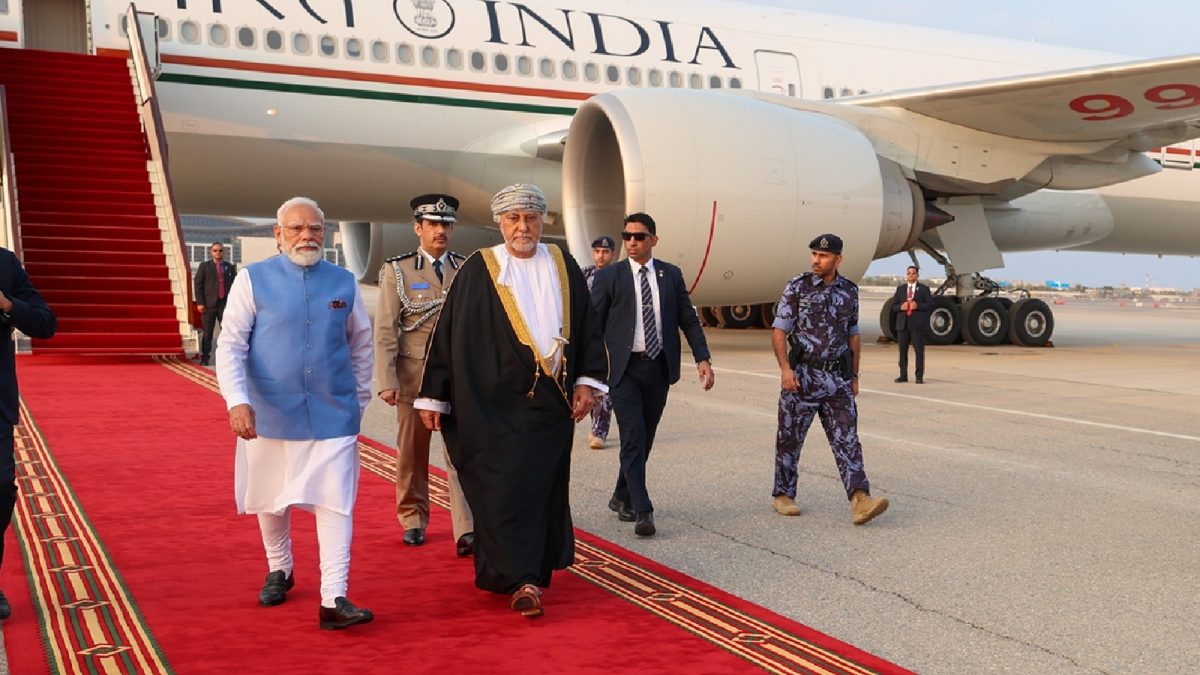
Highness Sheikh Shihab bin Tariq Al Said, Oman’s Deputy Prime Minister for Defence Affairs, extended a warm reception to Prime Minister Narendra Modi at Muscat International Airport on December 17.
India and Oman have signed a landmark Comprehensive Economic Partnership Agreement (CEPA), marking a major step forward in India’s economic engagement with the Gulf region and opening up significant new opportunities for trade, investment and services.
The agreement was signed in the presence of Prime Minister Narendra Modi and Sultan Haitham bin Tarik of Oman, with Commerce and Industry Minister Piyush Goyal and Oman’s Minister of Commerce, Industry and Investment Promotion Qais bin Mohammed Al Yousef formalising the pact. This is the second free trade agreement signed by India in the last six months, after the UK deal, and Oman’s first bilateral trade agreement with any country since 2006.
Here is a look at what the India-Oman CEPA entails and why it matters.
Near-total duty-free access for Indian exports
One of the most significant features of the CEPA is the scale of tariff liberalisation offered by Oman. Under the agreement, Oman will provide zero-duty access on 98.08 per cent of its tariff lines, covering 99.38 per cent of India’s exports to Oman by value. Immediate tariff elimination applies to 97.96 per cent of these lines.
This translates into a major boost for India’s labour-intensive sectors, including textiles, leather, footwear, gems and jewellery, engineering products, plastics, furniture, agricultural products, pharmaceuticals, medical devices and automobiles. The government expects these concessions to generate employment and support artisans, women-led enterprises and MSMEs.
Balanced tariff commitments by India
India, for its part, has offered tariff liberalisation on 77.79 per cent of its tariff lines, covering 94.81 per cent of imports from Oman by value. For sensitive products of export interest to Oman, India has largely followed a tariff-rate quota (TRQ) approach.
Several sensitive sectors have been kept out of the agreement to safeguard domestic interests. These include key agricultural products such as dairy, tea, coffee, rubber and tobacco, along with gold and silver bullion, jewellery, footwear, sports goods and scrap of several base metals.
Big push for services exports
Services form a core pillar of the CEPA. Oman currently imports services worth about $12.52 billion globally, while India’s share in this basket stands at just over 5 per cent, highlighting substantial untapped potential.
Oman has made ambitious and first-of-its-kind services commitments, offering market access across 127 sub-sectors. These include computer-related services, business and professional services, audio-visual services, research and development, education and health services. The package is expected to unlock high-value opportunities for Indian companies and create skilled jobs.
Enhanced mobility for Indian professionals
A major highlight of the agreement is improved mobility for Indian professionals. For the first time, Oman has offered wide-ranging commitments under Mode 4, covering temporary entry and stay for intra-corporate transferees, contractual service suppliers, business visitors and independent professionals.
The quota for intra-corporate transferees has been increased from 20 per cent to 50 per cent, while the permitted stay for contractual service suppliers has been extended from 90 days to two years, with the possibility of an additional two-year extension. Entry and stay conditions have also been liberalised for professionals in fields such as accountancy, taxation, architecture, and medical and allied services.
100% FDI and future social security talks
The CEPA allows 100 per cent foreign direct investment by Indian companies in major services sectors in Oman through commercial presence. This is expected to encourage Indian firms to expand operations in the Gulf.
Both countries have also agreed to hold future discussions on social security coordination once Oman’s contributory social security system is implemented, signalling a forward-looking approach to labour mobility and worker protection.
Boost for AYUSH, pharma and standards cooperation
In a first for any trade agreement, Oman has made a comprehensive commitment on Traditional Medicine across all modes of supply, opening up new opportunities for India’s AYUSH and wellness sectors and promoting medical value travel.
The agreement also provides for fast-tracking of marketing authorisations for pharmaceutical products approved by regulators such as the USFDA, EMA and UKMHRA, along with acceptance of GMP inspection documents. This is expected to reduce both time and cost for Indian pharma exporters.
In addition, the CEPA facilitates mutual recognition of Halal certification, acceptance of India’s NPOP certification for organic products, and enhanced cooperation on standards and conformity assessment, addressing non-tariff barriers that often restrict real market access.
Strategic importance of the deal
Oman is a key strategic partner for India and a gateway to the wider Middle East and Africa. Nearly seven lakh Indians live in Oman, with a long-established merchant presence, over 6,000 Indian businesses operating locally, annual remittances of about $2 billion, and bilateral trade exceeding $10 billion.
Union Minister for Commerce and Industry, Shri Piyush Goyal, expressed profound gratitude to Prime Minister Shri Narendra Modi for his visionary guidance, stating: “The India-Oman CEPA strengthens the historical strong ties of India with Oman and signifies an ambitious and balanced economic framework that significantly enhances opportunities for Indian exporters and professionals. It unlocks nearly universal duty free access for Indian goods in the Omani market, expands services commitments across key high growth sectors, and ensures greater mobility for Indian professionals. The agreement reinforces India’s commitment to inclusive growth benefiting farmers, artisans, workers, MSMEs while safeguarding core national interests.”
Commerce & Industry Minister Piyush Goyal said, “The deal provides India with unprecedented market access, offering zero-duty on 98.08% of Oman’s tariff lines, which cover 99.38% of India’s exports by value. This will significantly benefit labour-intensive sectors, generating employment and strengthening MSMEs, artisans, and women-led enterprises. Key export sectors, including textiles, leather, footwear, gems & jewellery, engineering goods, plastics, furniture, agricultural products, pharmaceuticals, medical devices, and automobiles, will gain from full tariff elimination, reinforcing India’s manufacturing and export competitiveness. Protection has been given to India’s sensitive sectors to safeguard the interests of our farmers and small businesses.”
The agreement provides a comprehensive and forward-looking framework for services trade, covering IT, business and professional services, R&D, education, health, and audio-visual services. A major highlight is an 8 times extension of permitted duration of stay for Contractual Service Suppliers from 90 days to two years, with the possibility of a further two-year extension, he added.
 Click here to add News18 as your preferred news source on Google.
 December 18, 2025, 17:41 IST
Read More

