


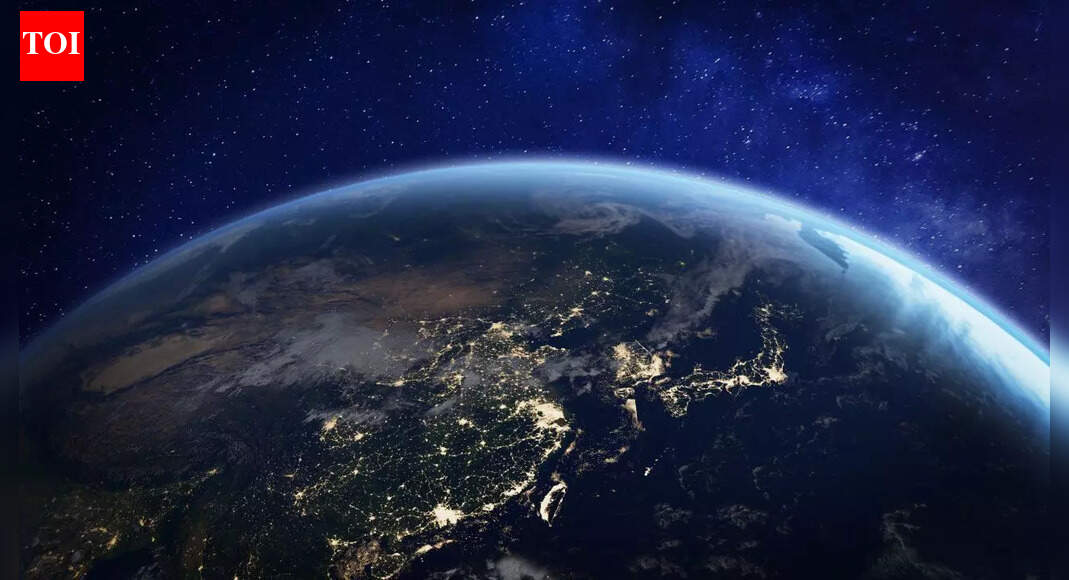
It sounds dramatic to imagine one half of Earth slowly losing its internal warmth faster than the other, but that is the general direction many researchers are now exploring. When geophysicists looked at long-term heat flow inside the planet, they noticed that the hemisphere covered mostly by the Pacific Ocean appears to be shedding heat more quickly than the side dominated by the continents. This shift did not begin yesterday. It has taken shape over millions of years, quietly influencing the way plates move, volcanoes behave and how the deeper parts of Earth evolve. We do not sense any of this in our daily lives, but the interior of the planet is far from still.A peer-reviewed paper in Geophysical Research Letters adds weight to the idea by pointing out how uneven the crust really is. Heat escapes with surprising ease through oceanic crust because it is thinner, younger and sits directly beneath vast, cold oceans. The continental crust on the opposite side is much thicker, and that extra thickness slows down the release of heat. Over long periods of time, this simple difference turns into a noticeable contrast between the two halves of the planet.
How one side of the Earth is cooling faster because of crust differences
The uneven cooling begins with the basic structure of Earth’s crust. New oceanic crust forms along underwater ridges and slowly travels outward. As it moves, it cools, interacts with freezing seawater and eventually sinks back into the mantle. This whole journey makes it an excellent pathway for heat to escape. The Pacific basin alone is so large that its combined heat loss becomes quite significant.Continental crust, on the other hand, is older, thicker and sits on huge landmasses that slow heat flow. Because of this, the continental hemisphere does not cool at the same pace. Researchers think this long-standing difference has quietly shaped mantle circulation patterns and may have played a part in how major plates have drifted across the globe. In simple terms, the deep Earth does not behave in a perfectly symmetrical way, even if the surface looks balanced.
What scientists think this cooling pattern reveals about Earth’s long-term behaviour
Looking at why one side cools faster helps researchers connect a lot of loose ends in Earth science. Regions with heavy volcanic or tectonic activity may be influenced by these deeper temperature differences. Heat affects how the mantle moves, and that movement dictates where new crust forms, where old crust is pulled down and where earthquakes tend to cluster. The Pacific hemisphere, which already carries the Ring of Fire, may be partly shaped by its long history of stronger heat loss.Scientists also see this as a way to understand Earth’s past. While climate at the surface is controlled by sunlight, oceans and greenhouse gases, the slow cooling beneath our feet sets the background for changes over millions of years. Knowing how heat flows inside the planet gives a clearer view of how Earth’s interior has changed and how it may continue to shift far into the future.
Why one side cooling faster does not mean any sudden climate change
This research does not signal that the Pacific side of Earth is about to freeze or that an ice age is waiting around the corner. Internal cooling is incredibly slow, happening on timescales much longer than human history. The temperature changes we experience at the surface depend on completely different factors, such as atmospheric circulation, ocean currents and how land is arranged across the globe.What this discovery really offers is a better sense of how Earth works beneath the crust. By tracking where heat comes from and where it escapes, scientists can build clearer models of Earth’s interior and understand how our planet has been shaped over unimaginable lengths of time. It is a subtle story, but one that reveals how dynamic the Earth remains, even when everything above ground feels stable.Also read| What NASA says would happen if Earth got too close to a black hole

